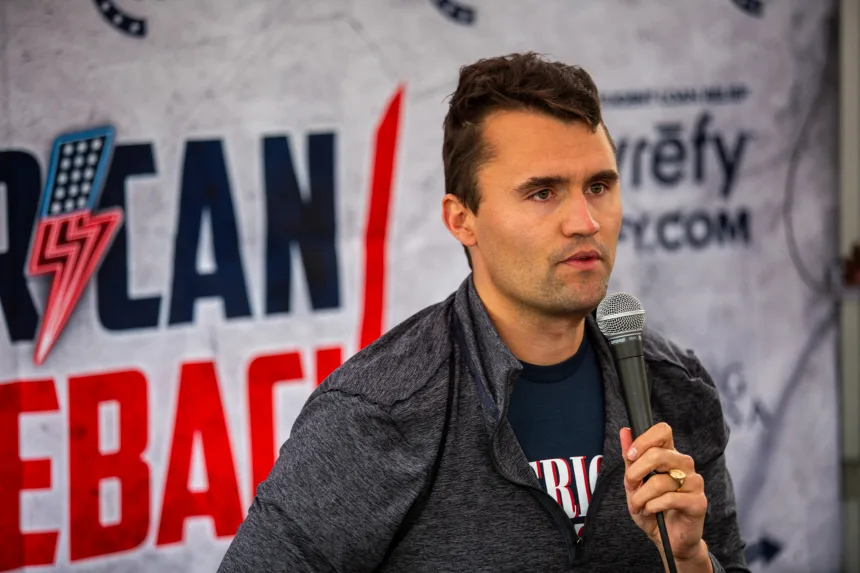
The Charlie Kirk murder online fallout has triggered a wave of online campaigns, exposing people who posted comments about his assassination. Conservative activists, Republican lawmakers, and a newly launched website have amplified messages from individuals — some with only a handful of followers — calling for them to face consequences.
A site titled Expose Charlie’s Murderers claims to have collected nearly 30,000 submissions, aiming to create a searchable database of people accused of celebrating Kirk’s death. While administrators insist the project is not doxxing, critics argue it risks turning private individuals into targets. Influencer Laura Loomer also vowed to “make everyone who celebrates his death famous,” intensifying fears of harassment.

Firings Across Schools, Companies, and Media
The online fallout from Charlie Kirk’s murder has already cost several people their jobs. A Middle Tennessee State University employee was fired after posting “zero sympathy” for Kirk’s death, a decision praised by Senator Marsha Blackburn. Similarly, a South Carolina teacher lost their position after social media comments surfaced.
Private companies have also taken action. Freddy’s Frozen Custard & Steakburgers and the Carolina Panthers dismissed employees who made controversial posts about Kirk. Even DC Comics canceled a series by writer Gretchen Felker-Martin after she allegedly mocked his assassination online. Legal experts note that while public employees have some protections, private companies often act swiftly when speech fuels political outrage.
MSNBC also faced pressure, firing senior analyst Matthew Dowd after he suggested Kirk’s rhetoric contributed to the attack. Former President Donald Trump publicly supported the decision, labeling Dowd “a terrible human being.”

Growing Concerns Over Harassment and Free Speech
For those caught up in the Charlie Kirk murder online fallout, the consequences extend beyond job losses. Journalists such as Rachel Gilmore report facing a “tsunami of threats,” despite clarifying they never celebrated Kirk’s death. Former Florida data scientist Rebekah Jones said she contacted police after receiving death threats and seeing her information shared on the anonymous site.
Experts warn these campaigns blur the line between accountability and harassment. Laura Edelson of Northeastern University described it as “a coordinated effort to target individuals,” while scholars argue it contributes to deepening political divides.
As the fallout continues, the debate now stretches beyond Kirk himself — raising urgent questions about free expression, online accountability, and the risks of fueling harassment in an already polarized America.