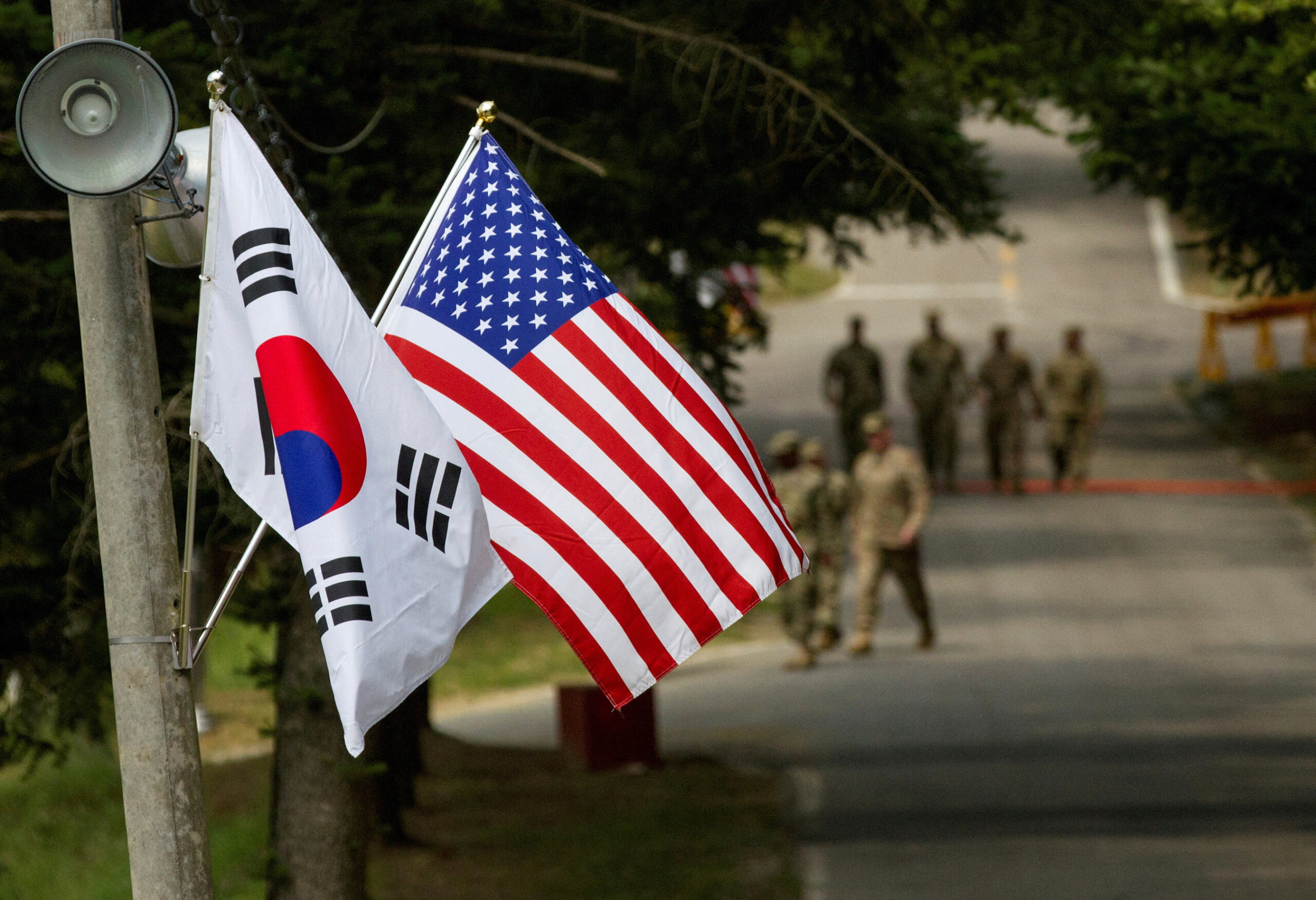
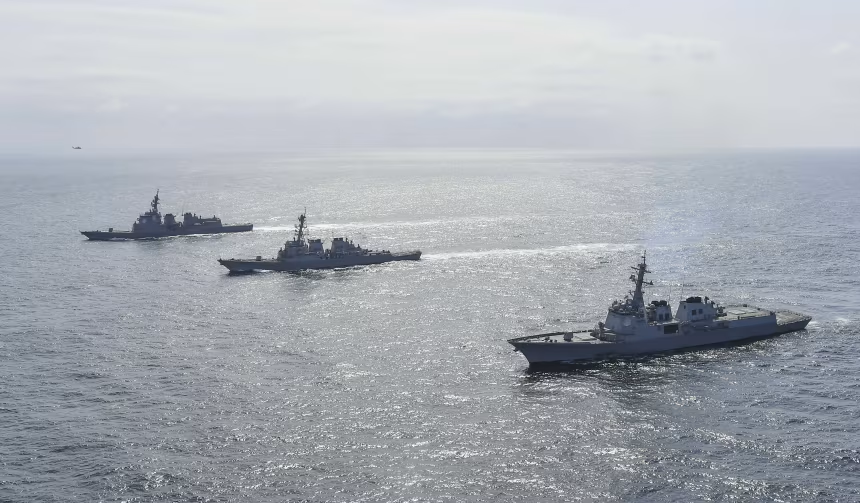
The United States, South Korea, and Japan started a new air and naval exercise this week called Freedom Edge 2025. The drills are taking place near South Korea’s Jeju Island.
South Korea’s Joint Chiefs of Staff said the goal is to counter North Korea’s missile and nuclear threats and to keep peace in the region. The U.S. Indo-Pacific Command added that the drills are the “most advanced” example of defense cooperation between the three allies so far.
The five-day event is happening at the same time as another U.S.-Japan exercise called Resolute Dragon. For this, Washington moved missile launchers to Japan that can reach mainland China.
Russia, China, and North Korea Show Unity
The drills come less than two weeks after Chinese President Xi Jinping, Russian President Vladimir Putin, and North Korean leader Kim Jong Un stood together in Beijing during a military parade. The parade showed China’s new weapons and the growing partnership between the three nuclear powers.
North Korea has already sent troops and weapons to support Russia’s war in Ukraine. It also signed a defense pact with Moscow. Experts say Pyongyang may soon get Russian missile technology, which would strengthen its nuclear program.
China’s talks with North Korea also raised concern. Beijing’s official statement made no mention of denuclearization, suggesting China may now accept North Korea as a nuclear state.
Mixed Reactions and Wider US Moves
North Korea’s Central Military Commission called Freedom Edge an “offensive war drill.” China also criticized the U.S. for sending its Typhon missile system to Japan for Resolute Dragon.
Still, experts say the U.S.-led drills focus on real training, not political theater. “Kim, Putin, and Xi sent a symbolic signal in Beijing. In contrast, U.S.-Japan-South Korea drills are about practical defense,” said Leif-Eric Easley, professor in Seoul.
These trilateral exercises are part of a larger U.S. military presence in Asia. Recently, the U.S., Japan, and the Philippines held joint drills in the South China Sea. U.S. and British warships also sailed through the Taiwan Strait, which China called a provocation. Washington replied that they were exercising their right to navigate in international waters.
Analysts say the growing number of drills shows U.S. alliances in Asia remain strong. The U.S. Indo-Pacific Command said the cooperation “proves our commitment to defend shared interests and strengthen deterrence in the region.”