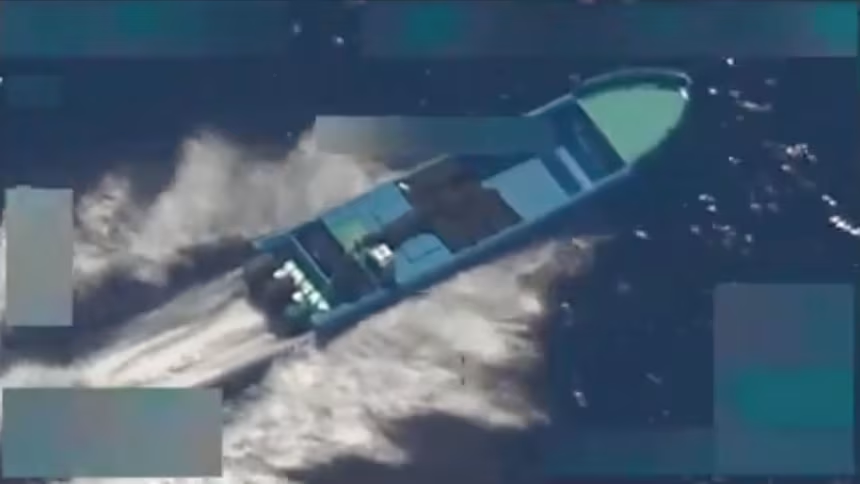
The US military strikes boat in Pacific incident has drawn global attention as Washington intensifies its campaign against international drug trafficking. The operation, reportedly conducted near the central Pacific Ocean, signals a broader expansion of America’s counter-narcotics strategy. While the Pentagon described the strike as a targeted action against an alleged smuggling vessel, the move raises deeper questions about how far the United States is willing to extend military power to curb illicit trade on the high seas.
Over the past decade, the Pacific Ocean has emerged as a growing corridor for transnational crime. Drug cartels, long reliant on Latin American and Caribbean routes, are increasingly shifting operations toward the Pacific. Officials say smugglers have been using small commercial boats and fishing vessels to move tons of narcotics, including methamphetamine and cocaine, toward Asia and Oceania.
The US military strikes in Pacific is believed to have been a response to credible intelligence that the targeted vessel was part of a larger trafficking network spanning Central and South America. According to defense analysts, the strike reflects the Pentagon’s growing role in maritime security and its cooperation with regional partners such as Australia, Japan, and the Philippines.
Initial reports suggest that a US Navy aircraft or drone identified and neutralized a small boat after it failed to comply with warnings to stop. Military sources indicated that the operation was part of a broader task force mission aimed at dismantling “maritime trafficking pipelines” used to fund criminal and insurgent activities.
No civilian casualties have been confirmed, and US officials say the action followed international maritime law. However, details about the vessel’s ownership and cargo remain classified. Independent analysts argue that the precision of the operation points to improved intelligence-sharing among allied nations in the Pacific region.
The strike underscores a shift in US strategy from defensive patrols to proactive disruption. Rather than waiting for traffickers to reach American waters, the military is now striking potential threats before they enter the hemisphere. This forward-leaning approach aligns with the Biden administration’s push to integrate anti-narcotics missions with global security objectives.
For Washington, the operation also serves as a warning to networks using the Pacific as a safe passage. It signals that the United States is willing to act beyond traditional drug enforcement boundaries when it perceives a threat to its national interests.
The US military strikes boat in Pacific event has stirred reactions across the region. Pacific island nations, whose waters are often used for covert shipping, have long requested stronger support from Washington in policing their maritime zones. Analysts note that the move could enhance US credibility among smaller states that lack naval resources to monitor vast ocean territories.
However, the strike may also provoke unease among countries wary of increased militarization in the Pacific. China, for example, has previously accused the US of using counter-narcotics operations as a cover for expanding its strategic footprint. Regional observers warn that unless carefully managed, such actions could deepen tensions in an already competitive maritime theater.
The global drug trade is evolving rapidly. According to the United Nations Office on Drugs and Crime (UNODC), methamphetamine production in Asia-Pacific has reached record highs, with trafficking routes now spanning from Mexico to Micronesia. The US strike, while small in scale, fits a larger pattern of adaptive enforcement designed to intercept drugs at source rather than at destination.
This trend also highlights the fusion of defense and law enforcement roles. The Pentagon’s involvement in anti-drug missions, once limited to surveillance and logistics, is now extending into direct military engagement. Experts argue that this transformation may set a precedent for future operations targeting organized crime at sea.
The marks a defining moment in America’s fight against global narcotics. It reflects both the complexity of modern trafficking networks and the willingness of Washington to confront them beyond its borders.
As the Pacific increasingly becomes a battleground for illicit trade, the line between law enforcement and military intervention continues to blur. Whether this approach will lead to lasting results depends on collaboration, transparency, and respect for international law. For now, the message is unmistakable: the United States intends to keep the world’s largest ocean under closer watch.