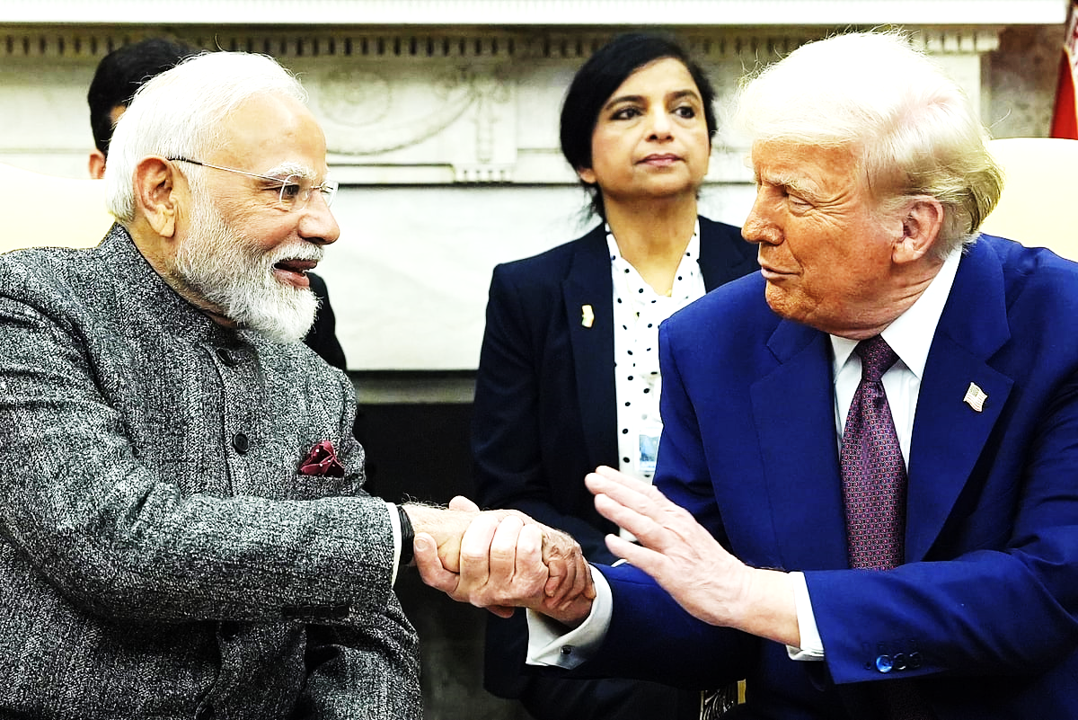
New Delhi— US President Donald Trump’s escalating tariff war with India is forcing Prime Minister Narendra Modi to recalibrate New Delhi’s foreign policy, turning to Moscow and Beijing as Washington presses for politically unworkable concessions on agriculture and dairy trade.
Trump’s plan to impose a 50% tariff on Indian exports — set to take effect on August 27 — has upended a relationship once seen as central to balancing China. Modi, under pressure to shield vulnerable sectors at home, has pivoted to strengthening ties with Russia and China while signaling a tougher line against Washington.
“Modi is standing like a wall against any policy that hurts Indian farmers, fishermen and the pastoral community,” the prime minister declared in his Independence Day address earlier this month.
According to officials, US negotiators repeatedly demanded sweeping access to India’s agriculture and dairy markets — an offer no Indian prime minister could accept. Draft trade deals were sent back from the White House multiple times, with Trump reportedly eager to showcase a win to his “MAGA” base.
“Trump wanted to tell his supporters that Modi opened up India’s market of 1.4 billion people,” said one senior Indian official, calling the requests “undiplomatic and unrealistic.”
The deadlock has coincided with India’s rupee weakening and gold prices hitting record highs, adding to concerns of a domestic economic hit if tariffs bite.
In recent weeks, External Affairs Minister S. Jaishankar met Russian President Vladimir Putin in Moscow, while Modi prepared for trips to both China — for the SCO summit — and Japan. Analysts say the moves reflect an urgent push to secure alternatives as the US relationship sours.
“India is making decisions more out of compulsion than choice,” said a senior Delhi-based strategist. “The collapse of trust with Washington has pushed Modi closer to China and Russia, despite the risks.”
Critics argue Modi and Jaishankar misjudged Trump’s second-term agenda, underestimating the primacy of his domestic political calculus. Yet New Delhi’s options are limited. BRICS and SCO forums are gaining new weight, while the QUAD appears stalled.
For Modi, the diplomatic reset also carries domestic political utility. His nationalist base, traditionally supportive of closer US ties, is now rallying behind him as he resists Trump’s demands. But the risk of an economic slowdown looms: forecasters warn India’s GDP growth could fall by half a percentage point if tariffs hit key exports.
“The tariff terror is real,” said a government source. “Our embassies are scrambling to find new markets, while ministries are assessing damage-control measures from GST reforms to trade diversification.”
With the August 27 deadline approaching, Modi faces one of the most severe tests of his premiership — navigating a rupture in India-US ties without triggering a deeper domestic economic or political crisis.