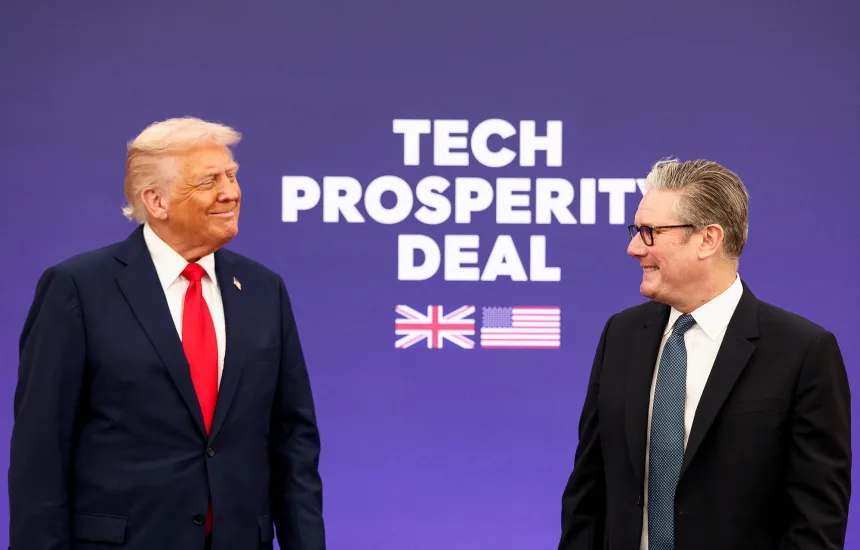
The Trump UK state visit was presented as proof of the “special relationship” between the United States and Britain. For two days, Donald Trump received full honors, including a state banquet, while Prime Minister Keir Starmer secured economic headlines.
The highlight was the £150 billion ($203 billion) “Tech Prosperity Deal.” US tech giants pledged £31 billion to expand Britain’s AI and digital infrastructure. Blackstone, a major private equity firm, committed £90 billion over the next decade. The government claimed these deals would create 7,600 jobs and boost confidence in the UK economy.
Yet doubts remain. Many of the investments had been announced earlier, and critics warned that they were repackaged to coincide with Trump’s visit. Britain also struck a post-tariff trade deal, but exporters still face a 10% tariff. Hopes that the US would lift its 25% tariff on British steel were dashed, leaving the industry under strain.


Political and Foreign Policy Effects of the Trump UK State Visit
The Trump UK state visit also carried weight in politics and diplomacy. Trump avoided direct clashes with Starmer but voiced concerns over Britain’s plan to recognize a Palestinian state. On Ukraine, he criticized Vladimir Putin but refused to commit to tougher action, insisting NATO must first stop buying Russian oil and gas.
At home, Trump’s comments energized Nigel Farage and the Reform UK party. His advice to “call out the military” against illegal immigration may strengthen the hard-right opposition and pressure Starmer’s government further.
Overall, the visit gave Britain symbolic wins and political challenges. While the investment promises sounded impressive, their real impact will take years to measure. For now, the visit shows that Britain values its partnership with the US, but questions remain about how much it gained in return.