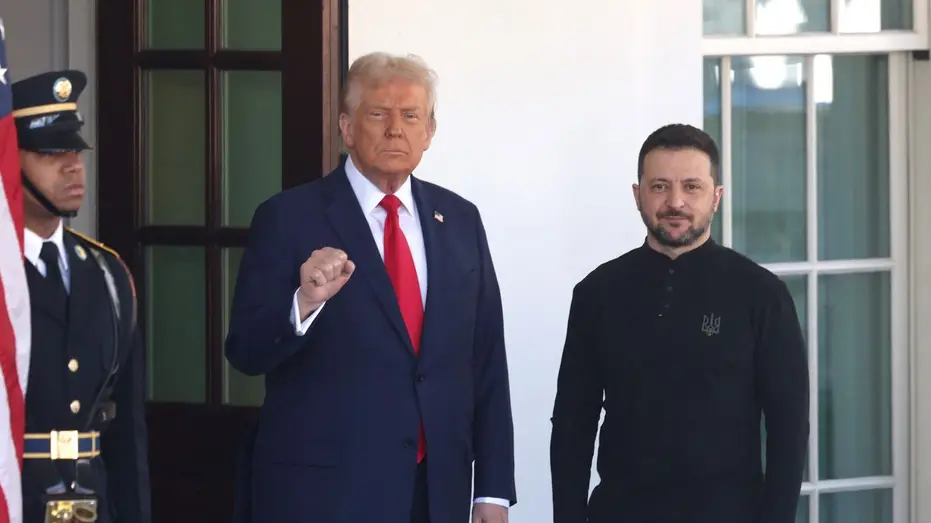
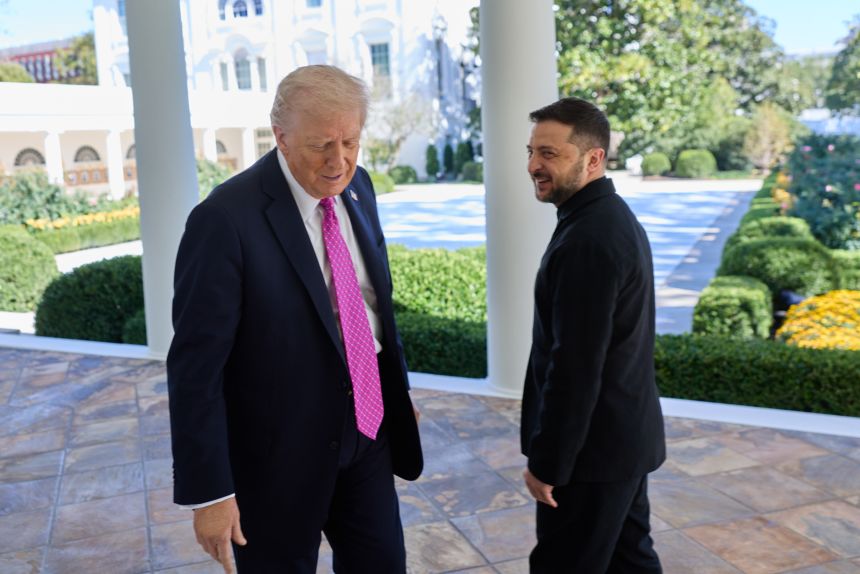
President Donald Trump appeared to step away from supplying long-range weapons to Ukraine, declaring that the time had come to “stop the war immediately”. At a tense meeting with Volodymyr Zelenskyy in Washington on October 17, 2025, Trump refused to commit to providing Tomahawk missiles and urged both Ukraine and Russia to cease fighting and freeze their positions. Even as Ukraine pushed for advanced weapons, Trump emphasized diplomacy and avoiding escalation.
During the White House meeting, Zelenskyy came with high expectations for U.S. approval of Tomahawk missiles that could enable Kyiv to strike deep into Russian territory. Yet Trump conveyed hesitation. According to multiple reports, the U.S. president insisted the United States needed to keep its own stock of Tomahawks and was unwilling to give a firm commitment.
At the same time, Trump spoke bluntly about his preferred outcome: a ceasefire by freezing battle lines rather than ramping up arms deliveries. He told reporters: “Stop the killing, stop where you are, let both sides claim victory, let history decide.”
Instead of talking weapon transfers, Trump shifted to a peace-first agenda. His remarks, calling for a halt to fighting “right now,” underline his belief that the war needs a diplomatic exit rather than a deeper military plunge. In that context, the key phrase stop the war immediately resonates as a political directive more than a military strategy.
Ukraine’s concern and Russia’s reaction
For Ukraine, the move signals uncertainty. Zelenskyy acknowledged the meeting was productive but emphasized that returning territory remained non-negotiable. Meanwhile, the Kremlin welcomed the hesitancy toward Tomahawks, interpreting it as a shift by Washington toward managing escalation, an outcome Moscow would view as advantageous.
Trump’s push to stop the war immediately raises several questions:
-
Is a freeze at current lines truly stable? While it may halt bloodshed in the short term, analysts warn it could reward Russia’s gains and leave Ukraine compromised.
-
By refusing advanced missiles, does the U.S. reduce Kyiv’s capacity to defend itself, or avoid widening the war? Both interpretations are plausible.
-
Politically, Trump positions himself as a peacemaker. Militarily, critics argue this could signal withdrawal or weakened support for Ukraine.
Historically, conflicts frozen along contested lines have sometimes lingered for years. Ukraine’s case carries the added risk that Russia may use a truce to solidify control and rebuild. The phrase stop the war immediately therefore carries both hope and caution.
President Trump’s refusal to send Tomahawk missiles to Ukraine and simultaneous call to stop the war immediately mark a clear shift in U.S. posture from escalation to diplomacy. While this approach may reduce the risk of wider confrontation, it leaves Ukraine facing a war without the advanced weapons it sought and raises uncertainty about how long a ceasefire might hold. Ultimately, whether this strategy works depends on mutual commitment by both sides and sustained U.S. engagement.