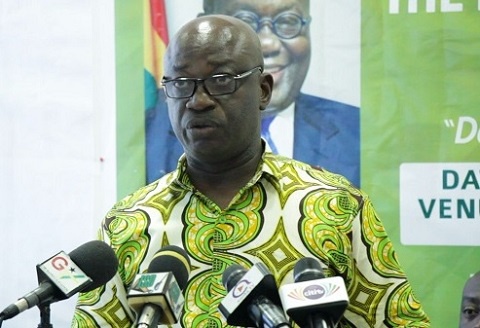
Greater Accra, Ghana – The Chief Executive Officer of the Public Sector Reforms, Mr. Thomas Kusi Boafo, has sparked controversy within the New Patriotic Party (NPP) after claiming that auctioned state vehicles are being unfairly distributed, favoring certain women over dedicated party workers.
In a blunt and emotionally charged statement, Mr. Kusi Boafo alleged that female beneficiaries of the vehicles are selected based on physical appearance rather than party contribution, particularly singling out what he described as “ladies with big buttocks.”
“Auctioned cars should be given to NPP Communicators to let them feel comfortable when sacrificing and working for the party,” he said. “But because of selfish interests, the cars are going to women with big backsides who do absolutely nothing for the NPP.”
According to him, party communicators, who are on the frontlines defending government policies on TV and radio, are often left struggling for basic logistical support, some relying on tricycles and public transport to attend media engagements.
“Communicators are using Pragyas and trotros to go to studios, and we expect them to deliver,” he lamented. “It is a big shame.”
Mr. Kusi Boafo did not mince words about the potential electoral repercussions of this neglect. He warned that the NPP’s chances in the 2024 general elections could be severely undermined, not due to governance failures, but because of a failure to empower the party’s grassroots communicators.
“NDC will win the 2024 elections not because NPP and Nana Addo failed Ghanaians, but because party communicators failed to project the good policies,” he stated.
He also threatened to “name and shame” individuals within the party he believes are sabotaging its electoral fortunes.
“The person in charge of auction cars is gradually failing the party. Some of us will fight for the grassroots and the communicators.”
Mr. Kusi Boafo’s remarks come amid rising tension in the NPP regarding internal equity, logistics, and grassroots support ahead of the high-stakes 2024 elections. His comments reflect growing frustration among party insiders who feel that the benefits of political power are not being fairly distributed.
While the statements have stirred controversy for their graphic and gendered language, they also highlight a deeper issue of party organization and loyalty recognition, particularly in an election year where every vote may count.
The NPP is yet to officially respond to the CEO’s claims.