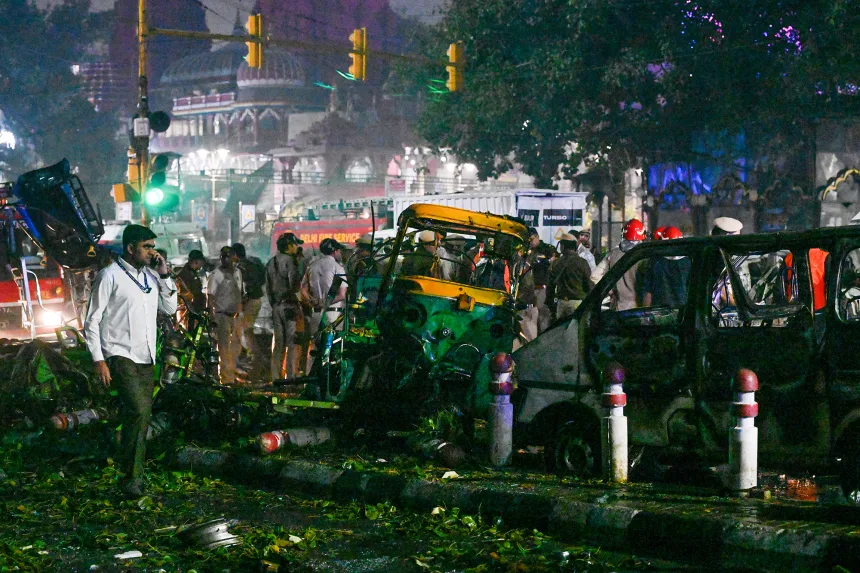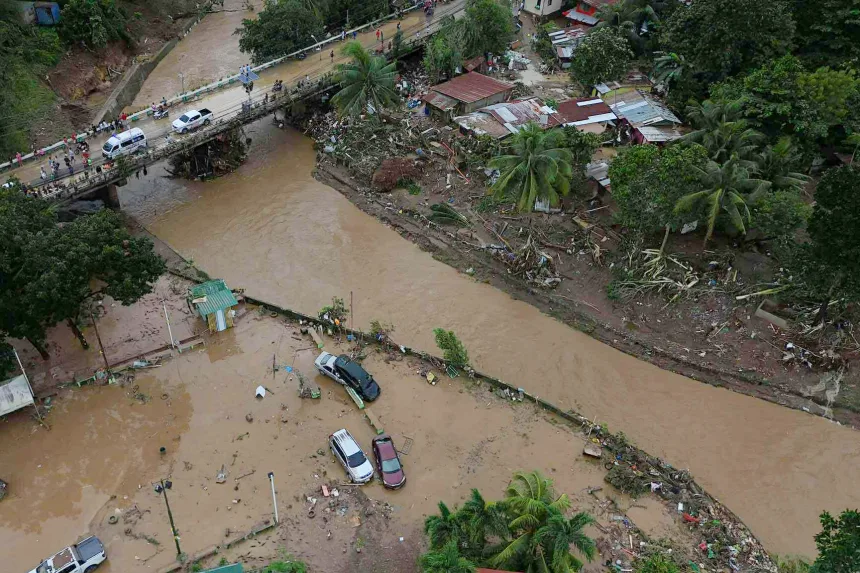
The death toll from Typhoon Kalmaegi continues to climb as the Philippines reels from one of its deadliest storms this year. Officials have confirmed at least 40 fatalities, with dozens more missing and thousands displaced by floods, landslides, and widespread destruction. The powerful typhoon, which struck the northern and central parts of the country over the weekend, left a trail of devastation that has overwhelmed local rescue and relief efforts.
Typhoon Kalmaegi made landfall with winds exceeding 150 kilometers per hour, toppling trees, ripping off rooftops, and submerging entire communities. The provinces of Cagayan, Isabela, and Ilocos Norte were among the hardest hit, according to the Philippine Atmospheric, Geophysical and Astronomical Services Administration (PAGASA). Rivers overflowed, cutting off villages and destroying bridges, while power outages affected millions of residents for several days.
Disaster management officials said that thousands of homes were damaged or destroyed, and critical infrastructure such as roads and communication lines were severely affected. In mountainous regions, heavy rains triggered deadly landslides, burying homes and trapping residents under debris. Rescue teams are still struggling to reach remote communities due to blocked roads and unstable terrain.
Authorities have deployed military units, coast guard teams, and volunteers to assist in rescue and relief operations. Helicopters and boats are being used to deliver food, water, and medical supplies to isolated areas. Local governments have set up temporary shelters in schools and evacuation centers, now housing more than 100,000 displaced residents.
Philippine President Ferdinand Marcos Jr. visited affected regions and pledged swift government assistance. He emphasized the need for better early warning systems and stronger disaster preparedness, acknowledging that many lives could have been saved if residents had more time to evacuate. “Our priority now is to save lives, restore power, and ensure that no community is left behind,” he said during a press briefing.
Behind the statistics lies immense human suffering. Many survivors have lost not only their homes but also their livelihoods. Farmers in northern Luzon reported that floodwaters destroyed rice and corn fields that were nearly ready for harvest, raising fears of food shortages in the coming months. Fishing communities along coastal areas also suffered major losses, with hundreds of boats either missing or damaged beyond repair.
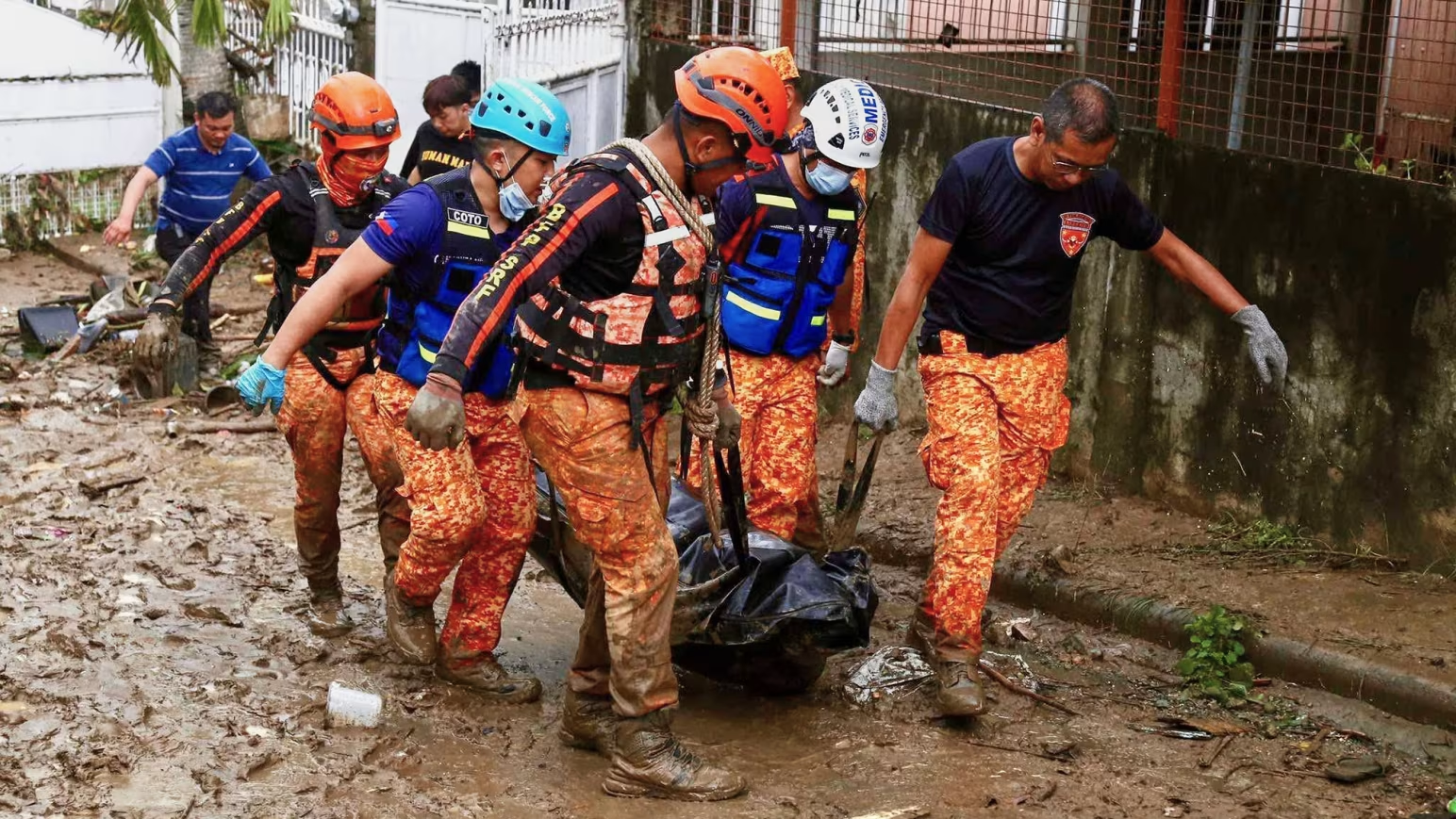
In the aftermath of the death toll from Typhoon Kalmaegi, hospitals are overwhelmed with patients suffering from injuries, infections, and dehydration. Humanitarian groups like the Philippine Red Cross and international relief organizations have mobilized to provide emergency assistance. Meanwhile, health officials are warning of potential outbreaks of waterborne diseases due to contaminated floodwaters.
The Philippines is no stranger to destructive typhoons, but experts warn that climate change is making these storms stronger and more unpredictable. Typhoon Kalmaegi is the latest in a series of extreme weather events that have struck the country in recent years. Scientists say rising ocean temperatures are fueling more intense cyclones that bring heavier rainfall and cause greater damage.
According to the World Meteorological Organization, the Pacific region has seen a steady increase in powerful typhoons over the past decade. The Philippines, sitting on the path of these storms, remains one of the most vulnerable nations in the world. Environmental groups are urging the government to invest more in sustainable infrastructure, reforestation, and disaster risk reduction to prevent similar tragedies.
Neighboring countries, including Japan, Australia, and the United States, have offered humanitarian aid and technical assistance to help the Philippines recover. The United Nations has also expressed concern about the scale of destruction and pledged to provide emergency funding for relief efforts.
Local charities and church organizations are coordinating food drives and donation campaigns, calling for public support for families who have lost everything. Online platforms have become a hub for fundraising and sharing real-time information about the hardest-hit communities.
The rising death toll from Typhoon Kalmaegi serves as a grim reminder of the Philippines’ ongoing struggle with natural disasters. While the immediate focus remains on saving lives and rebuilding destroyed communities, the larger challenge lies in strengthening resilience against future storms. Unless proactive measures are taken to adapt to the realities of climate change, tragedies like this will continue to haunt the nation. For now, the people of the Philippines face the difficult task of rebuilding their homes, livelihoods, and hopes from the wreckage left behind.