Family tensions are escalating for former South African President Jacob Zuma after his eldest daughter accused her half-sister of misleading at least 17 men including several relatives into joining Russian forces fighting in Ukraine.
The case has drawn renewed attention to concerns over the recruitment of African nationals into Russia’s military amid Moscow’s ongoing manpower shortages, as well as the historical and political ties between Russia and figures linked to South Africa’s African National Congress (ANC). Zuma, now 83, was once a senior member of the ANC, which began as a liberation movement opposing apartheid and later became the country’s ruling party.
Zuma resigned from the presidency in 2018 following multiple corruption scandals and was expelled from the ANC in 2024. During the apartheid era, he received military training in the Soviet Union, reflecting longstanding links between Moscow and anti-apartheid movements in southern Africa.
Who is Duduzile Zuma-Sambudla and what is she accused of?
Duduzile Zuma-Sambudla, 43, is one of Jacob Zuma’s many children and has been an outspoken supporter of Russian President Vladimir Putin, frequently expressing admiration for him on social media platforms.
Last week, Zuma-Sambudla stepped down from her parliamentary seat, where she represented the uMkhonto weSizwe (MK) Party, a political movement led by her father after her elder half-sister, Nkosazana Zuma-Mncube, filed a criminal complaint against her.
The complaint followed a government investigation into the fate of 17 South African men who became stranded in the war-torn Donbas region of eastern Ukraine. Authorities became involved after receiving distress calls from the men, who pleaded for assistance in returning home.
According to South African officials, the men were “lured to join mercenary forces involved in the Russia-Ukraine war under the pretext of lucrative employment opportunities.” Zuma-Mncube has alleged that the actions of Zuma-Sambudla, along with two additional individuals, played a role in placing the men in danger. Zuma-Sambudla has not publicly addressed the allegations.
Under South African law, citizens are prohibited from serving in foreign armed forces without explicit state authorization.
The Democratic Alliance (DA), South Africa’s second-largest political party, has also laid criminal charges against Zuma-Sambudla following consultations with the families of the affected men.
In addition, Zuma-Sambudla is facing unrelated criminal charges for allegedly inciting public violence and terrorism. Prosecutors accuse her of encouraging unrest through social media posts during the 2021 riots that erupted after Jacob Zuma was jailed for contempt of court, an unrest that left more than 300 people dead. Zuma-Sambudla has denied the allegations, while her father was released from prison in 2023.
DA lawmaker Chris Hattingh, who serves as the party’s spokesperson on defense and military veterans, shared findings from his inquiries with South Africa’s public broadcaster, SABC. Hattingh said he had spoken with multiple families and described a consistent pattern in their accounts.
According to Hattingh, the men believed they were traveling to Russia for professional development and security-related training. Upon arrival, he said, their passports were confiscated, their personal belongings gradually taken, and all communication with families eventually lost.
In a sworn affidavit submitted to police and cited by the Daily News, Zuma-Sambudla denied deliberately recruiting mercenaries. She said she had been misled by an individual identified as “Khoza,” who contacted her via WhatsApp and claimed to represent a legitimate paramilitary training initiative in Russia that did not involve combat operations.
Zuma-Sambudla stated that she personally took part in the training program for approximately one month and was not exposed to direct combat. Based on that experience, she recommended the program to 22 others, including members of her family. Of those who traveled, 17 South Africans are now believed to be located in northern Donetsk and serving with Russian forces.
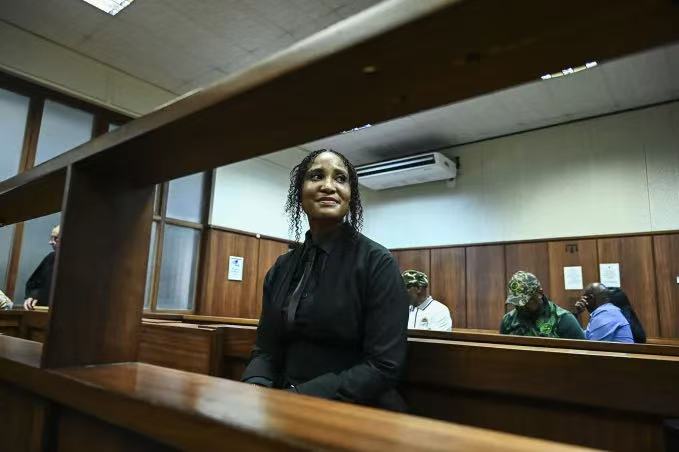
She said she believed the program was lawful and safe, adding that she now considers herself to have been manipulated to provide credibility to the recruitment scheme. Zuma-Sambudla has reportedly pledged full cooperation with investigators.
South African police confirmed they are probing whether crimes such as human trafficking, illegal recruitment, exploitation, or fraud may have contributed to the men’s movement to the conflict zone.
CNN has requested comment from Russia’s military and foreign ministry. In November, Russian Foreign Ministry spokesperson Maria Zakharova said Moscow had no information regarding the South African nationals and had not received a formal request from Pretoria.
She added that any official inquiry would be considered “in the spirit of strategic partnership” between Russia and South Africa. Russian authorities have previously denied coercing foreign nationals into military service.
Recruitment scam or covert Kremlin strategy?
Ukraine’s Foreign Minister Andrii Sybiha has claimed that more than 1,400 nationals from 36 African countries are currently fighting for Russia in Ukraine. He said many are sent directly into high-risk frontline assaults, where survival rates are low.
Precise casualty figures remain unclear, but Western intelligence agencies estimate that Russia has suffered more than one million casualties since its full-scale invasion of Ukraine in February 2022, including over 250,000 fatalities. The UK Ministry of Defence estimates that roughly 1,000 Russian soldiers are killed or wounded each day.
South Africa’s case reflects similar situations elsewhere on the continent. In Kenya, authorities are working to secure the release of more than 200 nationals believed to have been recruited into the conflict. Kenya’s foreign ministry has warned that recruitment networks remain active, while local media have reported that at least one Kenyan man was killed after being recruited under the pretense of civilian work.
Paul Mudau, a senior lecturer in constitutional and international law at the University of South Africa, said scammers often handle the initial approach through apps such as Telegram or Facebook.
“Once recruits arrive,” Mudau told CNN, “they are detained by Russian authorities, forced to sign contracts in a foreign language, and deployed with little or no military training.”
This article was first published on CNN