Ukrainian forces have withdrawn from the front-line town of Vuhledar in Donetsk Oblast, military officials confirmed on October 2, marking the end of nearly two years of fierce fighting over one of the most strategically important positions in southern Donetsk.
In a statement, the Khortytsia group of forces said that Ukraine’s high command had approved a tactical maneuver to pull units out of the town in order to preserve lives and equipment.
“The higher command authorized a maneuver to withdraw units from Vuhledar in order to save personnel and military equipment, and take up positions for further operations,” the statement said.
Vuhledar had been defended primarily by Ukraine’s 72nd Mechanized Brigade, which held the town since the early months of Russia’s full-scale invasion in 2022.
Over that period, Russian forces repeatedly attempted to seize the elevated settlement, suffering heavy losses in several failed assaults that made Vuhledar a symbol of Ukrainian resistance in the south of Donetsk Oblast.
In recent weeks, however, Russian pressure intensified significantly. Ukrainian military officials said Moscow committed additional reserves and sought to capture the town “at any cost,” focusing attacks on Vuhledar’s flanks in an effort to encircle Ukrainian defenders. According to the military, this relentless pressure exhausted defending units and created a growing risk of encirclement.
“As a result of the enemy’s actions, there was a threat of the town being encircled,” the Khortytsia group said, explaining the decision to withdraw.
Local authorities confirmed that Russian troops entered parts of Vuhledar on October 1, while fighting was still ongoing at the time.
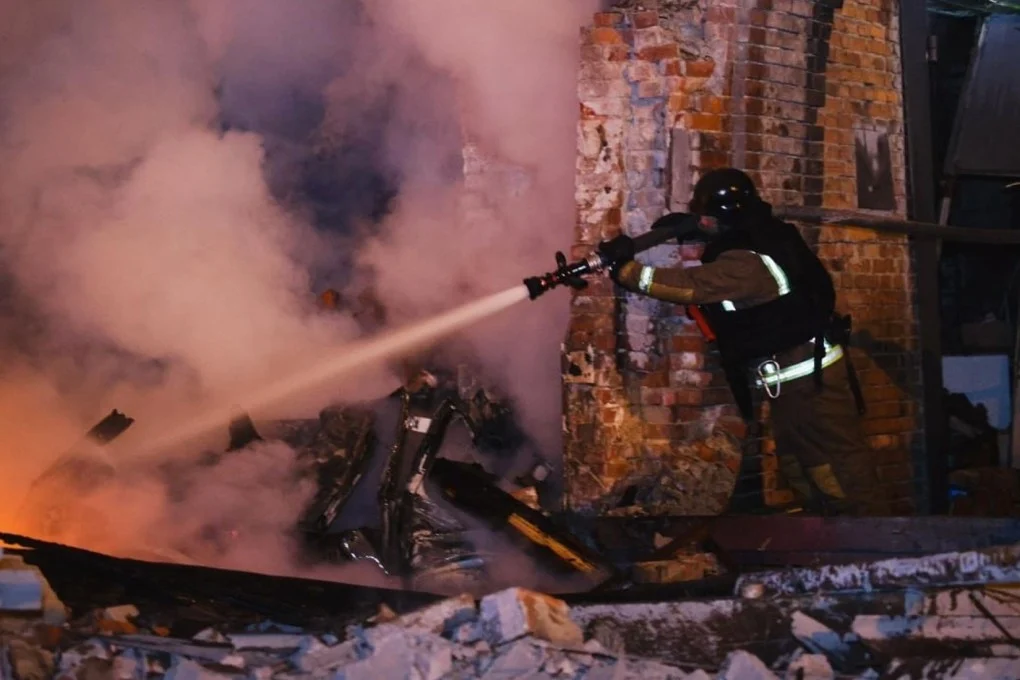
The withdrawal the following day formalized Ukraine’s pullback from the ruined town, which has been heavily damaged by months of artillery strikes, air attacks, and close-quarters combat.
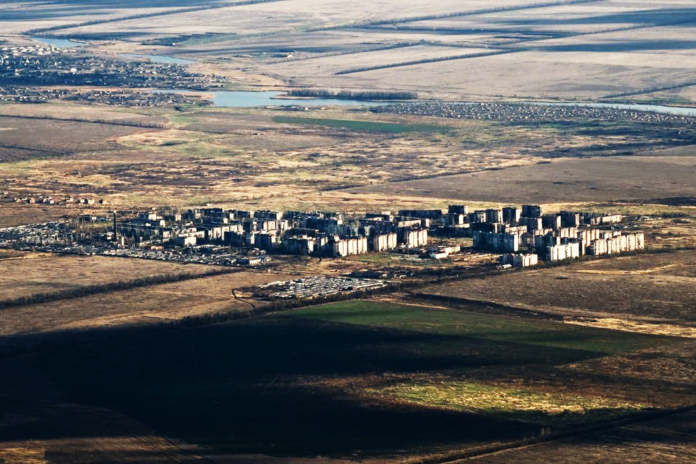
Vuhledar lies about 50 kilometers (30 miles) southwest of Russian-occupied Donetsk and roughly 40 kilometers (25 miles) east of the administrative border with Zaporizhzhia Oblast.
Its location has given it outsized military importance throughout the war. The town sits north of a key road junction linking the O-0532 road toward Vodiane and Kostiantynivka, a smaller paved road toward Kurakhove, and the partly occupied T-0509 highway running toward Velyka Novosilka.
Because of this network, Vuhledar has served as a crucial logistical hub for Ukrainian forces defending the southern flank of Kurakhove.
“It is, therefore, a key logistic point for Ukrainian forces defending the southern flank of Kurakhove,” Federico Borsari, a fellow at the Center for European Policy Analysis (CEPA), told the Kyiv Independent last month.
The town also represented the last heavily fortified urban position before the village of Velyka Novosilka and the wider southern portion of Donetsk Oblast still under Ukrainian control. Its loss could complicate Ukraine’s defensive posture in the area, forcing troops to rely on less-prepared positions further north and west.
At the same time, control of the area around Vuhledar is critical for Russian forces seeking to advance westward. The occupied section of the T-0509 highway, which runs south of the town, is considered essential for Russian logistics and maneuvering in the southern Donetsk direction.
While the withdrawal marks a setback, Ukrainian officials framed it as a calculated decision rather than a collapse, stressing that forces were repositioned to continue defensive and offensive operations elsewhere along the front.
As fighting intensifies across eastern and southern Ukraine, Vuhledar’s fall underscores the growing pressure on Ukrainian defenses amid Russia’s renewed push on multiple axes.