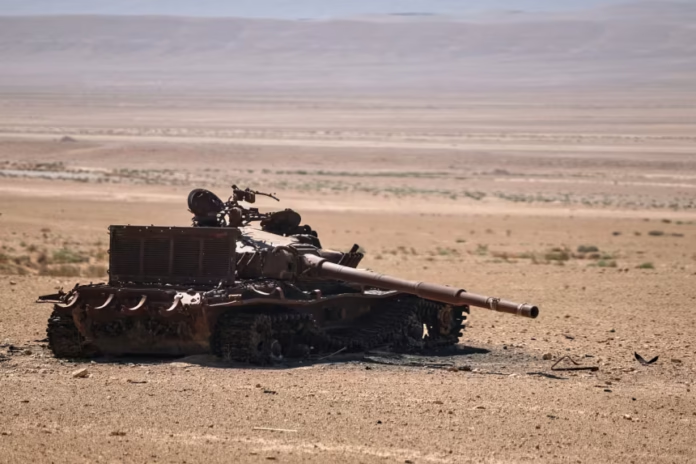
The deaths of two US Army soldiers and a civilian interpreter in Syria have once again drawn attention to the dangers facing American forces deployed in the Middle East. The incident, which occurred during a counter terrorism mission, highlights how volatile conditions remain on the ground even as ISIS no longer dominates headlines. The news that US soldiers killed in Syria were targeted during what was meant to be a routine engagement has sparked renewed debate about America’s continued military presence in the region.
According to the US Department of Defense, the attack happened while American troops were carrying out a key leader engagement alongside partner forces. Three additional personnel were wounded and evacuated for medical treatment. Pentagon officials confirmed that the attacker was killed during the response by allied forces.
US troops were conducting a joint patrol with Syrian partner forces in central Syria when they came under fire. The patrol was part of ongoing counter ISIS operations aimed at preventing the extremist group from regrouping or launching new attacks. These missions often involve coordination with local forces and community leaders to maintain stability in contested areas.
Following the attack, military aircraft and helicopters were seen operating overhead as wounded personnel were evacuated to the US base at al Tanf near the Iraqi border. Traffic along a major highway connecting Damascus and Deir Ezzor was temporarily halted, underscoring the seriousness of the security situation.
Defense officials said the names of the victims are being withheld until their families are notified, a standard practice following combat casualties.
Although ISIS lost its territorial stronghold years ago, US military leaders have repeatedly warned that the group remains a threat. Small cells continue to operate in remote areas, exploiting weak governance and ongoing conflict. American troops in Syria focus on intelligence sharing, training partner forces, and disrupting extremist networks before they can rebuild.
The deaths of US soldiers killed in Syria serve as a reminder that these missions are far from risk free. Even routine patrols can quickly turn deadly, especially in regions where multiple armed groups operate and loyalties shift.
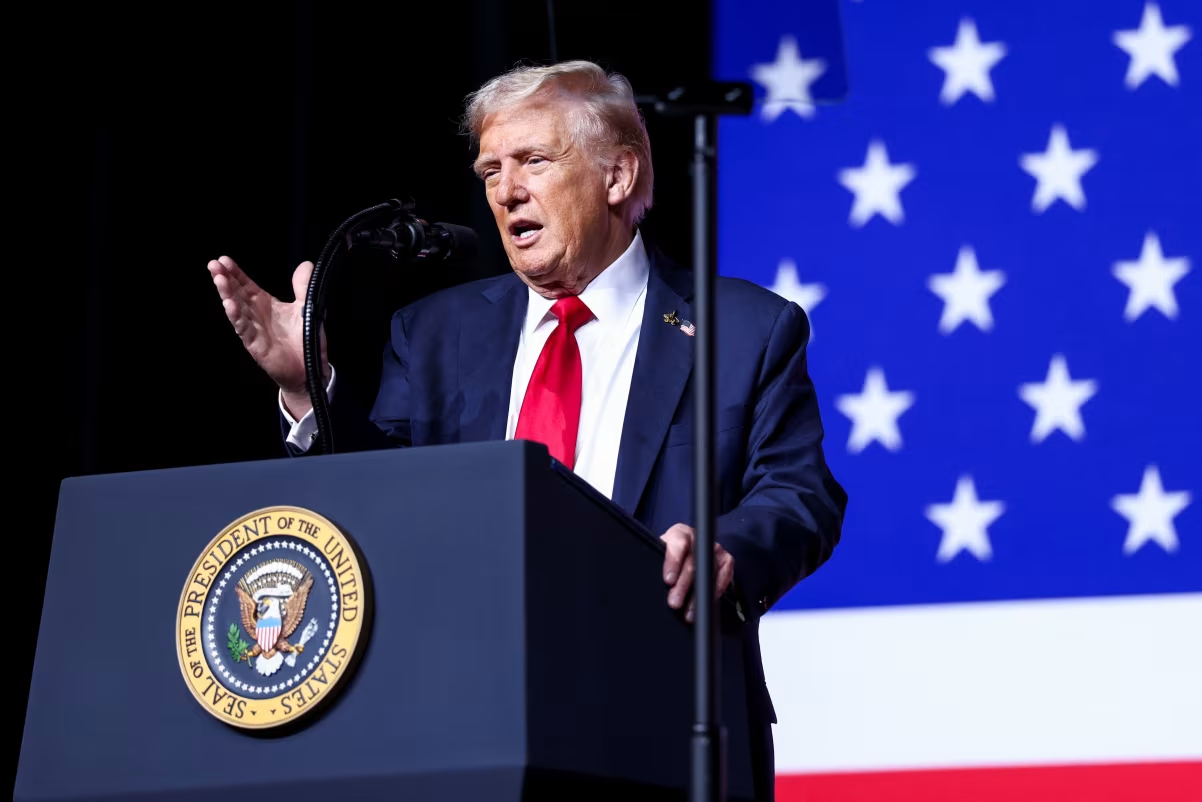
US Defense Secretary Pete Hegseth issued a forceful statement following the attack, emphasizing that those who target American personnel will face decisive consequences. His comments reflect a broader message the US government has consistently delivered in recent years, that attacks on US forces will not go unanswered.
Such statements are aimed not only at the attackers themselves but also at militias and extremist groups that may be considering similar actions. They are intended to reinforce deterrence while reassuring allies and military families that the safety of US personnel remains a top priority.
The incident is likely to reignite political debate in Washington about the scope and duration of US military involvement in Syria. Critics argue that American troops are being placed in harm’s way without a clear end goal, while supporters say their presence is essential to preventing a resurgence of ISIS and maintaining regional stability.
For military families, these losses are deeply personal. Each casualty underscores the human cost of overseas deployments and the reality that even limited missions carry significant danger.
The deaths of US soldiers killed in Syria underscore the fragile security environment that persists years after the peak of the ISIS conflict. While American forces play a critical role in counter terrorism efforts, the risks they face remain high. As investigations continue and families mourn their loved ones, the incident serves as a sobering reminder that the fight against extremism is ongoing and that US involvement in Syria continues to carry serious consequences.