The ongoing US drug boat strikes in the Caribbean Sea and the eastern Pacific have drawn global attention, not only for the scale of the operations but also for the troubling questions they raise about what happens to survivors. As the US military intensifies its campaign against suspected drug trafficking vessels, the treatment of those who live through the initial attacks has become a major point of debate. This sits at the center of a growing political, legal, and moral controversy.
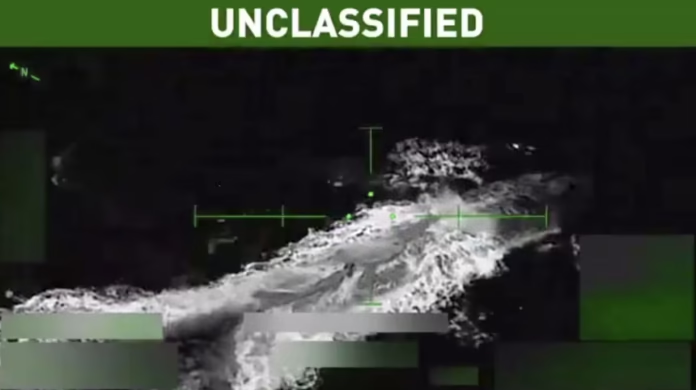
Since the campaign began, at least five people have survived explosions that destroyed their vessels and killed their crewmates. What happened after those strikes paints a complex picture. Two survivors were detained and repatriated. Another survivor was left drifting at sea and is presumed dead. The final two were killed in a follow-up strike while clinging to a damaged boat, a decision now under intense investigation.
So far, the US military says its overall protocol has not changed. But from the outside, the inconsistencies have raised serious questions about accountability and intent behind the US drug boat strikes.
The most controversial incident happened on September 2. After the first explosion disabled a suspected drug vessel, two survivors were left hanging on to the wreckage. Rather than rescuing them, military officials ordered a second strike that killed them. Adm. Frank Bradley, the commander overseeing the mission at the time, told lawmakers he believed the damaged vessel still contained cocaine and could have floated to safety. In his view, destroying it was necessary.
Critics argue that human lives should have been the priority. Legal experts say the survivors should have been considered out of the fight and therefore protected under the laws of war. The idea that people clinging to debris were treated as active threats struck many observers as deeply troubling.
Just weeks later, the military found itself in a nearly identical scenario. On October 16, a suspected narco-submarine was attacked, killing two crewmen. Two others survived. This time, the US retrieved the survivors and sent them back to their home countries. The shift in actions prompted further confusion. Why rescue survivors in one case but not the other?
Reports later revealed that Pentagon lawyers had even floated the idea of sending the rescued men to a harsh prison in El Salvador to keep them out of the US legal system. State Department officials quickly rejected the proposal, calling it unacceptable.
The pace of operations has slowed, but the scrutiny has not. A recent strike left another survivor lost at sea, and officials now acknowledge that the person is presumed dead.
As debates continue, what is clear is that the US drug boat strikes have opened a wide and uncomfortable discussion about human rights, military authority, and the boundaries of international law.
The US government insists its protocol has remained the same throughout this campaign, but the varied and sometimes disturbing outcomes for survivors tell a different story. As pressure grows from lawmakers, advocates, and international observers, the handling of survivors will likely remain a central focus in the broader debate over US drug boat strikes and the future of military counter-narcotics operations.