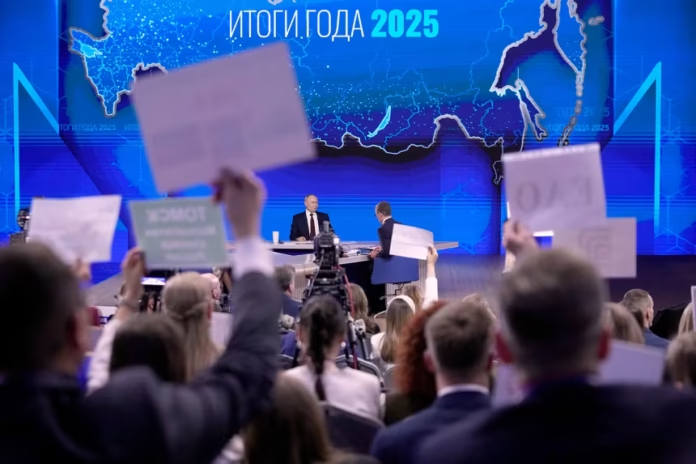
Russia’s annual marathon appearance by President Vladimir Putin is usually part policy briefing, part public relations exercise. The Putin year end press conference once again followed that familiar pattern, shifting between global power politics and narrow domestic concerns. Yet this year’s event carried a sharper edge, shaped by the grinding war in Ukraine and a changing international backdrop that is steadily working against Moscow.
The timing was notable. Just days earlier, European leaders approved a massive 105 billion dollar interest free loan package for Ukraine, designed to keep Kyiv financially and militarily afloat well into next year. As the conflict approaches its fourth year, the press conference became less about reassurance and more about justification.
During the hours long session, Putin painted a familiar picture of progress on the battlefield. He claimed Russian forces were advancing along the front line and cited a string of towns and villages that Moscow says it now controls, either fully or partially. These claims echoed official military briefings, though independent verification remains difficult.
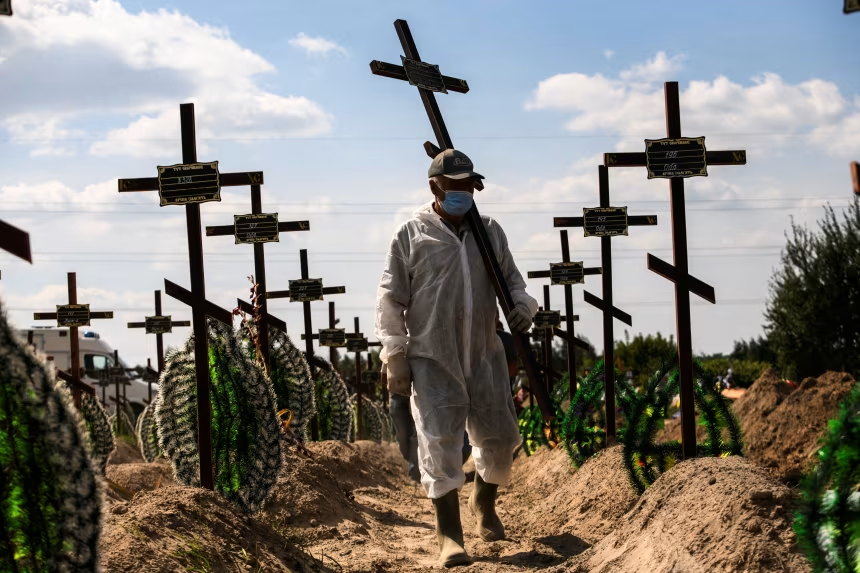
What stood out was Putin’s tone. He rejected responsibility for the war’s staggering human cost, insisting once again that Russia did not start the conflict. This assertion runs counter to the widely documented reality of Russia’s full scale invasion of Ukraine in February 2022, but it remains central to the Kremlin’s narrative at home.
The Putin year end press conference also revealed a leader still deeply resentful of the West. Putin returned to long standing grievances about NATO expansion, arguing that Russia had been disrespected and misled since the end of the Cold War. In his telling, Moscow’s actions are a response to broken promises rather than a cause of instability.
Despite the combative language, Putin left the door open, at least rhetorically, to ending the war. He said Russia was willing to pursue a peaceful settlement based on principles he outlined earlier in the year. However, those principles include demands that Ukraine and its allies have repeatedly rejected.
When Putin speaks of addressing the “root causes” of the conflict, he is referring to conditions such as Ukraine’s withdrawal from occupied eastern regions, a permanent halt to NATO expansion, and sweeping political changes in Kyiv. These are not minor concessions but core issues that strike at Ukraine’s sovereignty.
This makes Putin’s peace messaging deeply ambiguous. On one hand, he signals openness to negotiation. On the other, he ties that openness to demands that amount to a Russian victory at the negotiating table.
Putin’s repeated complaints about NATO deserve scrutiny. He argued that Western actions forced Russia’s hand and warned that similar military operations could be avoided if Moscow were treated with respect. Yet history suggests the opposite effect.
Russia’s invasion of Ukraine directly accelerated NATO’s expansion, with Finland and Sweden abandoning decades of military neutrality to join the alliance. Rather than shrinking Western influence, Moscow’s actions have strengthened it along Russia’s own borders.
This contradiction was left largely unaddressed during the Putin year end press conference, but it looms large for analysts trying to assess the Kremlin’s strategic thinking.
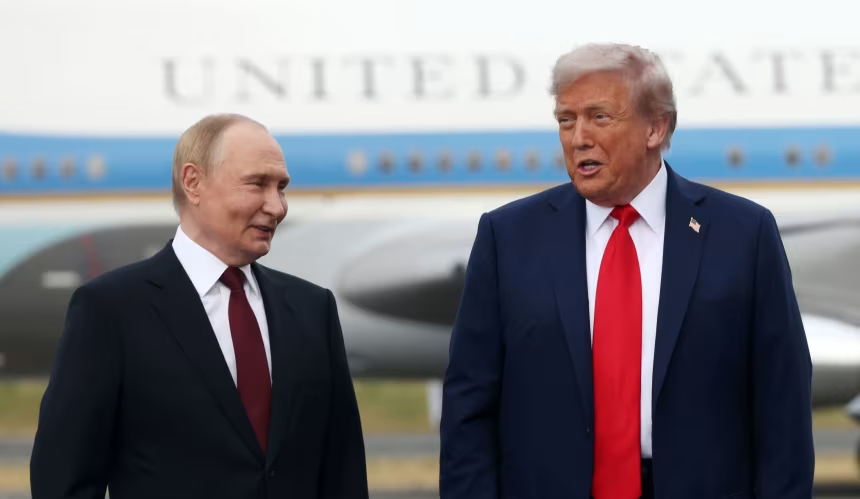
Another layer of complexity is the renewed diplomatic activity involving the United States. President Donald Trump’s administration has signaled interest in unconventional talks aimed at ending the war. Trump’s special envoy is expected to meet a senior Russian official to discuss possible frameworks for negotiations.
Putin welcomed these efforts publicly, praising Trump for what he described as serious attempts to resolve the conflict. Whether this praise reflects genuine openness or tactical messaging is unclear. Moscow may see value in prolonging talks while maintaining pressure on the battlefield.
The Putin year end press conference offered few surprises but plenty of insight. Putin remains defiant, resentful, and determined to frame the war as a defensive struggle forced upon Russia. His talk of peace is carefully hedged by demands that leave little room for compromise.
As Ukraine receives fresh financial backing from Europe and diplomatic maneuvering intensifies, the gap between rhetoric and reality remains wide. For now, Putin’s words suggest not a leader ready to retreat, but one still trying to reshape the outcome of a war that has already changed Europe’s security landscape.