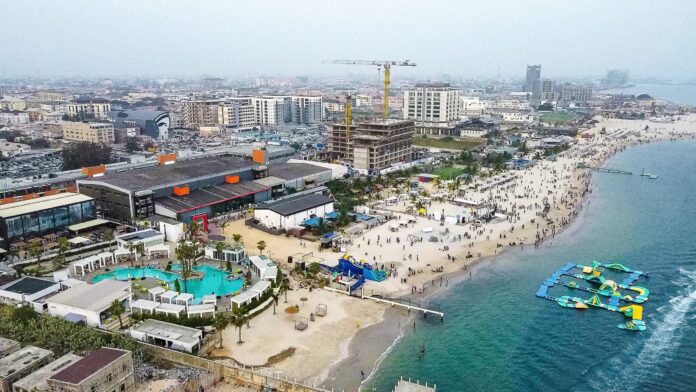
Nigeria is losing an estimated N20 billion ($13 million) every day as ageing port infrastructure, congestion, and systemic inefficiencies push maritime traffic to neighbouring West African ports, according to maritime law expert Olisa Agbakoba, a Senior Advocate of Nigeria.
Despite being West Africa’s largest economy and possessing an 853-kilometre coastline far longer than that of Ghana, Togo, or Benin—Nigeria continues to see shipping firms reroute cargo to ports in Cotonou, Tema, and Lomé, where operations are more efficient.
Foreign Ships Engaged in Illicit Trade
Agbakoba warned that more than 25,000 foreign ships are involved in illicit commercial activity in Nigeria’s coastal waters, undermining national security and depriving the country of substantial revenue.
Citing a recent market assessment by Dutch consultancy Dynanmar, he said around 80% of containers destined for West and Central Africa are headed for Nigeria, yet “less than 20% actually arrive” due to deteriorated infrastructure at key ports such as Lagos and Port Harcourt.
“A recent report by Dynanmar shows that Nigeria loses approximately N20bn daily at the ports due to poor infrastructure and inefficiencies, with most revenue flowing to neighbouring ports,” he said.
Dangote: Domestic Port Charges Too High
Africa’s richest man, Aliko Dangote, has also raised concerns about Nigeria’s port costs.
In July, he warned that oil marketers pay more to lift refined products from his Lekki Refinery than to source them from offshore storage depots in neighboring countries like Togo.
Multiple domestic port fees charged at both the loading and discharge points—are pushing businesses to opt for offshore alternatives such as the Lomé Floating Storage Terminal, Dangote said.
Nigeria’s Untapped Port Potential
Agbakoba argued that Nigeria should match the port capacity ambitions of Morocco, which is currently constructing one of Africa’s largest deep-sea ports to expand trade links with Europe, the Middle East, and North Africa.
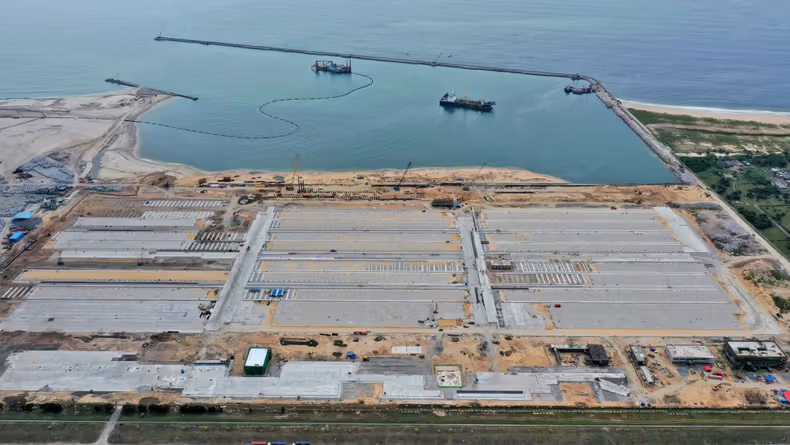 He praised the Lekki Deep Sea Port in Lagos as a model for what is possible, saying it is already attracting more than $20 billion in investment and could serve as a blueprint for modernising other ports.
“Imagine what would come if all other ports were operating optimally,” he said.
Key Ports Still Neglected
Despite its maritime potential, several major Nigerian ports remain underdeveloped:
Apapa Port — requires significant refurbishment to operate at full capacity.
Onitsha River Port — largely inactive despite its strategic importance for inland trade and its potential to decongest Lagos ports.
Analysts say Nigeria’s port challenges stem from decades of underinvestment, inadequate dredging, cumbersome customs processes, and the absence of a coordinated maritime strategy.
Without urgent reforms, they warn, the country risks losing even more regional market share to smaller but better-managed ports across West Africa.
This article was first published on Business Insider Africa