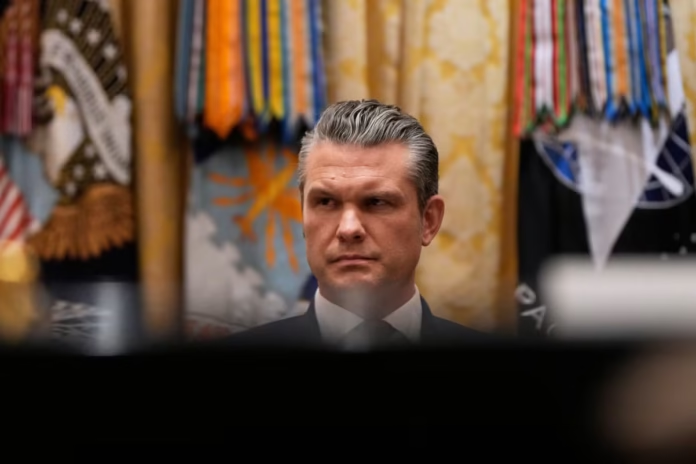
When a top official survives a brutal confirmation hearing and multiple personal controversies, the usual outcome is a swift resignation. Pete Hegseth has broken that pattern. Despite clashes with lawmakers, ethics concerns, and internal Pentagon alarm, he remains firmly in his position as US Defense Secretary. His survival reflects both his own combative style and the administration’s willingness to challenge long-standing norms around accountability and conduct.
One of the biggest issues fueling criticism is the revelation that Hegseth used an unsecured Signal chat to share sensitive operational details about a planned strike on Houthi militants in Yemen. Messages included timing, mission details, and other information taken from what began as a classified communication. The situation escalated when a journalist was mistakenly added to the chat, raising fears that military operations or personnel could have been compromised.
Investigators did not conclude that Hegseth intentionally leaked classified information, since he technically has declassification authority. However, they determined that he violated protocol and exposed highly sensitive data in a way that could have risked American service members. Lawmakers and security experts described the conduct as reckless and unacceptable for someone in charge of the Pentagon.
At the same time, Hegseth is being pressed on the details of a US strike in the Caribbean that targeted a suspected drug trafficking vessel. Reports indicate that after an initial attack disabled the boat, a second strike was launched, killing survivors in the water. Critics argue that targeting incapacitated individuals may violate international law and constitute a war crime.
Hegseth insists he only authorized the first strike and was unaware of the follow-up attack. He places responsibility on the commander overseeing the mission and describes the incident as a consequence of the fog of war. Still, the allegations have triggered concerns even among usually supportive lawmakers, with one Republican senator calling his statements either dishonest or incompetent.
Despite the mounting pressure, Hegseth continues to enjoy strong support from President Trump. Part of the reason is that Hegseth embodies the administration’s preferred approach to defense policy: aggressive, unfiltered, and unafraid to cast aside traditional Pentagon caution. He refers to himself as a secretary of war and has undertaken sweeping internal changes that favor loyalists and hardliners.
Another factor is the administration’s broader shift away from traditional oversight structures. Inspectors general have been weakened, and longstanding review mechanisms have been sidelined. In this environment, dramatic or norm-breaking behavior does not necessarily produce political consequences. Removing Hegseth could also reopen deeper investigations into the Pentagon’s conduct, which the administration may want to avoid.
The controversies surrounding Hegseth have created unease within the military and among allies. Sharing operational details on unsecured apps damages the credibility and discipline expected from the Pentagon’s top civilian leader. Questions surrounding the Caribbean strike raise moral and legal concerns that could affect US relationships abroad, especially in regions where cooperation relies on strict adherence to international law.
Within the ranks, some service members worry about the long-term impact of inconsistent leadership and blurred standards. Sensitive missions require trust and clarity. When top officials appear to disregard those principles, it risks weakening internal cohesion and inviting broader skepticism.
Hegseth remains in office, but the scrutiny around him is far from over. The issues involving Signal chats and contested military strikes are serious enough that, in earlier administrations, they might have forced a resignation. Yet the political climate has changed. Hegseth under fire has become both a headline and a defining feature of a Pentagon navigating new political realities. Whether his tenure strengthens US security or undermines it will be a question debated long after the investigations conclude.