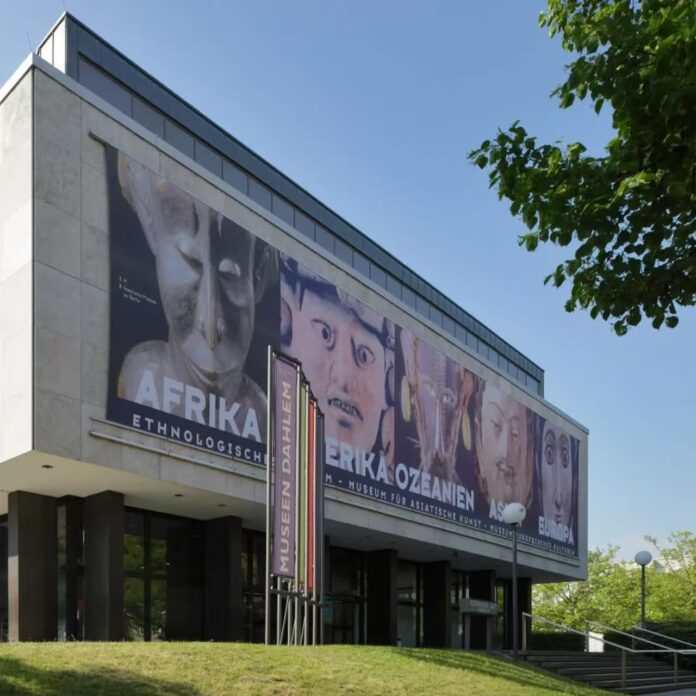
Germany has decided to return four cultural objects from the Ethnological Museum in Berlin to the people of Akpini in Kpando, Ghana, marking an important development in ongoing efforts to address the legacy of colonial-era collections.
The objects, two drums and two horns containing human remains were taken during the late 19th century amid the violent expansion of German colonial rule in what is now Ghana’s Volta Region.
At the time, the area formed part of German Togoland, a colony established in 1884 that remained under German control until the end of World War I. Cultural objects and human remains were often removed during military campaigns and subsequently displayed or stored in European museums.
Their return represents more than a transfer of artifacts. It reflects growing international recognition that human remains and sacred cultural items are deeply connected to the identity, spiritual life, and traditions of the communities from which they originate.
Marion Ackermann, Chair of the Prussian Cultural Heritage Foundation, has emphasized that human remains and culturally significant objects do not belong in foreign museum collections, but with the communities to whom they hold meaning.
In recent years, Germany has intensified efforts to review and return cultural property acquired during the colonial era. Restitutions have already taken place with countries such as Nigeria and Namibia, and further returns are under discussion. These initiatives form part of a broader reassessment of museum collections and historical responsibility.
The return of the items to Akpini in Kpando reflects a broader shift toward transparency, dialogue, and ethical stewardship of cultural heritage, while contributing to the strengthening of long-term cultural partnerships between Germany and Ghana.
Colonialism and Its Legacy
The era of European colonialism began in the 15th century, when Portugal and Spain established trade outposts and military bases beyond Europe. Over time, other powers including the Netherlands, Britain, France, Belgium, Germany, Italy, Russia, Japan, and the United States expanded territorial control abroad, often through armed force.
By the late 19th century, large parts of Africa, Asia, and the Pacific had been divided among competing colonial empires, primarily for resource extraction and strategic influence.
Germany entered colonial expansion relatively late, annexing territories in Africa and Asia beginning in 1884. By 1914, measured by total land area, Germany had the third-largest colonial empire after the United Kingdom and France.
Its colonies included territories in present-day Burundi, Rwanda, Tanzania, Namibia, Cameroon, Togo, parts of Ghana, China, Papua New Guinea, and several islands in the western Pacific. Following Germany’s defeat in World War I, all of its colonies were transferred to other colonial powers.
Decolonisation unfolded in several phases during the 19th and 20th centuries. While many countries in Latin America gained independence in the 1800s, most African nations achieved independence during the 1960s.
Despite political independence, significant disparities persisted between former colonial powers and former colonies, particularly in economic development, political influence, and access to global resources. These imbalances continue to shape international relations and development cooperation.
The Colonial Past
In Germany, post World War II public discourse focused primarily on addressing the Nazi period, while the country’s colonial history received comparatively little attention. In recent years, however, critical engagement with the colonial era has increased in politics, academia, museums, and broader public debate.
Even so, discussions in public education and cultural institutions continue to examine how deeply modern European societies remain shaped by colonial-era power structures and perspectives.
In May 2021, Germany and Namibia initialed a Joint Declaration addressing the genocide committed against the Nama and Herero communities during German colonial rule. Although the declaration has not yet been formally signed, Germany has stated its intention to ask Namibia for forgiveness.
Cultural Heritage and Restitution
During the colonial period, cultural objects, sacred items, and human remains were frequently removed from their communities and transported to Europe. Many entered museum collections as conquest trophies, scientific specimens, or ethnographic materials, often without consent or proper records of their cultural importance. Institutions such as the Ethnological Museum in Berlin became repositories for these collections.
For decades, these materials were approached primarily as research objects, detached from the living cultures to which they belonged. In recent years, sustained scholarly research, public discussion, and dialogue with descendant communities have prompted a reassessment of these practices.
Germany’s current restitution initiatives form part of a broader international effort to reconsider colonial-era collections and museum ethics. The return of cultural heritage is increasingly viewed not only as a diplomatic measure, but as an acknowledgment of historical responsibility and an effort to restore cultural continuity and dignity.
This evolving approach recognizes that while injustices of the colonial era cannot be reversed, addressing their ongoing consequences remains central to building equitable and respectful relationships today.