NEW YORK — A New York judge ruled Tuesday that Donald Trump committed fraud for years while constructing the real estate empire that propelled him to celebrity status and eventually the White House.
Judge Arthur Engoron, ruling in a civil lawsuit filed by New York Attorney General Letitia James, found that the former president and the Trump Organization systematically deceived banks, insurers and other counterparties by grossly inflating the value of assets and exaggerating Trump’s net worth on financial documents used to secure loans, insurance coverage and favorable business terms.
Judge Orders Sanctions Against Trump Businesses
As punishment, Engoron ordered that some of Trump’s business licenses be revoked, a move that could make it difficult or even impossible for certain Trump entities to continue operating in New York. The judge also said an independent monitor would remain in place to oversee the Trump Organization’s operations.
A spokesperson for Trump did not immediately respond to a request for comment. Trump has consistently denied any wrongdoing.
A Major Blow to Trump’s Business Image
The ruling, issued just days before the start of a non-jury trial in James’ case, represents the most sweeping legal rebuke yet of Trump’s carefully cultivated image as a savvy billionaire developer and dealmaker turned political powerhouse.
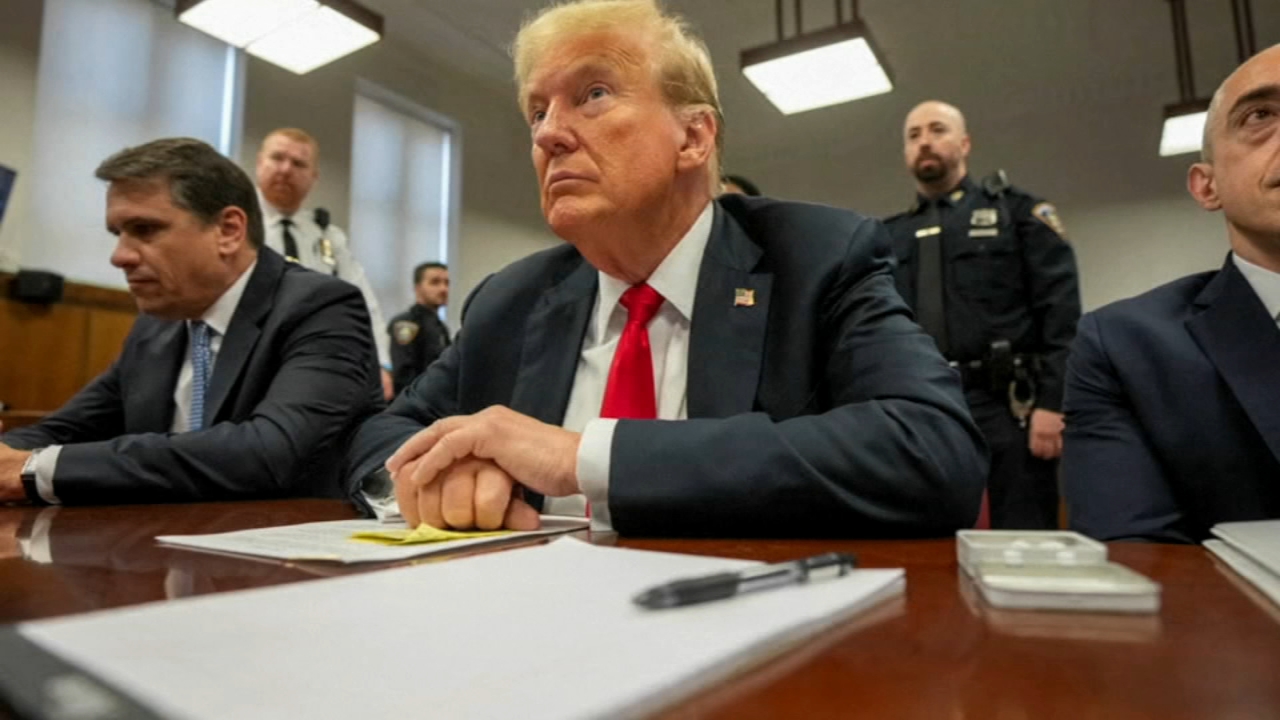 Engoron found that Trump, his company and senior executives went far beyond boastful exaggeration, repeatedly misrepresenting asset values in annual statements of financial condition. According to the judge, those misstatements produced tangible benefits, including lower insurance premiums and more favorable loan terms.
“These tactics crossed the line and violated the law,” Engoron wrote, rejecting Trump’s argument that disclaimers included in the financial statements shielded him from liability.
‘A Fantasy World,’ the Judge Says
In a sharply worded 35-page decision, Engoron dismissed what he described as the defendants’ distorted view of reality.
“In defendants’ world: rent-regulated apartments are worth the same as unregulated apartments; restricted land is worth the same as unrestricted land; restrictions can evaporate into thin air; a disclaimer by one party casting responsibility on another party exonerates the other party’s lies,” Engoron wrote. “That is a fantasy world, not the real world.”
Manhattan prosecutors previously examined whether to bring criminal charges over the same conduct but declined, leaving James to pursue civil penalties that could significantly disrupt Trump’s and his family’s business operations in the state.
Summary Judgment Resolves Core Claim
Engoron’s decision came during a phase of the case known as summary judgment, resolving the central fraud claim in James’ lawsuit. Six additional claims remain unresolved.
The judge is scheduled to preside over a non-jury trial beginning Oct. 2, at which he will consider the remaining allegations and determine what additional penalties, if any, should be imposed. James is seeking $250 million in penalties and a permanent ban on Trump doing business in New York. Engoron has said the trial could extend into December.
Trump’s attorneys had urged the judge to dismiss the case outright, arguments Engoron rejected. The defense claimed James lacked the legal authority to sue because Trump’s conduct caused no demonstrable harm to the public. They also argued that many of the claims were barred by statutes of limitation.
Engoron, noting he had “emphatically rejected” those arguments earlier, likened their repetition to being trapped in “the time loop in the film ‘Groundhog Day.’”
‘The Art of the Steal’
James, a Democrat, filed the lawsuit a year ago, alleging a long-running pattern of deception she branded “the art of the steal,” a play on Trump’s 1987 memoir, The Art of the Deal.
The suit accuses Trump and his company of routinely inflating the value of signature properties including skyscrapers, golf courses and his Mar-a-Lago estate in Florida to pad his net worth by billions of dollars.
Among the most striking allegations: Trump claimed his three-story penthouse apartment in Trump Tower was nearly three times its actual size and valued it at $327 million. According to James, no apartment in New York City has ever sold for anything close to that amount.
Inflated Valuations of Mar-a-Lago and Other Assets
Trump also valued Mar-a-Lago at as much as $739 million, more than ten times what James described as a reasonable estimate. That valuation was based on the premise that the Palm Beach property could be developed for residential use, even though deed restrictions explicitly prohibit such development, the lawsuit said.
Trump has repeatedly denied wrongdoing, arguing in sworn testimony that the contents of his financial statements were irrelevant because they carried disclaimers advising readers not to rely on them.
“You don’t have a case and you should drop this case,” Trump told James during an April deposition.
“Do you know the banks were fully paid? Do you know the banks made a lot of money?” Trump testified. “I don’t believe I ever got even a default notice — even during COVID, the banks were all paid. And yet you’re suing on behalf of banks. It’s crazy. The whole case is crazy.”
Engoron dismissed that defense, saying disclaimers cannot excuse falsehoods.
“The disclaimer makes abundantly clear that Mr. Trump was fully responsible for the information contained within,” the judge wrote, adding that allowing disclaimers to “insulate liars from liability would completely undercut” the essential role financial statements play “in the real world.”
Legal Troubles Mount as Trump Campaigns
James’ lawsuit is one of several legal challenges confronting Trump as he campaigns for a return to the White House in 2024.
Over the past six months, Trump has been indicted four times: in Georgia and Washington, D.C., on charges related to efforts to overturn his 2020 election loss; in Florida, for allegedly mishandling classified documents; and in Manhattan, for falsifying business records tied to hush-money payments.
Separately, the Trump Organization was convicted last year in an unrelated criminal tax fraud case for helping executives evade taxes on luxury perks such as Manhattan apartments and high-end vehicles. The company was fined $1.6 million.
Trump’s longtime finance chief, Allen Weisselberg, pleaded guilty in that case and served five months in jail. Weisselberg is also a defendant in James’ civil lawsuit and provided sworn deposition testimony in May.
Potential Consequences for Trump and His Family
Although James’ lawsuit carries no risk of prison time, it could significantly complicate Trump’s ability to conduct real estate transactions and could cast a lasting shadow over his legacy as a developer.
James has asked Engoron to bar Trump and his three eldest children from ever running a New York-based company. She is also seeking a five-year prohibition on Trump and the Trump Organization entering into commercial real estate acquisitions, along with other sanctions. The $250 million in penalties she seeks represents what her office says are the ill-gotten gains from the alleged fraud.
James began scrutinizing Trump’s business practices in March 2019, shortly after taking office, following congressional testimony from Trump’s former personal lawyer Michael Cohen. Cohen told lawmakers that Trump routinely exaggerated his wealth on financial statements submitted to Deutsche Bank while seeking financing to purchase the NFL’s Buffalo Bills.
James’ office had previously sued Trump over the misuse of his charitable foundation. That case ended with Trump paying $2 million to a group of charities and the dissolution of the Trump Foundation, adding to the legal record now shaping the most consequential civil judgment yet against his business empire.