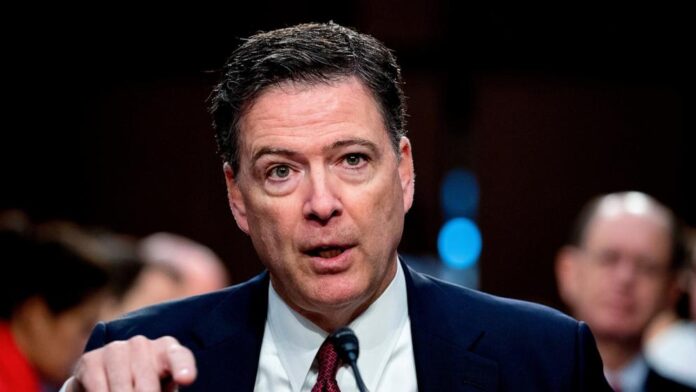
Federal prosecutors in Virginia appear to be facing mounting hurdles in the criminal case against former FBI Director James Comey, as questions swirl over the validity of the grand jury process that led to his indictment.
U.S. District Judge Michael Nachmanoff, a Biden appointee, scrutinized the events surrounding the September 25 charges during a Wednesday hearing, probing whether the grand jury ever fully considered the two-count indictment accusing Comey of lying to and obstructing Congress.
The original indictment included three proposed charges, one of which the grand jury rejected, prompting interim U.S. Attorney Lindsey Halligan to submit a narrower substitute indictment to a magistrate judge.
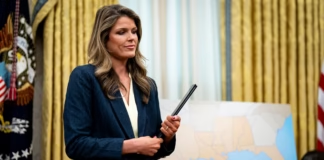
Nachmanoff’s focus was so sharp that he called Halligan to the courtroom lectern to explain whether any grand jurors beyond the foreperson were present when the revised indictment was presented.
Halligan, making her first substantive public remarks since the indictment, confirmed that only the foreperson and one other juror were present, leaving open the question of whether the full grand jury ever reviewed the substitute indictment.
“I just wanted to make sure the indictment had never been seen by the full grand jury,” Nachmanoff stated. Halligan’s confirmation was brief, lasting less than a minute before she returned to her seat.
The judge did not immediately indicate what action he might take regarding the procedural irregularity, but his intense scrutiny suggested it could be pivotal or even fatal to the government’s case.
Assistant U.S. Attorney Tyler Lemons, who handled most of the argument, said the substitute indictment was necessary after the grand jury declined one of Halligan’s proposed charges.
“They really had no other way to return it,” he explained. Despite this, Comey’s lawyer Michael Dreeben argued that the procedural misstep effectively nullified the indictment, noting that the statute of limitations expired on September 30. “There is no indictment,” Dreeben asserted, calling the error “tantamount to a complete bar” to prosecution.
Later, prosecutors filed a court brief defending their actions, arguing that the failure to present the revised indictment to the full grand jury did not warrant dismissal. “The government course of conduct here was permissible and proper,” they wrote, though they acknowledged that most grand jurors were not present. They also denied that Halligan’s remarks during the proceedings violated Comey’s rights.
The discussion over the indictment’s validity capped more than an hour of argument concerning whether President Donald Trump’s public calls for Comey’s prosecution, combined with Halligan’s unusual appointment, tainted the case with political motives.
Nachmanoff pressed prosecutors on whether career officials had advised against prosecuting Comey initially. Lemons repeatedly invoked internal deliberation protections, citing “privileged” work product from a possible declination memo outlining weaknesses in the case.
“I am aware of written correspondence debating whether charges should be brought,” Lemons said, acknowledging drafts of internal memos existed but refusing further detail.
The potential involvement of career prosecutors urging against the case could bolster Comey’s claim that the charges were politically motivated.
Dreeben emphasized this point, arguing that Trump’s public social media posts and pressure on Attorney General Pam Bondi exemplified a Justice Department acting at the president’s behest.
He cited Bondi’s prior handling of the Epstein investigation as an instance of following Trump’s directives over standard DOJ procedure.
“The case against Comey represents a blatant use of criminal justice to achieve political ends,” Dreeben said, pointing to a social media post showing Comey with an X over his face as a warning from the executive branch.
Prosecutors Defend Grand Jury Process as Apolitical
Prosecutors, led in court by Lemons, maintained that the grand jury’s actions were apolitical and based solely on the facts. “The defendant in this case was indicted because he lied to the Senate Judiciary Committee,” Lemons said, noting the grand jury returned a “true bill.” Nachmanoff interjected, questioning the procedural fairness of the grand jury process and its implications for Comey’s defense.
Judge Orders Release of Grand Jury Transcripts
Earlier in the week, a magistrate judge ordered prosecutors to release transcripts of Halligan’s grand jury appearance with Comey, an unusual step prompted by concerns she may have misled the jury. The ruling could provide grounds for Comey’s motion to dismiss the case. Nachmanoff allowed prosecutors an opportunity to appeal before ruling, signaling that a decision could come as early as next week.
Questions Raised Over Interim U.S. Attorney’s Authority
Complicating matters, the Comey case faces additional uncertainty over Halligan’s authority. The interim U.S. attorney, a former personal lawyer to Trump with no prior prosecutorial experience, was appointed shortly after Trump publicly demanded that Bondi target his political adversaries, including Comey. Halligan took control of the Eastern District of Virginia office days later, presenting the Comey case to the grand jury.
Indictment Issued Days Before Statute of Limitations Deadline
The indictment, issued just days before the statute of limitations would have barred prosecution, now stands on shaky procedural and legal footing.
Comey’s Legal Team Alleges Abuse of Power and Political Retaliation
With questions surrounding Halligan’s appointment and the grand jury process, Comey’s legal team argues the case is an abuse of power, brought in retaliation for his actions during Trump’s presidency and for previous investigations into the president’s campaign.
Prosecutor Resignation Fuels Public Concern
The controversy has already sparked resignations and public concern. Troy Edwards, a senior prosecutor in Alexandria and family member to Comey, resigned citing his oath to the Constitution.
Political Fallout and Uncertain Future of the Case
The unfolding legal drama highlights the unprecedented nature of the Justice Department’s recent political entanglements and raises questions about the future of the case against one of Trump’s most high-profile adversaries.