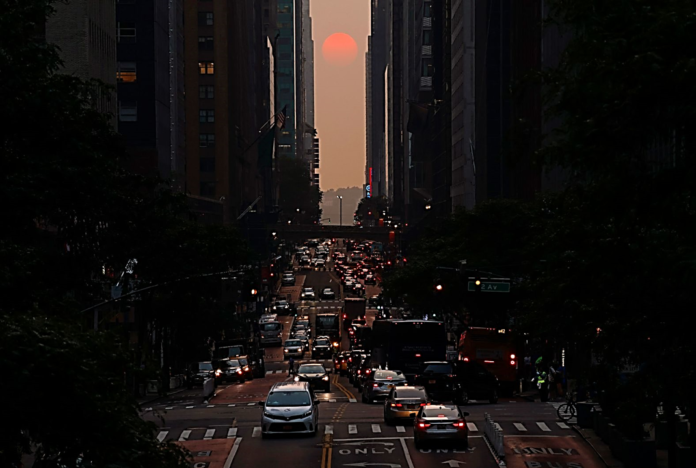
A vast plume of smoke from Quebec’s wildfires has blanketed parts of the eastern United States and Canada, grounding flights, closing schools and parks, and exposing more than 75 million people to dangerously poor air quality.
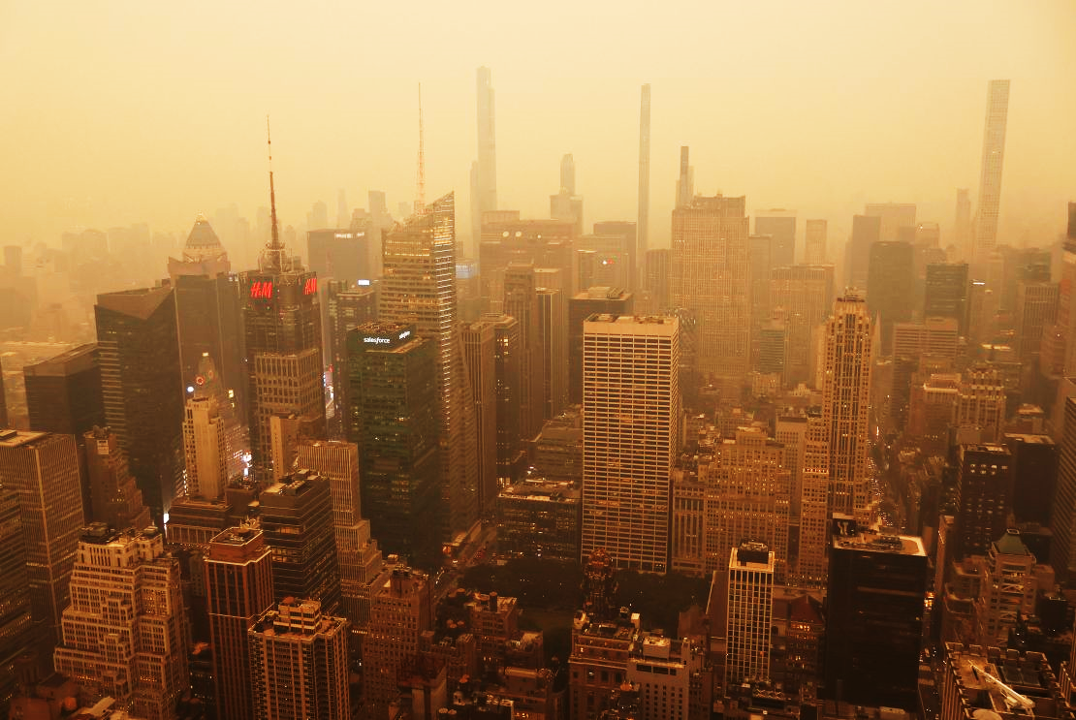
Cities from Maryland to Ottawa spent Wednesday shrouded in thick, orange-tinged haze that obscured skylines and pushed air-quality indexes (AQI) to levels rarely seen in North America. The heaviest smoke is expected to affect the Northeast, mid-Atlantic and parts of the Carolinas through at least Thursday.
New York City recorded an AQI of 484 on Wednesday afternoon a “hazardous” level and the city’s worst on record since the 1960s, Mayor Eric Adams said. Officials warned that conditions would worsen into the late evening before temporarily easing overnight, with another wave of smoke expected Thursday afternoon.
“This is not the day to train for a marathon or to do an outside event with your children,” Adams said, urging residents to remain indoors and use air purifiers if possible. He cautioned that smoke forecasts beyond 24 hours remain highly uncertain.
Schools, Sports and Events Shut Down
Across the region, schools canceled outdoor activities and events. Montgomery County Public Schools in Maryland suspended all outdoor programming through Thursday, citing health risks. More than 10 districts in central New York, including Rochester and Syracuse, did the same.
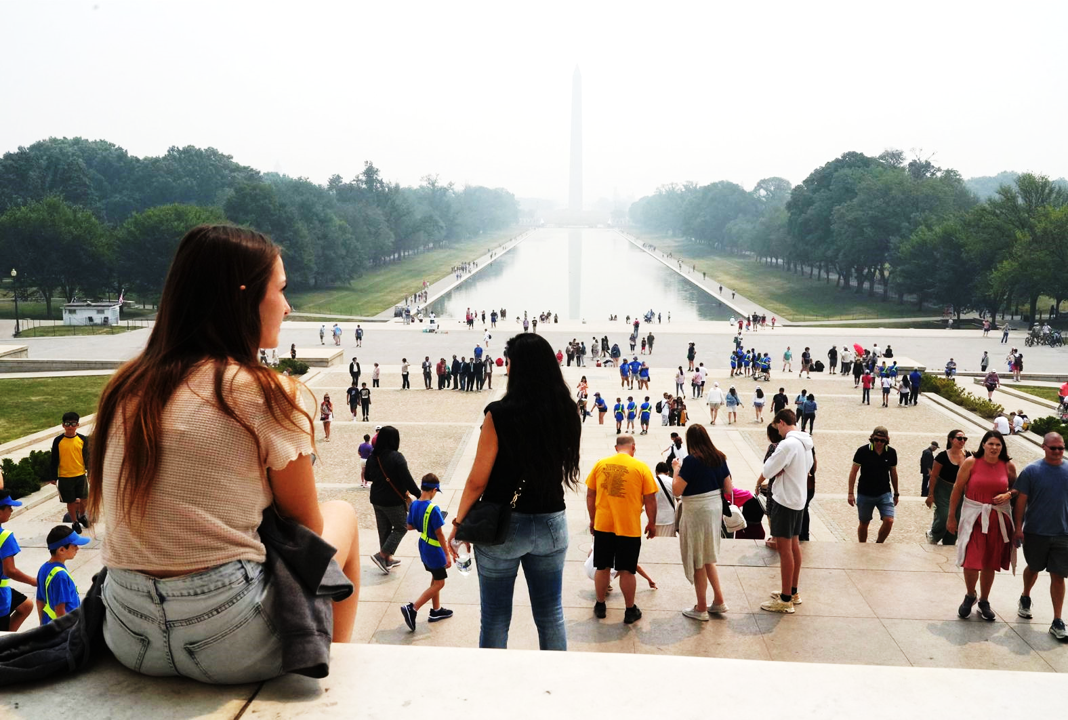
New York City, the nation’s largest school system canceled outdoor activities but kept schools open. A Westchester County district dismissed students early, while Monroe County closed its zoo and county parks.
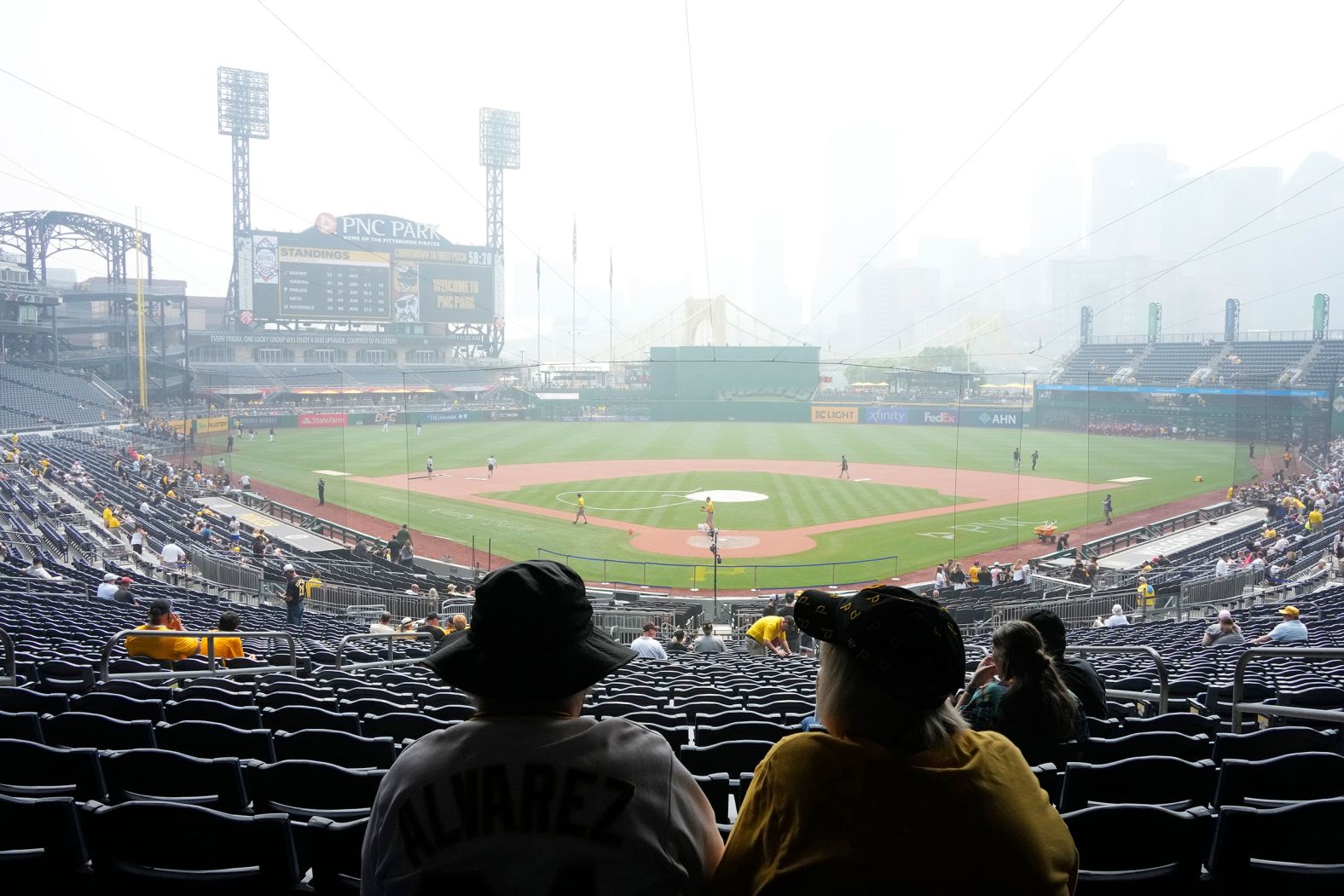
Professional sports were also disrupted. Major League Baseball postponed games in New York and Philadelphia, and at least three horse racing tracks along the East Coast suspended operations due to visibility and air-quality concerns.
Thick, orange-tinged haze settled over Yankee Stadium, and the smell of burning wood drifted through the concourses. The New York Yankees’ game against the Chicago White Sox and the Philadelphia Phillies’ matchup with the Detroit Tigers were both called off for safety reasons and rescheduled as doubleheaders.
At Yankee Stadium, some fans and stadium staff wore masks reminiscent of the pandemic era. Yankees manager Aaron Boone said he was shocked when he first stepped outside. “I actually walked outside about 2 o’clock and was like “whoa,” Boone said. White Sox manager Pedro Grifol praised the league’s decision: “These are health issues. At one point it was pretty bad out there kind of orange. They did the right thing.”
The Phillies had played the Tigers the night before under similar smoky skies, but by Wednesday afternoon, visibility was far worse. From the ballpark, the Philadelphia skyline was no longer visible.
Outside Yankee Stadium, some fans expressed disappointment but understanding. “It’s disappointing because this was one of the highlights of the trip,” said Malcolm, a visitor from Vancouver, British Columbia. “But I don’t want the players running around in this. It can’t be good for them.”
Minor league teams across the Northeast also canceled games, and the New York Racing Association suspended Thursday morning training at Belmont and Saratoga Race Course ahead of the Belmont Stakes. Decisions on live racing were postponed pending air quality reviews.
Even indoor events weren’t immune, reporters at Brooklyn’s Barclays Center noted that the smell of smoke was noticeable inside the arena during morning practice.
Local NFL teams, the New York Giants and Jets, moved workouts indoors, and youth sports leagues in New Jersey adjusted schedules based on air quality updates.
The poor conditions also forced the postponement of a National Women’s Soccer League match in New Jersey and a WNBA game between the New York Liberty and Minnesota Lynx in Brooklyn even though the latter was indoors.
Wildfire smoke disrupting sports schedules is not unprecedented as MLB faced similar challenges in 2020, when poor air quality from West Coast fires forced the Mariners and Giants to relocate a series to San Francisco.
Flights Delayed as Haze Reduces Visibility
The Federal Aviation Administration (FAA) issued a ground stop for incoming flights to LaGuardia Airport and delayed departures to Newark Liberty International Airport until late Wednesday night, citing reduced visibility. As of 7:30 p.m. ET, nearly 150 U.S. flights had been canceled and close to 4,000 delayed, according to FlightAware.
“Boston, the New York metro area, Philadelphia and the D.C. region are all experiencing smoke that could impact travel,” said Sam Ausby, a national traffic management officer at the FAA.
Commercial aircraft can operate safely without visual reference, but visibility constraints can significantly slow airport operations.
Health Officials Warn of Acute and Long-Term Risks
Air quality in several major metro areas including Philadelphia, Jersey City and New Haven reached “very unhealthy” levels between 200 and 300 on Wednesday. Ottawa, meanwhile, experienced some of the worst conditions on the continent.
Health officials warned that vulnerable groups including older adults, children, pregnant people and those with lung or heart conditions face the highest risk.
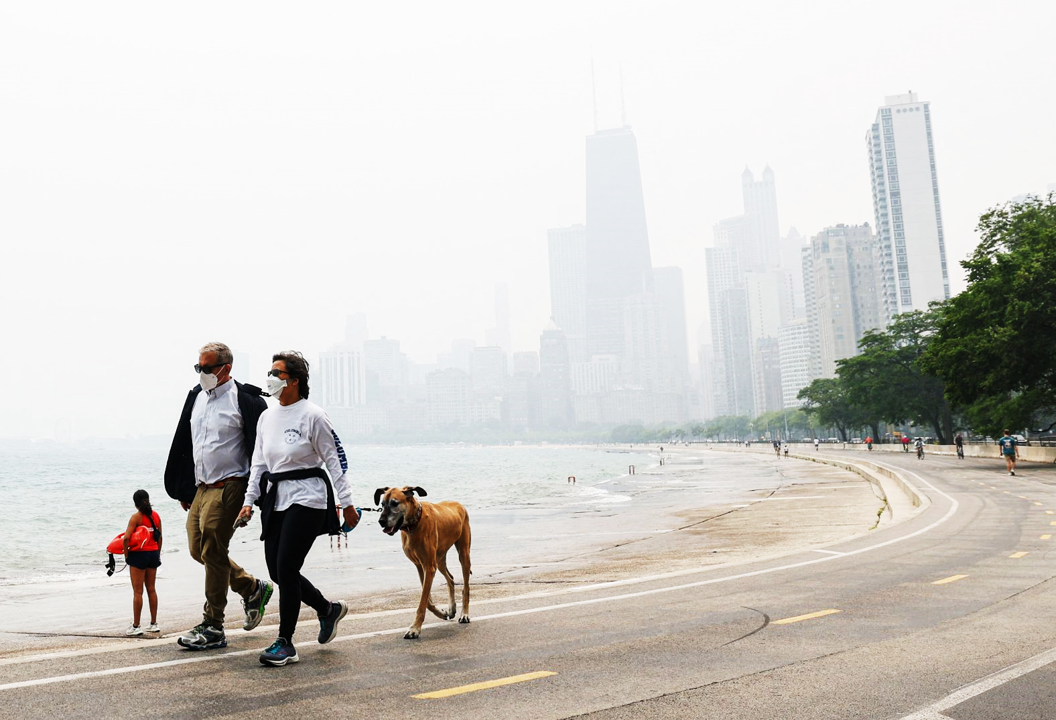
“At these levels, even healthy people are at risk,” said Dr. Purvi Parikh, an allergist and immunologist with NYU Langone Health. Extended exposure, she said, could worsen chronic conditions and, in some cases, trigger new respiratory illnesses.
Experts recommend N95-type respirators for anyone who must be outdoors. “They protect very well from smoke particles, which are the most hazardous component,” said Linsey Marr, a Virginia Tech engineering professor specializing in airborne particles.
Wildfires Intensify in Quebec
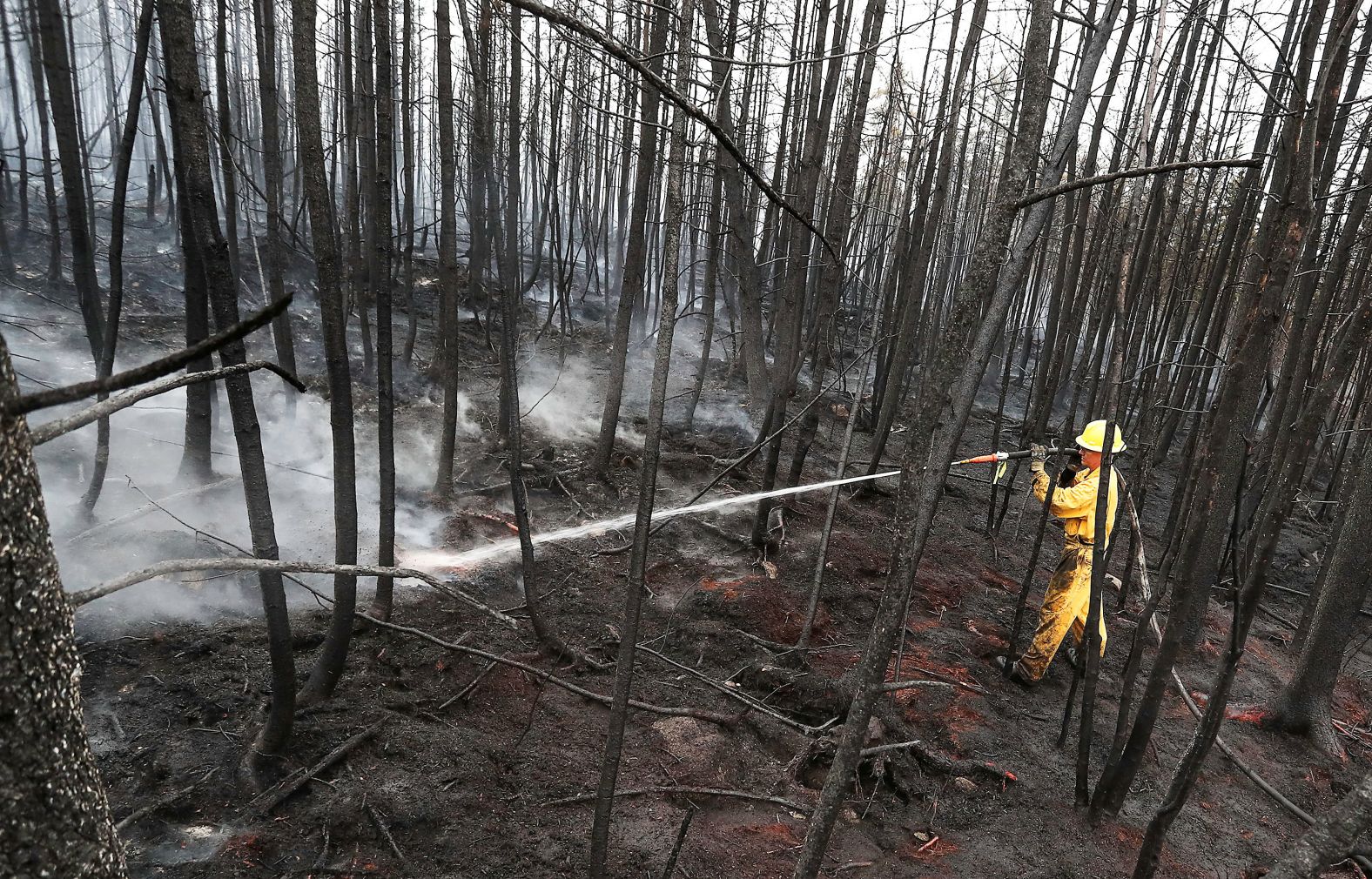
The smoke crisis stems from more than 150 active wildfires burning across Quebec. The entire town of Chibougamau, home to about 7,000 people, was ordered to evacuate Wednesday as fast-moving fires expanded.
Quebec has recorded more than 400 wildfires so far this year double the seasonal average. Nationwide, over 9 million acres have burned in 2023, roughly 15 times the typical area scorched by this point.
U.S. Assists Canada as Leaders Coordinate Response
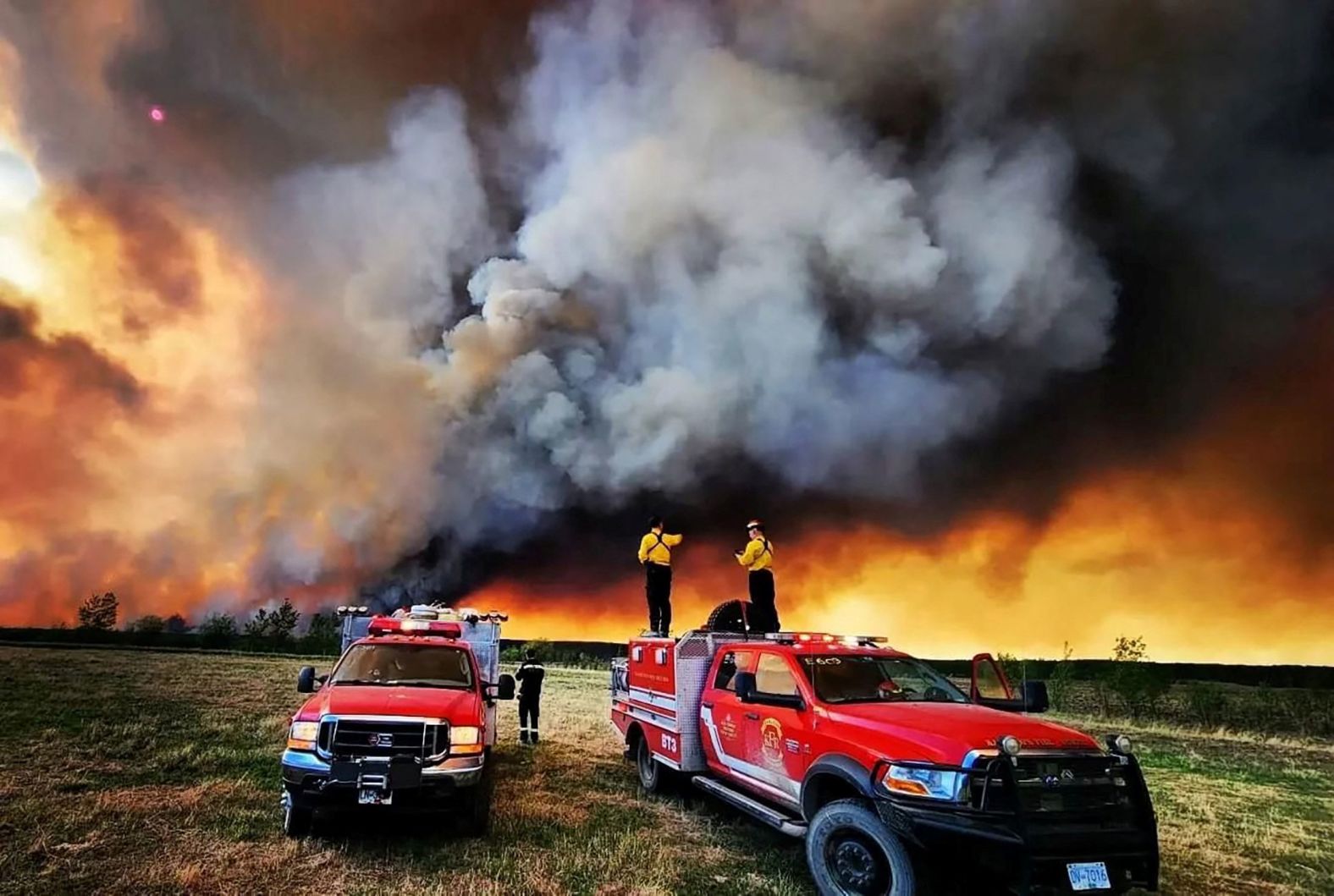
Canadian Prime Minister Justin Trudeau and U.S. President Joe Biden spoke Wednesday about the wildfire emergency. The U.S. has deployed more than 600 firefighters and support personnel, as well as additional firefighting resources.
States Issue Warnings and Distribute Masks
Officials across the Northeast and mid-Atlantic urged residents to limit outdoor exposure. States including Pennsylvania, Delaware, New Jersey, Rhode Island and Maryland issued code red alerts, warning that air quality was unhealthy for all.
New York Gov. Kathy Hochul said the state will distribute one million N95 masks to residents and called the situation “unprecedented… a very serious, dangerous moment.”
“This is high pollution,” said the American Lung Association’s William Barrett. “If you can see or smell smoke, you’re being exposed and it’s important to do everything you can to remain indoors.”
This article was first published on CNN