China’s clean-energy buildout continues to accelerate at a pace unmatched anywhere in the world, installing more wind and solar power in a single year than the entire amount of renewable energy currently operating in the United States. New data from Global Energy Monitor (GEM) underscores how far ahead China has moved and how recent policy changes in Washington may widen the gap.
President Donald Trump’s new spending law, signed earlier this month, sharply reduces federal tax credits for wind and solar projects. Industry leaders warn the rollback will raise electricity prices for consumers and businesses, as the cheapest power sources on the grid become more expensive to build and are replaced by gas. The cuts also arrive just as US developers were beginning to make progress on emerging technologies such as advanced battery storage.
China Builds at Record Scale
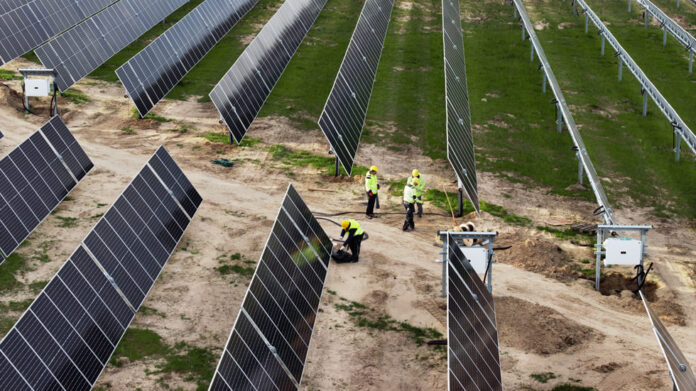
GEM reports that China is currently constructing 510 gigawatts of utility-scale wind and solar capacity, to be added to the country’s existing 1,400 gigawatts already online—five times the total US capacity. Li Shuo, director of the China Climate Hub at the Asia Society Policy Institute, said the disparity leaves little doubt about the outcome. “The game has already been called,” he told CNN.
Analysts say China’s surge reflects a rush by developers to complete projects before government subsidies expired in June. “This is why the surge is coming before May,” said Yujia Han, who co-authored the GEM report with Mengqi Zhang.
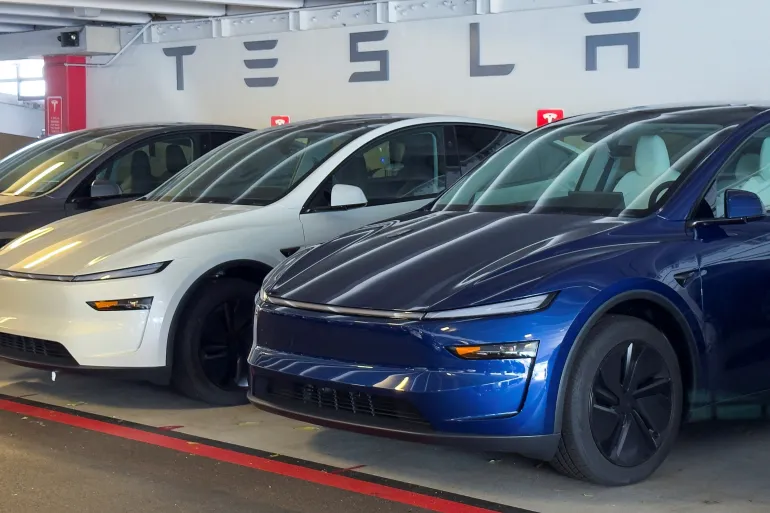
China’s energy transition is also visible on city streets. In Beijing, internal-combustion cars have become a rarity, Shuo said, noting that nearly all ride-hailing drivers he encountered used electric vehicles.
Many reported fuel costs as low as one-sixth of a petrol-powered car. Climate analysts now believe China has already reached peak oil demand, though the larger question is whether its booming renewable capacity can meaningfully displace coal in the power sector. For now, recent increases in electricity demand have been met entirely by renewables, keeping emissions level.
US Growth Stalls Under New Law
The US had roughly 275 gigawatts of wind and solar in operation at the end of last year, with an additional 150 gigawatts planned through 2031, according to the Energy Information Administration. Those projects are now at risk, with Trump securing deep cuts to renewable tax credits in his signature legislation and vowing further action against the industry.
Modeling by the non-partisan Rhodium Group shows the law would reduce expected clean-energy additions by half over the next decade compared with previous projections. The result, analysts say, will be higher electricity prices nationwide as gas-fired generation fills the gap left by cancelled or delayed renewable projects.
Rhodium’s Ben King warned that the slowdown could also hinder US economic development. Energy-intensive sectors such as data centers and semiconductor manufacturing may face difficulty securing adequate power in states where renewables stall and new natural-gas plants face long permitting delays. “Some of that new industrial load just might not be able to come online,” King said.
A Diverging Energy Landscape
While renewables still make up the vast majority of new US electricity capacity and account for about 85% of projects awaiting federal approval, analysts say the new law threatens to blunt that momentum. China, meanwhile, continues to expand solar, wind and battery storage on a scale no other country has attempted.
As Shuo put it, with China installing more clean energy in a year than the US has in total, the global balance of power in the energy transition is rapidly shifting and the gap is only set to grow.