The widening divide between Washington and its traditional allies has become one of the most significant geopolitical shifts of the decade. At the center of this shift are US Europe relations under Trump, a dynamic that has grown increasingly tense as the American president publicly criticizes European governments while praising Russia’s position in the war on Ukraine. These fractures are not just diplomatic disagreements. They are creating real opportunities for Vladimir Putin to exploit, deepening concerns across Europe about the future of transatlantic unity.
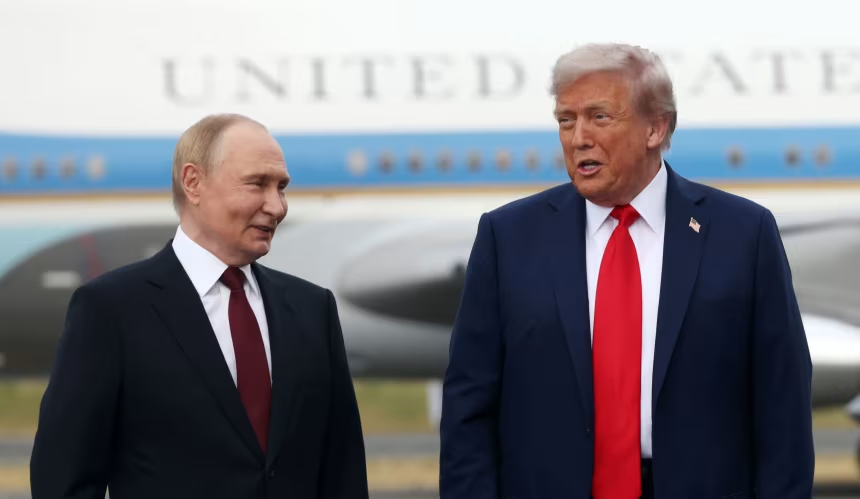
Tensions reached a new level after Trump labeled European nations weak and decaying because of their immigration policies. He also argued that Russia holds the upper hand in the war on Ukraine and urged President Volodymyr Zelensky to start accepting outcomes that favor Moscow. For European leaders who have spent years trying to maintain unity against Russian aggression, these remarks landed like a shockwave.
The Trump administration’s newly released national security strategy added even more fuel. The document accused European leaders of blocking a peace deal by supporting Ukraine too strongly and labeled some governments as obstacles to democracy. This framing has been welcomed by Russian officials, who immediately used it to claim ideological alignment between Moscow and Washington.
Kremlin spokesman Dmitry Peskov openly praised the document, calling it consistent with Russia’s interests. Russian state figures, including sovereign wealth fund chief Kirill Dmitriev, used Trump’s words to amplify narratives that Europe is unstable, misguided and drifting away from democratic values.
European leaders did not stay silent. Germany’s Chancellor Friedrich Merz called parts of the US national security strategy unacceptable and rejected any suggestion that Europe needs the United States to preserve democracy. During a tense news conference, Merz insisted that European governments would continue supporting Ukraine and safeguarding democratic institutions regardless of Washington’s changing posture.
These disputes mark a major departure from traditional US Europe relations under Trump. Historically, the United States and Europe have coordinated closely on security issues, especially when facing Russia. But the new rhetoric coming from Washington is straining the trust that once formed the backbone of NATO.
While Europe sorts through internal concerns and diplomatic disagreements with Washington, Moscow sees an opening. Russian analysts and officials have already begun sharpening their messaging. Hardline political voices such as Sergey Karaganov argue that Russia is effectively at war with Europe and insist the conflict will not end until Europe is weakened politically and morally.
President Vladimir Putin has also used these moments to send warnings to European governments. He claims Russia does not want war but is prepared if Europe chooses confrontation. These statements are aimed at pressuring European citizens and political leaders who may already feel uneasy about the uncertainty of US Europe relations under Trump.
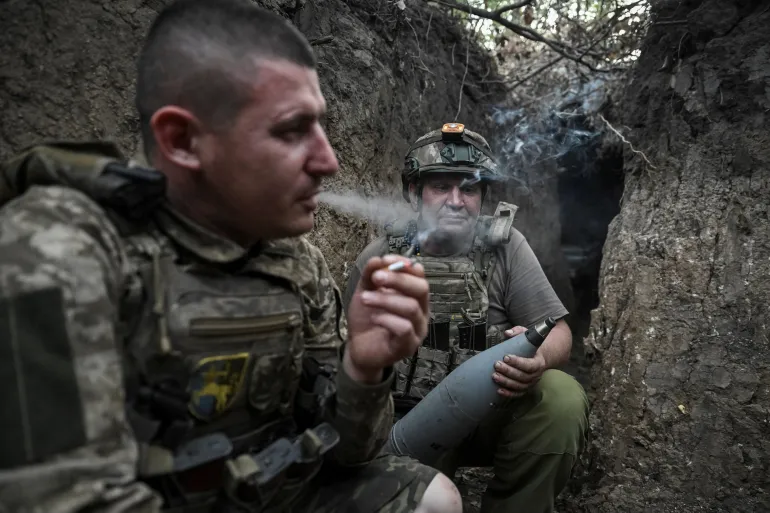
Despite the friction, European support for Ukraine continues. Zelensky has traveled to Britain, France and Germany to reinforce partnerships and secure military commitments. European Union leaders have also emphasized that their policies are rooted in long term security interests that go beyond shifts in American politics.
Yet the information war is intensifying. Russian messaging attempts to paint Europe as divided and fading, while Trump’s remarks often echo similar themes. This overlapping narrative increases pressure on European governments already navigating economic challenges, migration debates and security concerns.
The future of US Europe relations under Trump remains uncertain, and that uncertainty is proving beneficial for Moscow. A fractured transatlantic alliance weakens the collective response to Russia’s actions in Ukraine and creates new vulnerabilities for democratic governments across the continent. As Europe works to steady itself, the coming months will reveal whether these tensions are temporary disagreements or the beginning of a long term geopolitical realignment.