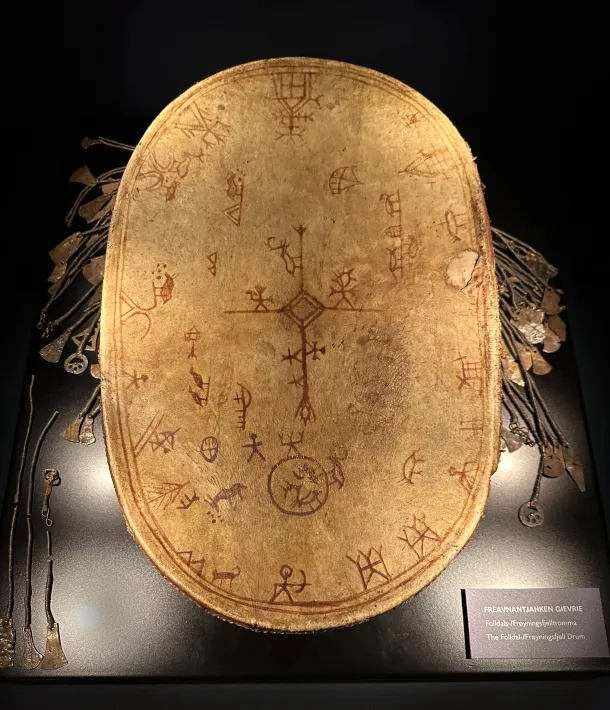
A sacred Sámi ceremonial drum has been returned to Norway, 300 years after it was seized during efforts to forcibly convert the Indigenous Sámi population to Christianity. The repatriation, completed in November 2023, marks the first time a Sámi cultural object has been returned from outside Scandinavia, a moment described as historic for Sámi self-determination and cultural preservation.
The Frøyningsfjell, or Folldal drum, was formally handed back to the South Sámi community in a ceremony attended by the President of the Sámi Parliament and Norway’s Minister of Culture. Norwegian authorities and Sámi leaders expressed deep gratitude to the Meininger Museen, the Kulturstiftung Meiningen-Eisenach, and German officials for facilitating the return.
The repatriation aligns with international frameworks such as the UN Declaration on the Rights of Indigenous Peoples, ILO Convention 169, and UNESCO’s recommendations on returning ceremonial and culturally significant items to Indigenous communities.
A rare and deeply significant object
The drum is considered one of the most important surviving examples of traditional Sámi religious practice. Exceptionally well-preserved, it includes a full chart detailing the symbolic engravings used by Sámi shamans to communicate with nature’s spirits, seek guidance, and navigate the challenges of daily life.
The drum’s history is also unusually well-documented. It was seized in 1723, when Norway was under Danish rule, and delivered to the King in Copenhagen. It later became a wedding gift to a German relative and ultimately entered the collections of Schloss Elisabethenburg and the Meininger Museen in Thüringen, where it remained for 267 years.
Journey home
After extensive dialogue and cooperation, German institutions agreed to return the drum to Norway. It is now housed at the Saemien Sijte Museum in Snåsa, where it serves as the centrepiece of the museum’s permanent exhibition on South Sámi history and culture.
The drum also provides an important record of the period in which Sámi religious leaders were persecuted for their beliefs. Prior to his execution, the shaman who once used the drum was forced to describe its inscriptions—accounts that today offer vital insights for scholars studying Sámi cultural and spiritual traditions.
The return of the Frøyningsfjell drum is widely seen as a significant step toward recognising historical injustices and restoring cultural heritage to the Sámi people, whose traditions were systematically suppressed for centuries.