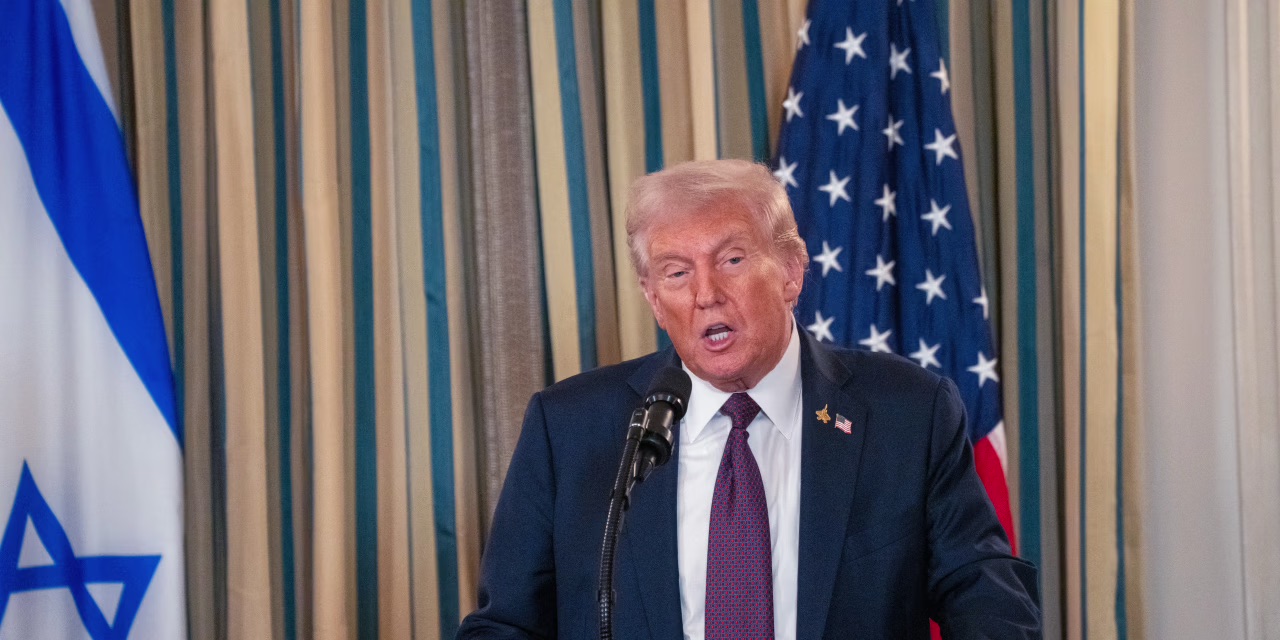
The Supreme Court heard Trump’s Supreme Court tariff case this week, and the arguments revealed deep divisions over how much power a president should have to impose global tariffs. The hearing, which stretched over two and a half hours, focused on whether President Donald Trump overstepped his authority by using a decades-old emergency law to justify sweeping trade duties. The outcome could reshape not only U.S. trade policy but also the limits of presidential power in economic emergencies.
Chief Justice John Roberts and Justice Amy Coney Barrett, both conservative members of the court, were among the most skeptical of the administration’s arguments. Roberts noted that the law Trump relied on, the International Emergency Economic Powers Act (IEEPA), was never intended for such broad use. He questioned whether it gives presidents the ability to “impose tariffs on any product, from any country, in any amount, for any length of time.”
Barrett pressed the government’s lawyer, Solicitor General D. John Sauer, to cite historical examples where “regulate importation” was interpreted as giving a president tariff authority. When Sauer referenced a lower-court case from the Nixon era, Barrett interrupted to point out that it wasn’t a Supreme Court ruling, highlighting the weakness of the argument.
Their pointed questions suggested that even some conservatives are uneasy about expanding presidential authority in a way that bypasses Congress.
Justice Brett Kavanaugh took a nuanced approach during Trump’s Supreme Court tariff case, focusing heavily on the Nixon administration’s actions in 1971. Back then, President Richard Nixon imposed a 10% tariff on all imports, later justifying it under the Trading with the Enemy Act, which contained language similar to IEEPA.
Kavanaugh questioned why Congress did not modify the wording when enacting IEEPA if it disagreed with Nixon’s approach. He suggested that Congress’s silence might imply approval. However, Neal Katyal, representing the businesses challenging the tariffs, countered that Nixon didn’t initially rely on that law and only cited it later in court.
This line of debate underscores how much historical interpretation will influence the court’s ruling—and whether past actions can justify present-day uses of presidential power.
Beyond the legal arguments, the case also has major financial implications. The federal government has already collected nearly $90 billion from the contested tariffs. If the Supreme Court rules against the administration, it could force a massive refund process.
Justice Barrett voiced concern about the logistical nightmare such a decision could cause, asking if it would be “a complete mess.” Katyal admitted that while the companies he represents deserve refunds, distributing money to thousands of other affected businesses would be extremely complicated.
Justice Samuel Alito hinted that the issue of refunds should be addressed quickly, before the amount owed grows even larger.
The court’s three liberal justices—Elena Kagan, Sonia Sotomayor, and Ketanji Brown Jackson—were openly critical of the administration’s justification for the tariffs. Jackson reminded the court that Congress enacted IEEPA to limit, not expand, presidential emergency powers. “It seems inconsistent to interpret a law designed to constrain authority as one that gives the president unlimited power,” she said.
Kagan questioned Trump’s frequent use of emergency declarations to advance policy goals, warning that this approach turns “everything all the time” into an emergency, blurring the line between normal governance and crisis management.
The Trump’s Supreme Court tariff case also intersects with a major constitutional principle known as the “major questions doctrine.” In recent years, the conservative-majority court has ruled that presidents must have clear congressional authorization before taking sweeping actions with major economic or political consequences.
This doctrine was used to strike down President Biden’s student loan forgiveness plan and vaccine mandate. Katyal argued that the same principle should apply to Trump, saying emergency powers cannot transform vague language into unlimited authority. Sotomayor echoed this point, reminding the court that “a tariff is a tax” and should be subject to strict legal limits.
As the Supreme Court weighs Trump’s Supreme Court tariff case, it faces a delicate balance between preserving presidential flexibility in foreign affairs and preventing executive overreach. The justices’ skepticism suggests Trump may face his first major legal setback from the conservative bench since returning to office.
Whatever the final ruling, this case will shape how future presidents use emergency powers in trade and beyond,testing whether America’s checks and balances can withstand the growing strain of political and economic crises.