A decision by South Africa’s culture minister to rename a historic town has opened a deep and emotional fault line, one that stretches far beyond questions of signage and into the country’s unfinished reckoning with its past.
A name that carries centuries of identity
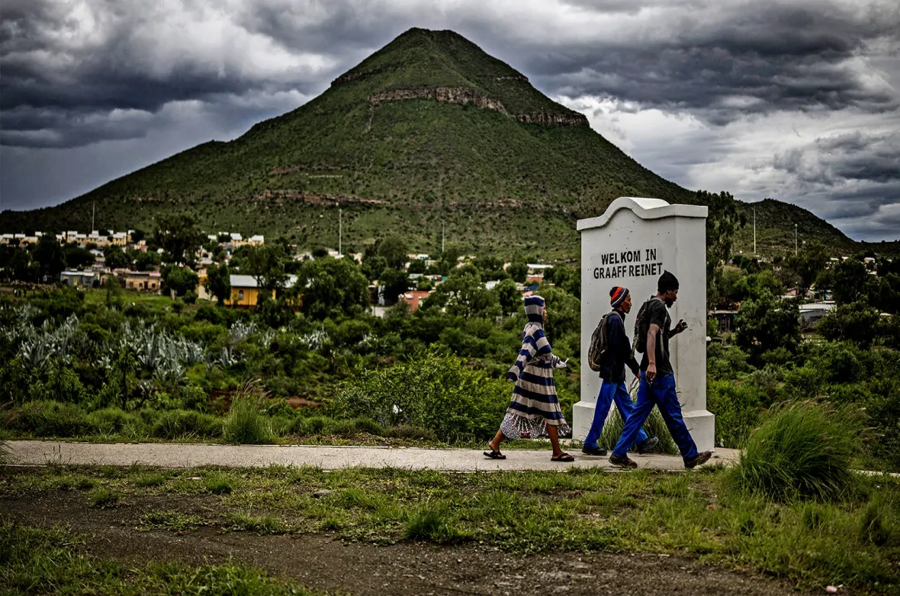
The town of Graaff-Reinet, known for its whitewashed Cape Dutch architecture and long colonial history, is set to be renamed after Robert Sobukwe. The move, approved on 6 February by Gayton McKenzie, has divided residents, ignited protests, and revived longstanding tensions over race, identity, and memory.
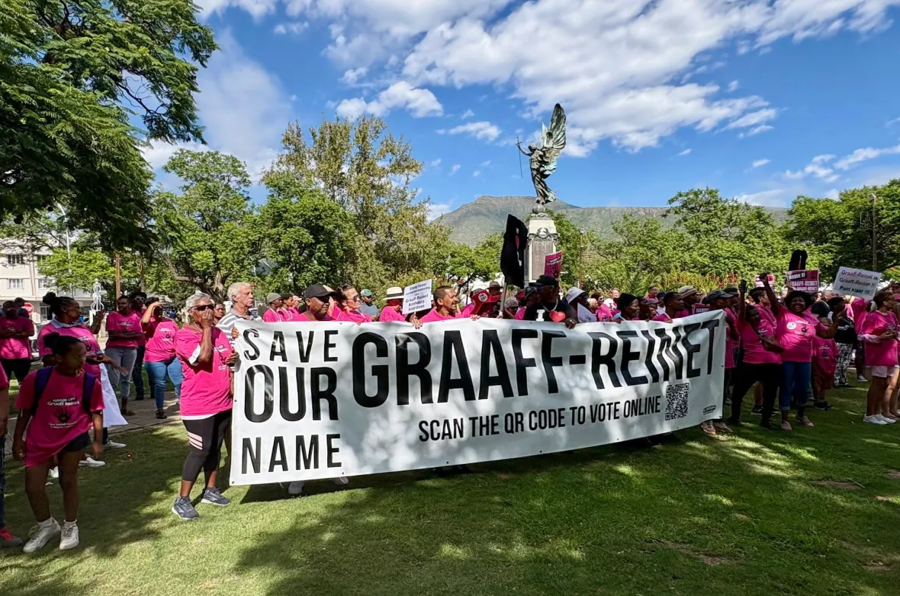
What might appear, at first glance, to be a symbolic administrative change has instead become a flashpoint. In recent weeks, petitions have circulated, rival marches have taken to the streets, and a formal complaint has been lodged against the minister’s decision.
For some residents, the renaming feels like a necessary correction to history. For others, it represents an erasure of identity tied not only to a name, but to generations of lived experience.
Graaff-Reinet was founded in 1786 and named after Cornelis Jacob van de Graaff, then governor of the Cape Colony, and his wife Hester Cornelia Reynet. Over time, the name became woven into the town’s identity, embraced by residents across racial lines despite its colonial origins.
That complexity lies at the heart of the current dispute. Many locals say their attachment to the name Graaff-Reinet has less to do with its Dutch roots and more to do with what it has come to represent over centuries. Families have grown up identifying themselves as “Graaff-Reinetters,” a term that signals belonging and continuity in a country where both have often been disrupted.
Sobukwe’s legacy and the push for transformation
On the other side are those who argue that such continuity cannot come at the expense of historical justice. They see the renaming as part of a broader national effort to confront the legacies of colonialism and apartheid, systems that imposed names, borders, and hierarchies designed to exclude the majority.
Sobukwe, whose name the town is set to adopt, occupies a significant place in South Africa’s liberation history. A former member of the African National Congress, he broke away in 1959 to founder the Pan Africanist Congress, driven in part by disagreements over the ANC’s policy of allowing white members.
His political vision emphasized African self determination, and he became a central figure in the resistance against apartheid laws. On 21 March 1960, Sobukwe led protests against pass laws requiring Black South Africans to carry identification documents restricting their movement. Police opened fire on demonstrators in what became known as the Sharpeville massacre, killing 69 people and shocking the world.
For many, naming the town after Sobukwe is not only appropriate but overdue. He was born and buried there, and supporters argue that honoring him locally is a way of restoring a history that was long suppressed.
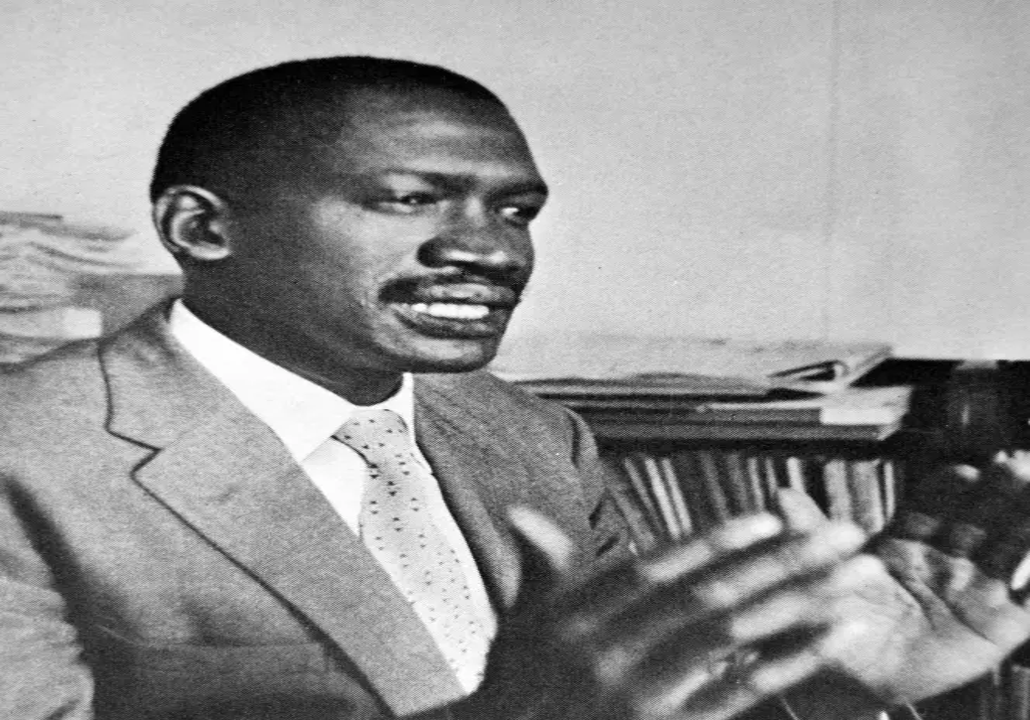 “We have a history that has been erased,” said Nomandla Singeni, whose daughter is part of the Robert Sobukwe Steering Committee. “We’ve got leaders who contributed and laid down their lives for the freedom that we enjoy today. It is time to honour them.”
Yet the process has proven as contentious as the outcome. Critics argue that the consultation leading up to the decision was flawed. A survey conducted in December 2023 found that 83.6 percent of residents opposed the name change, including overwhelming majorities among Coloured and white respondents. Among Black residents, support was more divided, with roughly a third backing the proposal.
The findings, documented by Stellenbosch University geography professor Ronnie Donaldson, point to a community deeply split not only along racial lines but also in how different groups interpret the meaning of transformation.
“Many residents felt that changing the name would erase part of their identity as ‘Graaff-Reinetters’,” Donaldson wrote.
That sense of loss is particularly acute among some Coloured residents, a group whose identity in South Africa has been shaped by a complex and often painful history. Under apartheid, Coloured people were classified separately from Black South Africans and granted limited privileges, a system that fostered divisions that persist today.
Laughton Hoffman, who runs a youth focused nonprofit, sees the name change through that lens. Standing in a bright pink “Hands Off Graaff-Reinet” T-shirt, he argued that the town’s current name, whatever its origins, has become an economic and cultural asset.
“We are not emotional about the Dutch,” Hoffman said. “Out of the grief of the past, the name became a benefit for the people and for the economy of the town.”
A divided town mirrors a divided past
Tourism is a particular concern. Graaff-Reinet’s historic center, with its well preserved buildings and reputation as one of South Africa’s oldest towns, draws visitors from around the world. Some residents worry that a name change could dilute that brand, even if others argue that new narratives could attract a different kind of visitor interested in liberation history.
Hoffman also voiced frustration at what he described as ongoing marginalization. “We have been oppressed since the end of apartheid by governments led by the black dominated ANC,” he said. “We have been marginalised for 32 years as a cultural group.”
Such sentiments reflect broader debates within South Africa about who has benefited from the post apartheid order and who has been left behind. While apartheid formally ended in 1994, inequalities in wealth, opportunity, and social cohesion remain stark.
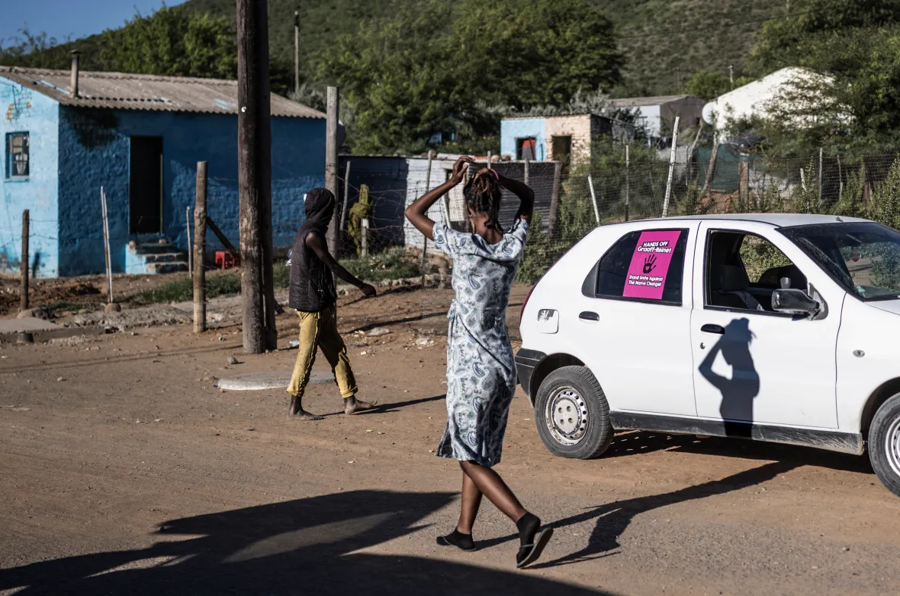 Supporters of the name change reject the idea that the town was free of racial tension before the decision. Athe Singeni, a member of the steering committee, said that claims of harmony overlook subtler forms of division.
“We have always had racial problems,” she said. “It was very subtle.”
The dispute has, in some cases, taken on a darker tone. Earlier this month, Sobukwe’s grave was vandalised by unknown individuals, an act that shocked supporters and underscored how deeply emotions are running.
Legal questions have also entered the fray. A lawyer, Derek Light, has formally challenged the decision, arguing that the consultation process did not meet required standards. “It was a faux process,” he said, adding that the change has unnecessarily inflamed tensions in a town that, in his view, had managed to coexist peacefully despite its challenges.
Beyond Graaff-Reinet, the controversy fits into a much larger national pattern. Since 2000, South Africa has renamed more than 1,500 places, according to official records. These changes have affected everything from post offices and rivers to major urban centers. In 2021, the city of Port Elizabeth was officially renamed Gqeberha, a move that sparked similar debates at the time.
 The government frames these efforts as part of a project of restorative justice. In announcing a batch of 21 new name changes, including Graaff-Reinet, the Department of Sports, Arts and Culture said its mission is to “redress, correct and transform the geographical naming system” to address colonial and apartheid legacies.
Analysts note that such policies are not unique to South Africa. Around the world, countries have grappled with how to deal with place names tied to colonial or oppressive histories. From statues being removed to streets being renamed, these debates often reveal deeper questions about whose stories are told and whose are forgotten.
Back in Graaff-Reinet, those questions are no longer abstract. They are playing out in homes, community meetings, and on the streets. In uMasizakhe, a former Black township on the outskirts of town, some residents see the change as a long awaited recognition.
“I’m happy to change this name,” said Mzoxolo Nkhomo, a 59 year old jobseeker. “Because Sobukwe is our fighter. Sobukwe made us free.”
Yet even among supporters, there is an awareness that the issue has been shaped by politics. Mangaliso Tsepo Sobukwe, the activist’s grandson, noted that his grandfather’s legacy has not always been consistently honored, particularly by the ANC, which now appears to be championing the renaming.
“Placename changes have been instrumentalised by politicians,” he said. “It is interesting that the ANC would be seen championing the honouring of Sobukwe, because they have been suppressing his legacy.”
Even so, he expressed a sense of personal satisfaction. “Going forward, I’m happy that my grandfather’s been honoured, more than anything else.”
For now, the future name of the town remains a source of contention rather than closure. The decision has exposed layers of history that cannot be easily reconciled, from colonial foundations to apartheid divisions to the uneven realities of the present.
Whether the name Robert Sobukwe ultimately takes hold may depend not only on legal outcomes or political will, but on whether the community can find a way to navigate its competing narratives. In a country still negotiating the meaning of its past, that may prove to be the hardest task of all.