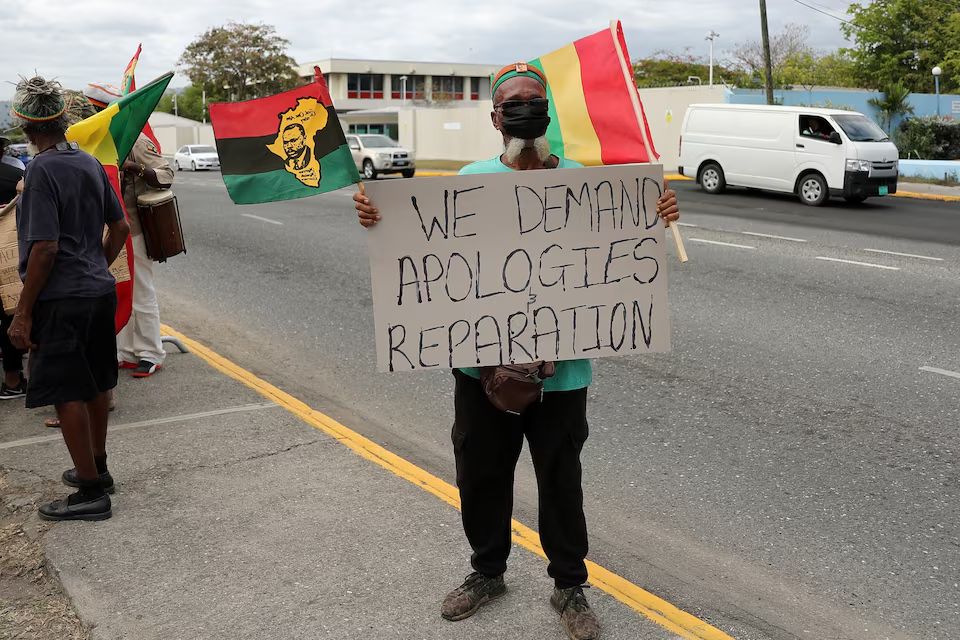
Support is steadily growing among African and Caribbean nations for the creation of an international tribunal to address atrocities linked to the transatlantic slave trade, in what could mark a historic shift in how the world confronts one of its darkest chapters.
The proposal, inspired in part by the post-World War Two Nuremberg Trials, is gaining traction within a wider movement seeking reparations for centuries of enslavement and colonial exploitation.
First proposed last year, the idea has since been formally recommended by the United Nations Permanent Forum on People of African Descent, which in June called for the establishment of a tribunal capable of addressing not only slavery but also apartheid, genocide, and colonialism.
The concept has since been discussed at regional gatherings and policy forums, reflecting a growing alignment between African and Caribbean leaders on the need for a legal framework to pursue reparatory justice.
At the heart of the push is a belief that moral recognition alone is no longer sufficient. Advocates argue that a tribunal could help establish legal norms for handling complex historical claims, creating an official record of events while also determining responsibility and potential remedies.
For many, this represents an essential step toward closing what they see as a longstanding gap between acknowledgment and accountability.
Eric Phillips, a senior figure in the reparations movement within the Caribbean Community, said discussions have intensified across both Caribbean and African institutions. He noted that the tribunal concept is being actively explored as part of a broader strategy to secure justice for the descendants of enslaved Africans.
The African Union, representing 55 countries, has also taken a leading role in advancing the idea. Working alongside Caribbean partners, African policymakers are seeking to build a coalition of support within the United Nations system, with the goal of eventually bringing the proposal before the General Assembly.
Yet even its strongest supporters acknowledge that the path forward will be complex. Martin Okumu-Masiga described the initiative as facing “huge obstacles,” including the challenge of securing cooperation from countries historically involved in the slave trade and navigating the legal difficulties of assigning responsibility for events that took place centuries ago.
“These things happened many years ago,” he noted, pointing to the scarcity and reliability of historical records as a major hurdle. Unlike the Nuremberg Trials, where perpetrators were still alive to face justice, no direct participants in the transatlantic slave trade remain. This raises fundamental questions about who could be held accountable and under what legal standards.
Despite these challenges, advocates argue that the enduring consequences of slavery justify extraordinary measures. Brian Kagoro, a long-time campaigner for reparations, said a tribunal would serve not only as a mechanism for justice but also as a means of establishing an authoritative historical record.
Supporters point to extensive research by the United Nations showing that the legacies of slavery continue to shape global inequalities. Patterns of poverty, underdevelopment, and systemic racism across Africa, the Caribbean, Europe, and the Americas are often traced back to the economic and social disruptions caused by centuries of forced labour and exploitation.
Clive Lewis, himself a descendant of enslaved people in Grenada, has spoken about the ongoing effects of structural racism. He notes that disparities in housing, health, education, and environmental conditions are not accidental but deeply rooted in historical injustices. “These legacies are alive and well,” he said, underscoring the argument that reparations are not merely about the past but about present realities.
The proposal has also gained support at the national level. Nigeria, Africa’s most populous nation, has publicly backed the idea, with Foreign Minister Yusuf Tuggar stating that his country would support the tribunal “until it becomes a reality.” In the Caribbean, leaders such as Grenadian Prime Minister Dickon Mitchell have expressed full support, viewing the initiative as a natural extension of longstanding regional efforts.
Momentum has also been building through high-level summits. A reparations conference held in Ghana brought together African and Caribbean leaders, culminating in a commitment to explore judicial routes, including litigation and the possible establishment of a tribunal. The gathering reflected a growing sense of unity across regions historically affected by slavery.
Among the most vocal advocates is Justin Hansford, who serves on the UN forum with backing from the United States.
He has been actively lobbying governments and international bodies to support the initiative, with plans to raise the proposal again at the UN General Assembly. Hansford estimates that it could take three to five years to establish such a tribunal, depending on the level of international backing.
The United States itself has taken a cautious but supportive stance. While not explicitly endorsing the tribunal, it has funded the UN forum at the centre of the discussions and expressed strong support for its broader work.
Officials have acknowledged the complexity of reparations, citing legal challenges and differing perspectives among affected nations.
The United Nations leadership has also signaled growing openness to the idea of reparatory justice. Antonio Guterres recently called for “reparatory justice frameworks” to address generations of exclusion and discrimination.
Meanwhile, the UN human rights office has noted that no country with a legacy of slavery or colonialism has fully accounted for its impact on people of African descent.
Still, resistance remains strong among some Western governments. The United Kingdom has acknowledged its historical role in slavery but has ruled out financial reparations, arguing that the focus should instead be on addressing present-day challenges.
Other European nations, including France, Portugal, Spain, and Denmark, have either declined to comment or have not fully engaged with the tribunal proposal.
The Netherlands, however, has taken a more proactive step by issuing a formal apology and establishing a fund to address the legacy of slavery.
One of the central challenges lies in defining both claimants and defendants. According to Okumu-Masiga, potential claimants could include African states, Caribbean nations, descendants of enslaved people, and indigenous communities.
Defendants might include countries, institutions, and even corporations with historical links to the slave trade. Some proposals have even raised the possibility of claims against the descendants of enslavers, though this remains highly controversial.
There are also alternative legal pathways under consideration. Caribbean leaders have proposed seeking an advisory opinion from the International Court of Justice, which could clarify the legal basis for reparations and guide future action. The eventual choice between a tribunal and other legal mechanisms may depend on such findings.
The broader reparations movement itself has deep historical roots. From the earliest days of enslavement, Africans and their descendants resisted through uprisings, escapes, and cultural expression.
Over time, these demands evolved into organised political movements, gaining support from figures such as Martin Luther King Jr. and various grassroots organisations across the African diaspora.
In recent years, the movement has gained unprecedented momentum. Institutions, governments, and advocacy groups are increasingly acknowledging the scale and impact of the transatlantic slave trade. The involvement of major organisations like the African Union and CARICOM has given the campaign new legitimacy and global reach.
At the same time, debates continue over what reparations should actually entail. Some advocate for direct financial payments to descendants of enslaved people, while others emphasise structural solutions such as debt relief, investment in education and healthcare, and economic development initiatives. CARICOM’s 2014 reparations plan, for example, called for a comprehensive approach addressing both historical and contemporary inequalities.
What sets the current moment apart, observers say, is the level of international coordination. Jasmine Mickens described the growing alignment between African and Caribbean nations as unprecedented. “We have a global community behind this message,” she said. “That’s something this movement has never seen before.”
Whether that momentum will translate into a functioning tribunal remains uncertain. The legal, political, and diplomatic challenges are formidable, and any progress will likely be gradual.
Yet the conversation itself has already shifted. What was once considered a fringe idea is now being debated within the highest levels of international governance.
For advocates, that shift is significant. It suggests that the world may finally be moving toward a more comprehensive reckoning with the legacy of slavery, one that goes beyond acknowledgment to consider accountability, restitution, and justice.