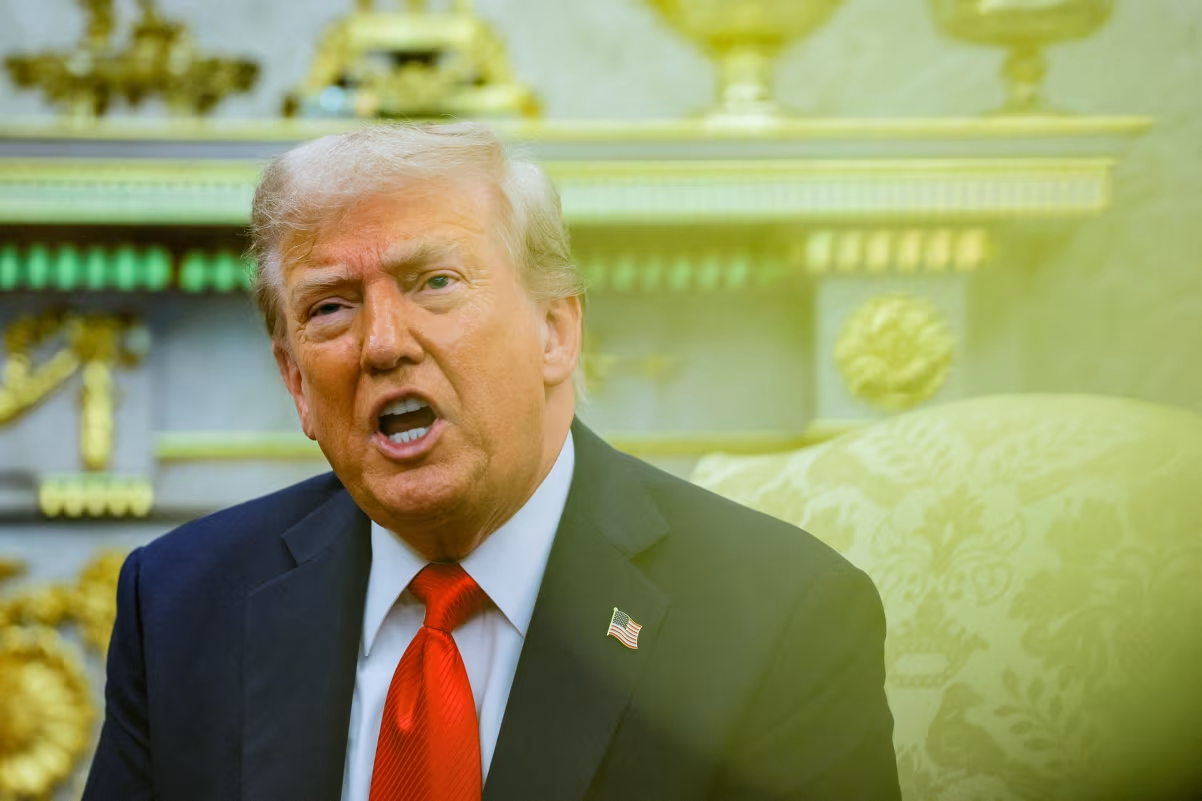
Donald Trump and Vladimir Putin are once again aligning on Europe. With the Ukraine war dragging on, both leaders are placing pressure on European nations as efforts toward peace continue to stall. The alignment between Trump and Putin on Europe highlights growing tensions within NATO and the uncertain future of Ukraine’s security guarantees.
In a recent call with European leaders and Ukrainian President Volodymyr Zelensky, Trump urged Europe to end its reliance on Russian oil, pointing out that Russia earned over €1 billion from EU fuel sales in just one year.
The former US president also pushed European leaders to apply economic pressure on China, accusing Beijing of indirectly funding Russia’s war efforts. Zelensky confirmed the discussions focused on depriving Moscow’s “war machine” of money and resources.
Hypocrisy in Trump’s Demands
Despite Trump’s tough rhetoric, critics argue his stance is contradictory. While pressing Europe to act against China, Trump has been reluctant to impose direct sanctions on Beijing himself due to ongoing US-China trade negotiations.
India Caught in Trump’s Tariff Strategy
Trump’s hardline approach has also impacted India. The US imposed a 50% tariff on Indian exports, citing India’s continued purchases of Russian oil. This move disrupted decades of American diplomatic efforts to keep India aligned against China, instead pushing New Delhi closer to Moscow and Beijing.
During a recent summit in Asia, Chinese President Xi Jinping warmly welcomed Indian Prime Minister Narendra Modi, who also shared an extended meeting with Putin — underscoring the shifting alliances Trump’s policies may be accelerating.
Europe’s Efforts to Cut Russian Energy Dependence
While Trump criticized Europe for buying Russian oil, EU member states have already taken significant steps to reduce reliance on Russian energy.
-
A ban on maritime oil exports and refined products has been imposed.
-
Imports from Russia have sharply declined, dropping from $16.4 billion in early 2021 to just $1.72 billion in the first quarter of 2025.
These measures show that Europe has been actively scaling down Russian oil purchases, even before Trump’s renewed pressure.

Russia’s Strategy: Divide NATO and Target Europe
Moscow, meanwhile, is pursuing its classic strategy of dividing NATO allies. Putin has dismissed European fears of further aggression as “hysteria,” despite Russia’s history of invading Ukraine in 2014 and again in 2022.
-
During his visit to China, Putin warned against Europe “interfering” in his diplomacy with Trump.
-
The European Commission recently accused Russia of GPS jamming a plane carrying EU President Ursula von der Leyen in Bulgaria — an allegation Moscow rejected as “paranoia.”
-
Russian officials have also condemned any proposal for foreign troops in Ukraine after a peace deal, calling it “unacceptable.”
These moves reflect Russia’s goal of undermining European unity while keeping the spotlight on US involvement.
Security Guarantees for Ukraine: Macron Pushes for US Role
Following the latest round of calls, French President Emmanuel Macron announced that 26 countries pledged contributions to a possible peacekeeping force if a ceasefire is achieved.
Macron emphasized that Ukraine’s security framework should consist of three pillars:
-
Strengthening Ukraine’s armed forces.
-
Deployment of European troops for support.
-
An “American safety net” to ensure credibility.
The US has signaled willingness to play a limited role in these guarantees, potentially offering air support missions but ruling out ground troops.
Conclusion
The alignment of Trump and Putin on Europe is reshaping the narrative around the Ukraine war. As Moscow seeks to split NATO and Trump pressures Europe on energy and China, the continent faces difficult choices in balancing security, diplomacy, and economic survival.
The coming months will reveal whether the US and Europe can maintain unity or if Russia’s wedge strategy will succeed in weakening the Western alliance.