Pope Leo’s recent call for a ceasefire in Gaza during a private meeting with Israeli President Isaac Herzog has offered the clearest glimpse yet of the new pontiff’s emerging diplomatic style — quieter than his predecessor’s, but no less forceful.
Elected in May as the first US pope in history, Leo has shown a preference for working behind the scenes, leaning on the Vatican’s vast diplomatic machinery while reserving his public remarks for carefully measured moments.
It marks a contrast with the late Pope Francis, who often startled even Vatican officials with off-the-cuff comments or bold public statements. Francis had openly accused Israel of committing genocide in Gaza in 2024 — remarks that inflamed Israeli leaders and dominated headlines.
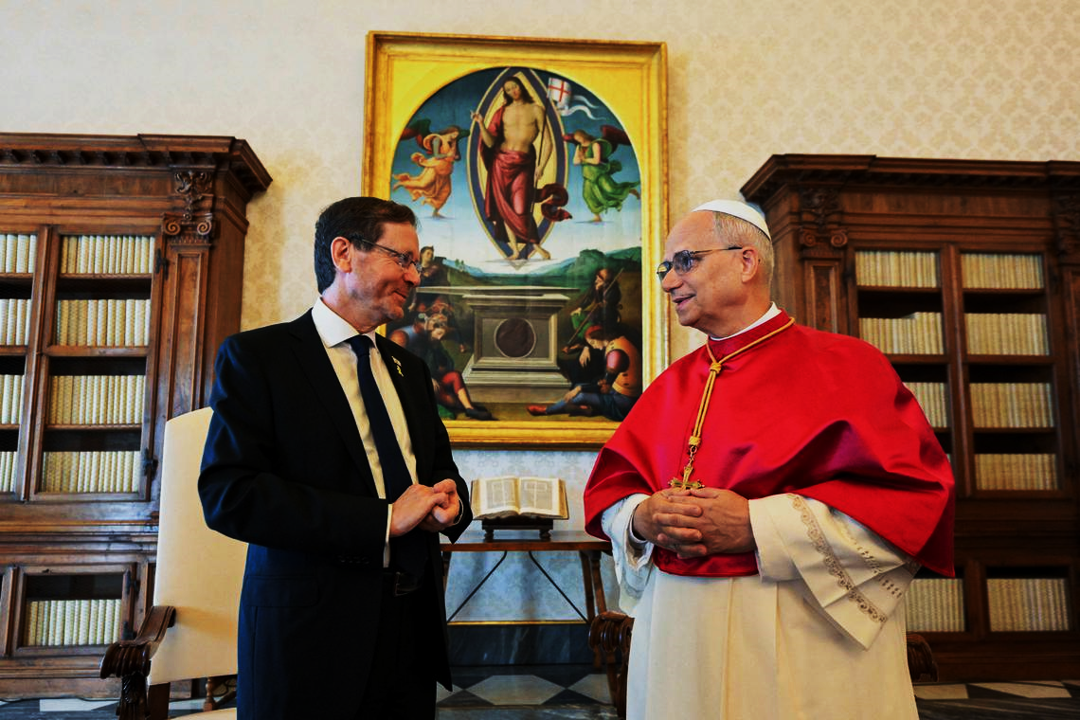
Leo, by comparison, avoided mentioning Gaza in his weekly audience on Sept. 3. Instead, he delivered his message privately the following day to Herzog, the first Israeli leader received by a pope in seven years.
Behind closed doors, according to an unusually detailed Vatican statement, Leo and senior officials lamented the “tragic situation in Gaza,” pressed for a permanent ceasefire, and reaffirmed support for a two-state solution. They also demanded the release of Israeli hostages held by Hamas.
“He wants to talk directly to the people who matter, not to surprise them through the media,” said Dr. Massimo Faggioli, a Vatican expert based in Dublin. “This is a more traditional, cautious form of diplomacy.”
The change in tone has not gone unnoticed. Retired Vatican correspondent John Thavis said Leo’s language “leans more toward impartiality,” a hallmark of classic papal diplomacy.
Still, signs of continuity with Francis remain. When Leo posed for photographs with Herzog, he avoided smiling, echoing the way Francis sometimes used body language to signal disapproval, as he once did during a frosty encounter with then US President Donald Trump.
The world’s cardinals are expected to give Leo time to develop his approach. At 69, he could lead the Catholic Church for a decade or longer. Early signals suggest his style will be more reserved, but equally determined to keep the Holy See at the center of global conflict mediation.
“They’re not letting anyone think that any government can use them as they wish,” Faggioli said of the Vatican under Pope Leo. “That’s the message here.”