Nigeria, a nation of more than 200 million people and over 250 ethnic groups, is confronting one of the most serious internal and external challenges of its modern history: territorial overstretch.
This condition arises when a state becomes responsible for securing, administering, and governing a territory and population far beyond what its security institutions, administrative capacity, and political structures can effectively manage.
In Nigeria’s case, territorial overstretch has manifested through escalating violence across multiple regions, the growing inability of the state to maintain full control over its borders, and the overwhelming demand placed on the military and police who are deployed far beyond sustainable levels.
Nigeria covers an enormous landmass of 923,768 square kilometres, making it the 32nd largest country in the world and the 14th largest in Africa. It shares approximately 4,000 kilometres of land borders with Benin, Niger, Chad, and Cameroon.
Many of these borders cut through remote terrain thick forests, semi-arid zones, mountain ranges, and the swampy islands of Lake Chad. For decades, security analysts have described these borders as porous because they allow for the relatively unmonitored movement of people, arms, contraband, and in many cases, insurgent groups fleeing military pressure in one country and regrouping in another.
Nigeria is therefore not only fighting internal crises but is deeply entangled in the spillover of regional instability, especially from the Sahel region, which has witnessed the rise of jihadist groups, military coups, and collapsing governance in recent years.
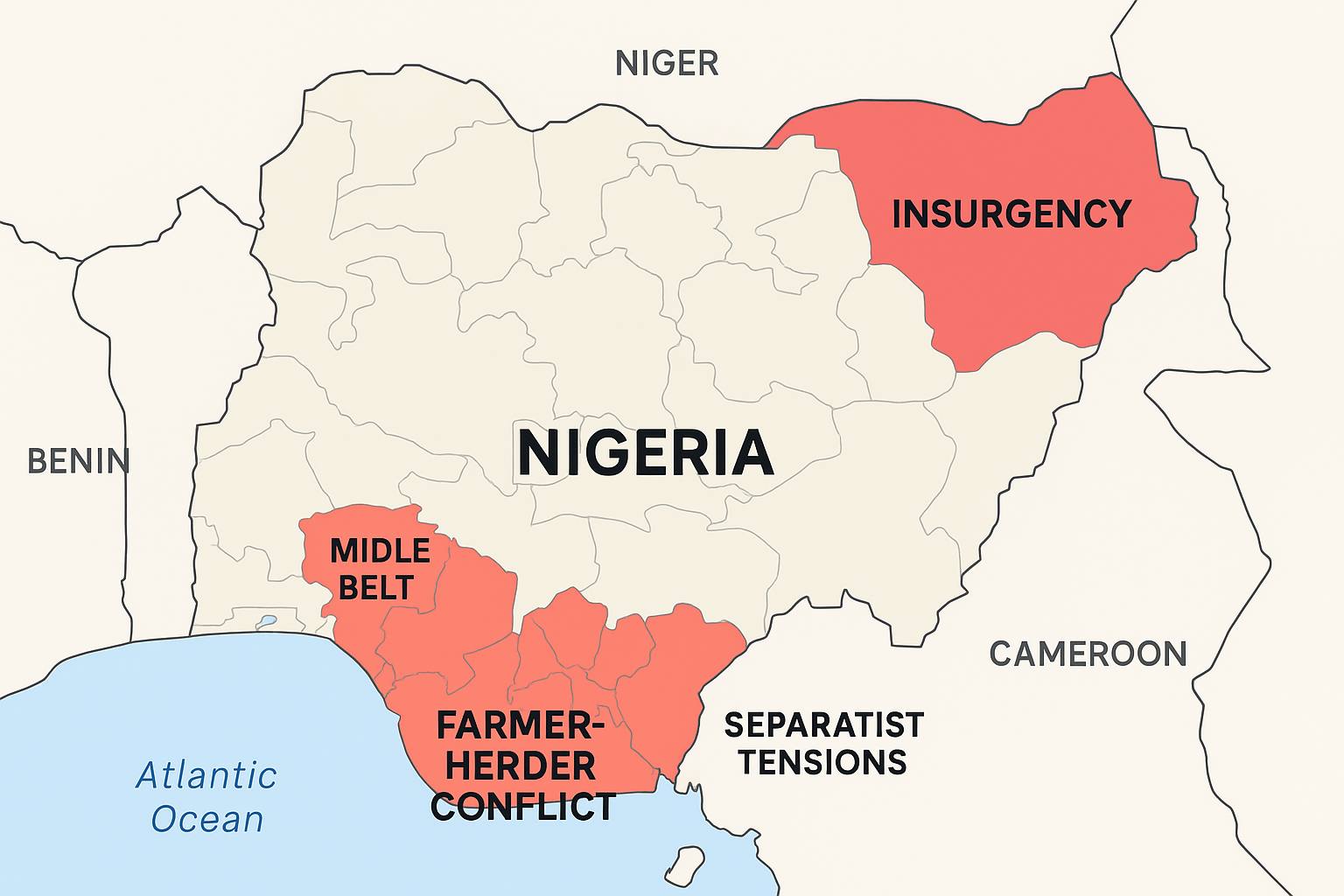
However, the pressures pushing Nigeria toward territorial overstretch are not limited to its borders. Within the country, multiple theatres of conflict operate simultaneously, stretching the armed forces across nearly all 36 states. In the Northeast, the Boko Haram insurgency now divided into the original Boko Haram faction and the Islamic State West Africa Province (ISWAP) has persisted for more than 15 years.
The insurgency has killed tens of thousands of people and displaced more than 2.5 million residents across Borno, Yobe, and Adamawa states. While the Nigerian military has recaptured many territories previously under extremist control, the insurgents continue to exploit forested areas like the Sambisa Forest and the islands of Lake Chad, attacking military patrols, raiding villages, and disrupting farming and trade.
The vastness of the terrain, coupled with the extremists’ deep knowledge of the local geography, makes year-round security a difficult and resource-intensive task.
Moving westward, new threats have emerged that further overwhelm the state’s capacity. The rise of large-scale banditry in the Northwest particularly in Zamfara, Katsina, Kaduna, Kebbi, and Niger states has created what many analysts now describe as a low-intensity war.
Bandit groups, often armed with sophisticated weapons trafficked from Libya and the Sahel, occupy forests such as the Kuyanbana, Birnin Gwari, and Kamuku reserves.
These groups conduct mass kidnappings, attack rural communities, rustle cattle, and impose “taxes” on farming villages. Some reports estimate that between 2011 and 2023, bandits killed more than 13,000 civilians and displaced hundreds of thousands more.
The geography of these regions, with their extensive forests and minimal government presence, allows bandits to operate like parallel authorities. To counter them, the military and police must constantly deploy thousands of troops, yet the situation remains highly volatile.
In the Middle Belt, particularly in Plateau, Benue, Nasarawa, and Taraba states, longstanding tensions between farming communities and nomadic herders have escalated into deadly cycles of revenge attacks.
Climate change has intensified these tensions, as the Sahara Desert expands southwards, herders migrate deeper into farming territories, leading to disputes over land, water, and grazing routes.
These conflicts have grown increasingly complex, involving ethnic, religious, and economic factors. Local vigilante groups, militias, and criminal elements take advantage of these divisions, creating a patchwork of security crises that demand extensive peacekeeping and mediation efforts. Once again, the state’s security agencies are spread thin, responding to violent outbreaks across vast rural areas.
In the South-East, separatist agitations led by the Indigenous People of Biafra (IPOB) and its militant wing, the Eastern Security Network (ESN), have created another front of instability. Attacks on police stations, government facilities, and public offices have risen sharply since 2020.
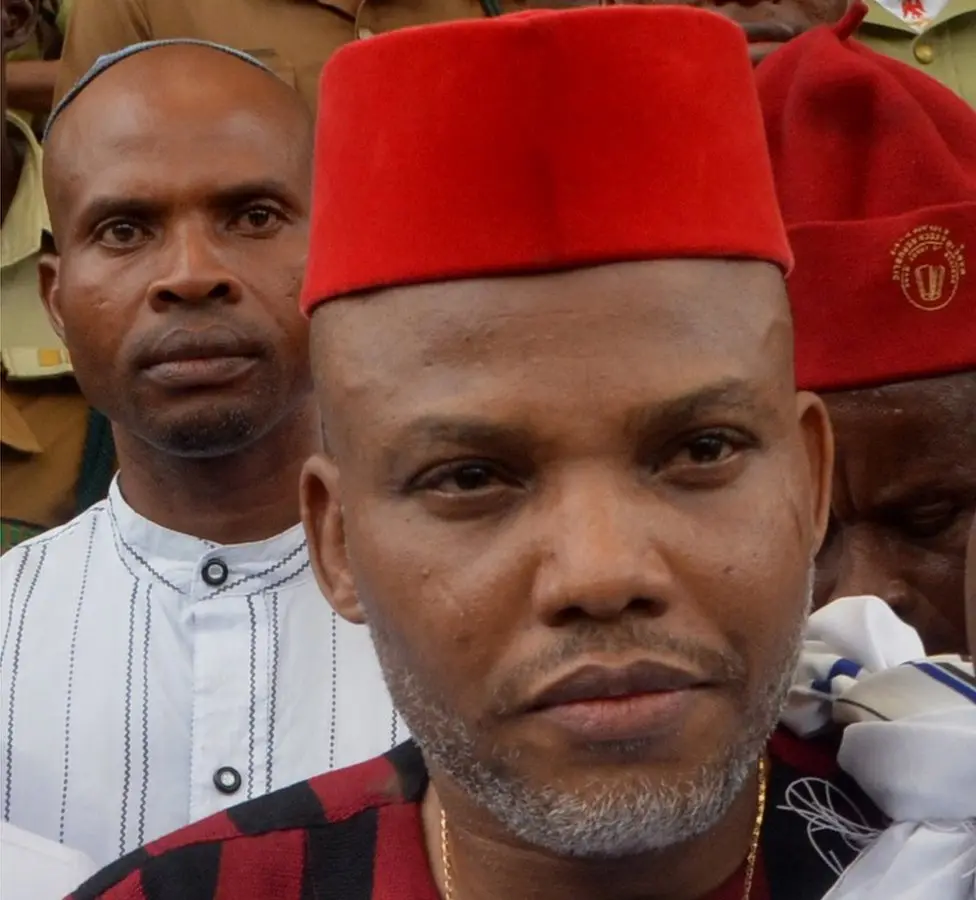
In some communities, the enforcement of “sit-at-home” orders originally introduced by separatist agitators has disrupted economic activities and weakened citizens’ confidence in federal authority. To contain these activities, the government has deployed large numbers of security personnel, increasing the already heavy burden on national forces.
The Niger Delta presents yet another dimension of territorial overstretch. The region remains the economic heart of Nigeria, producing most of the country’s crude oil.
However, the difficult terrain thick mangrove forests and winding waterways combined with longstanding grievances over environmental degradation and underdevelopment has fueled militancy, oil theft, and pipeline vandalism.
Illegal refining camps, locally known as “kpo-fire” sites, operate deep within the creeks, often under the protection of armed groups. The Nigerian Navy, Army, and Civil Defence Corps are tasked with policing thousands of kilometres of pipelines, yet the scale of the operation makes total control nearly impossible.
A critical factor underpinning this widespread overstretch is the limited capacity of Nigeria’s security forces. The country has fewer than 370,000 police officers, far below the United Nations recommendation for a country of its size.

Moreover, the police remain heavily centralized under federal control, preventing states from tailoring security to local needs. Consequently, the military has increasingly assumed roles traditionally reserved for police, resulting in constant deployments, rising fatigue among personnel, and strained resources. Nigeria has one of the highest rates of internal military deployment in the world.
Governance challenges further deepen the problem. Many of the country’s conflict-prone regions suffer from chronic underdevelopment, poor infrastructure, limited access to education or healthcare, high youth unemployment, and inadequate local government presence.
These gaps create fertile ground for armed groups who offer protection, income, or alternative authority structures. Meanwhile, corruption and mismanagement hamper security funding, while political polarization undermines coordinated national responses.
Demographic pressures add yet another layer of complexity. Nigeria’s population is projected to reach 400 million by 2050, placing the country among the top three most populous nations globally. As the population expands, so does the demand for land, resources, and security services, amplifying tensions and stretching the state even further.
The consequences of Nigeria’s territorial overstretch are far-reaching. Ungoverned spaces continue to grow; non-state actors exert significant influence; economic activities are disrupted; and millions of citizens live with limited protection.
Insecurity has weakened food production in major agricultural zones, worsened poverty levels, and intensified humanitarian crises. As of 2024, Nigeria hosts more than 3 million internally displaced persons, many of whom have been uprooted multiple times due to persistent violence.
Addressing territorial overstretch will require a comprehensive transformation of Nigeria’s security and governance architecture. Strengthening border security through regional cooperation, modern surveillance technologies, and community-based monitoring is essential.
Police reforms, including the establishment of state or regional policing structures, would bring security closer to the people. Expanding rural development in the form of roads, schools, irrigation, and agricultural support—would reduce the appeal of armed groups.
Equally important is tackling corruption, improving intelligence-gathering capabilities, and promoting dialogue in conflict-prone regions. The government must also work closely with neighbouring countries, particularly through platforms like the Multinational Joint Task Force (MNJTF), to contain cross-border extremist movements.
Nigeria stands at a pivotal moment. Its ability to overcome territorial overstretch will depend on whether it can strengthen its institutions, rebuild public trust, and adapt its security strategies to the realities of a complex and rapidly changing nation.
Failure to act decisively risks allowing non-state actors to gain further ground, threatening the country’s cohesion and future stability. However, with the right reforms and sustained political will, Nigeria can begin to reclaim its overstretched territories and steer itself toward a more secure and unified future.