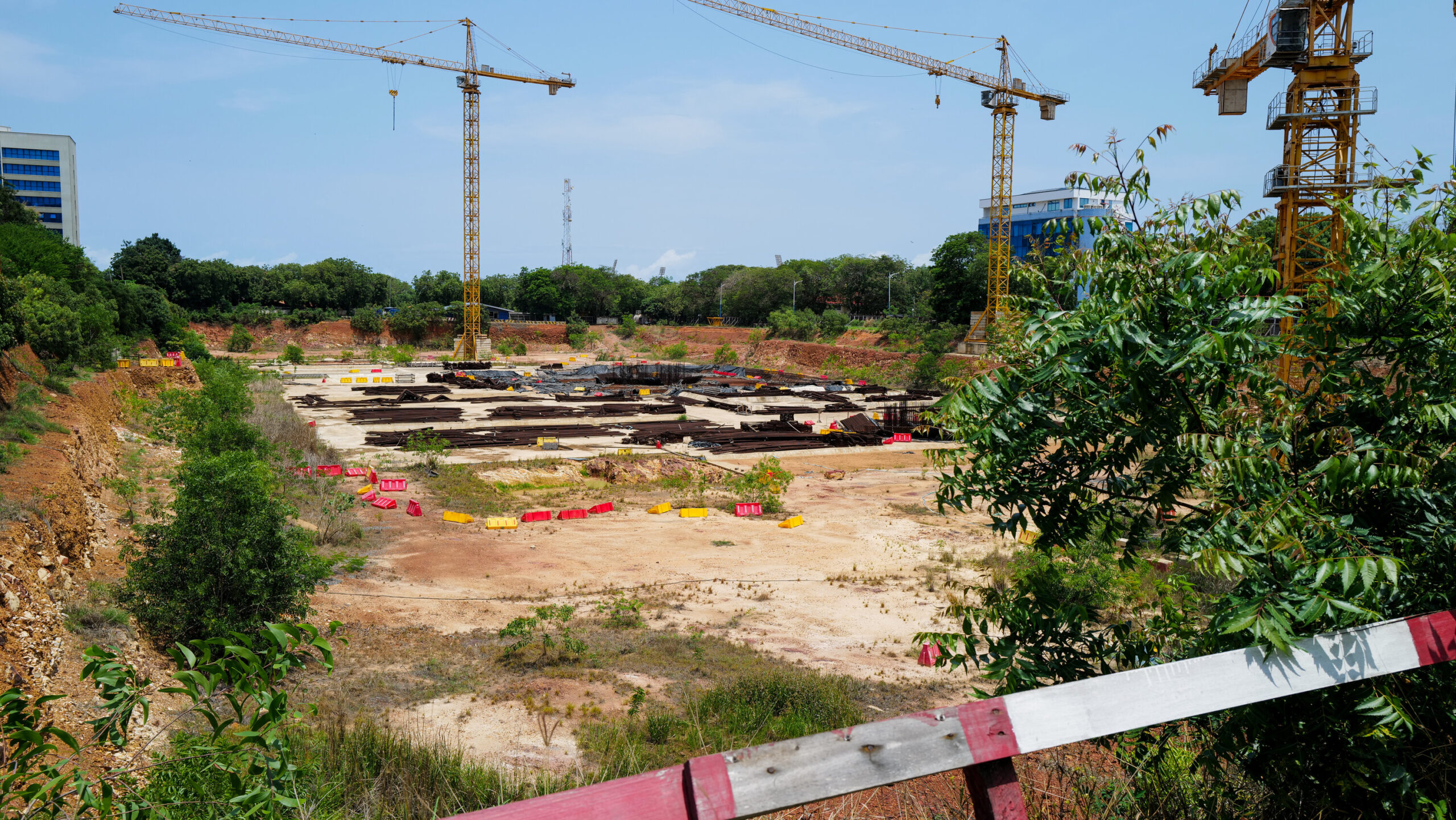
Accra, Ghana – The National Cathedral project, proposed by the government in March 2017, was intended to stand as a powerful national symbol, one that would embody unity, spirituality, and a shared cultural identity in a deeply religious society.
Nearly a decade later, however, the ambitious project has evolved into one of the most contentious public debates in the country, raising difficult questions about governance, accountability, and national priorities at a time of economic strain.
From the outset, the vision for the cathedral was grand. It was designed as a $350-million interdenominational Christian complex that would include a 5,000-seat auditorium, multiple chapels, a baptistery, a Bible museum, and spaces for national religious ceremonies.
The cathedral was also meant to host state functions, positioning it as both a spiritual and civic landmark. Supporters argued that the structure would rival iconic religious sites around the world, placing Accra on the global map as a destination for faith-based tourism and cultural exchange.
The project was closely tied to a personal pledge made by President Nana Akufo-Addo, who said he promised to build the cathedral as an act of gratitude to God after winning the 2016 election. For many of his supporters, the cathedral represents a fulfillment of that vow and a reflection of Ghana’s strong Christian identity, an identity that shapes public life, politics, and community values across much of the country.
Yet even in its early stages, the project attracted scrutiny. Questions emerged about its cost, its funding model, and whether it should be a priority for a developing nation facing significant economic and social challenges.
Over time, those concerns have only intensified, particularly as Ghana has grappled with rising inflation, currency instability, and mounting public debt.
A Vision Backed by Faith and Leadership
Despite the controversy, the National Cathedral project has received backing from several influential figures. Traditional leaders such as the Asantehene, as well as prominent Christian clergy, have expressed support, describing the cathedral as a unifying national symbol that transcends denominational divides.
In a country where religion plays a central role in daily life, many see the project as a natural extension of Ghana’s identity.
Supporters argue that the cathedral could serve as a rallying point for national cohesion, particularly in times of crisis. They also emphasize its potential economic benefits, including job creation during construction, increased tourism, and the hosting of international religious events.
For these advocates, the cathedral is not merely a building but a long-term investment in Ghana’s cultural and spiritual capital.
The government initially maintained that the project would be funded largely through private donations, particularly from Ghana’s Christian community. A board of trustees was established to oversee fundraising efforts, and appeals were made to churches, businesses, and individuals both within Ghana and across the diaspora.
This approach was intended to minimize the burden on public finances while encouraging a sense of collective ownership.
Mounting Concerns Over Funding and Priorities
However, the funding model has become one of the most controversial aspects of the project. The government’s decision to allocate an additional GH¢25 million to the National Cathedral Secretariat has reignited public outrage, with critics arguing that it contradicts earlier assurances that taxpayer money would not be heavily used.
For many Ghanaians, this move has become a flashpoint in a broader debate about fiscal responsibility. The country has faced significant economic pressures in recent years, including high inflation, unemployment, and challenges in funding essential public services. In this context, the allocation of public funds to a large-scale religious project has struck some as tone-deaf.
Citizens and civil society groups have increasingly voiced their frustrations, both online and in public forums. A common question raised is whether Ghana truly needs another large church when the country already has thousands of places of worship. Some have suggested that existing national venues, such as Independence Square, could be used for major religious gatherings instead of constructing a new and costly facility.
Others have pointed to pressing national needs that they believe should take precedence. These include investments in infrastructure, job creation, healthcare, and education, areas where many communities continue to face significant gaps. The government’s flagship initiatives, such as Agenda 111 and One District One Factory, have also been cited as projects that require sustained funding and attention.
The perception that the cathedral is being prioritized over these initiatives has fueled a growing sense of discontent. For some, the issue is not opposition to the cathedral itself, but rather the timing and scale of the investment.
Public Sentiment and the Question of Leadership
Public reaction to the project has been deeply divided. While some continue to support it on religious or cultural grounds, others see it as emblematic of broader governance challenges. Social media platforms and public discussions have become arenas for intense debate, with many citizens questioning whether the project aligns with the needs of ordinary Ghanaians.
One recurring argument is that should not come at the expense of public resources. This sentiment has been echoed by activists and commentators who argue that political leaders have an obligation to prioritize the welfare of their citizens above symbolic projects.
“If this Cathedral is a personal promise to God by the President, then he should also fulfill his promises to the people of Ghana,” one civil society activist remarked.
At the same time, the debate has highlighted deeper questions about the role of religion in public life. Ghana is a secular state, yet religion remains a powerful force in politics and society. The National Cathedral project sits at the intersection of these dynamics, raising questions about how governments should balance spiritual aspirations with practical governance.
Critics have also pointed to the broader economic context. Ghana has faced significant financial challenges in recent years, including negotiations with international lenders and efforts to stabilize its economy. In such a climate, large public expenditures, particularly those perceived as non-essential are likely to attract heightened scrutiny.
Calls for Transparency and Accountability
As the controversy has grown, so too have calls for greater transparency. Civil society organizations, policy analysts, and concerned citizens have urged the government to provide detailed accounts of how funds for the cathedral are being sourced and spent. There have also been demands for an independent audit of the project to ensure accountability.
Parliament has been called upon to play a more active oversight role, particularly given the use of public funds. Advocates for transparency argue that such measures are essential not only for the cathedral project but for maintaining public trust in government more broadly.
The issue of accountability has become central to the debate. For many Ghanaians, the cathedral is no longer just about religion or architecture, it is about how decisions are made, how resources are allocated, and how leaders are held responsible.
A Symbol of Unity or Division?
What began as a vision of unity has, for some, become a source of division. The National Cathedral was intended to bring people together across denominational and cultural lines, yet it has instead exposed differing views on what national unity should look like.
Supporters continue to argue that the cathedral will ultimately serve as a unifying symbol, one that reflects Ghana’s shared values and faith. They believe that once completed, it will stand as a testament to the country’s identity and resilience.
Critics, however, worry that the project risks deepening divisions, particularly if it is seen as prioritizing certain interests over others. They argue that true unity cannot be achieved through symbolism alone, but must be grounded in policies that address the needs and aspirations of all citizens.
A Broader Reflection on Ghana’s Future
As debates over the National Cathedral continue, the project has taken on a significance that goes far beyond its physical structure. It has become a lens through which Ghanaians are examining their country’s direction, their leaders’ decisions, and their own expectations for the future.
At its core, the controversy reflects a fundamental tension between vision and reality. On one hand, there is a desire to create something lasting and meaningful, a symbol of faith and national pride. On the other, there is the immediate reality of economic hardship and the urgent need for practical solutions.
For many, the question is not whether the cathedral should exist, but whether it should take precedence at this moment in Ghana’s history. The answer to that question varies widely, depending on individual perspectives, experiences, and priorities.
What is clear, however, is that the National Cathedral has become a defining issue, one that encapsulates broader debates about governance, accountability, and the role of leadership in challenging times.
As Ghana navigates its path forward, the outcome of this debate may well shape not only the fate of the cathedral, but also the country’s broader approach to development and national identity.
“The true worship of God,” one commentator noted, “is seen in how leaders treat their people with justice, compassion, and accountability.”
For many Ghanaians, that sentiment captures the heart of the debate: a call to ensure that, whatever decisions are made, they reflect a commitment to justice, compassion, and the collective good.