

An extraordinary visitor from beyond our solar system just completed its closest flyby of Earth, offering scientists a rare glimpse into the composition and behavior of objects from interstellar space.
What is Comet 3I/ATLAS?
Comet 3I/ATLAS reached its closest point to Earth on December 19, 2025, at approximately 1:00 a.m. EST, passing at a safe distance of about 168 million miles (270 million kilometers), or nearly twice the average distance between Earth and the sun. This marks only the third time in recorded history that astronomers have confirmed an interstellar object visiting our cosmic neighborhood.
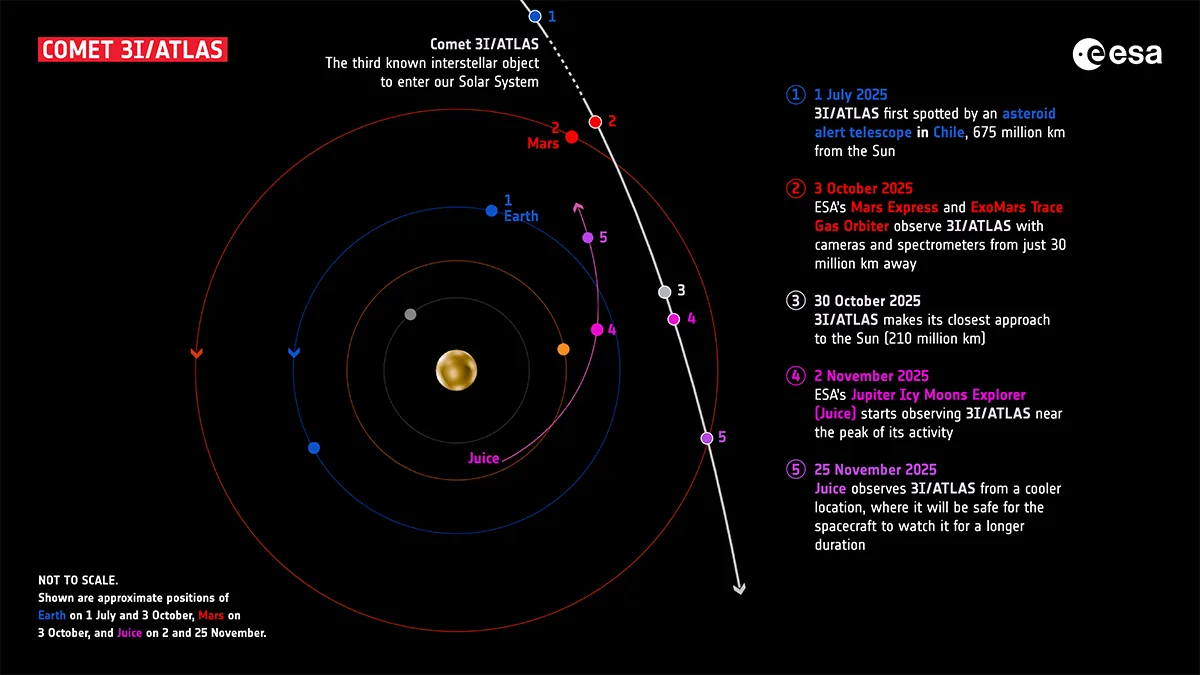
The NASA-funded ATLAS (Asteroid Terrestrial-impact Last Alert System) survey telescope in Rio Hurtado, Chile, first reported observations to the Minor Planet Center of comet 3I/ATLAS on July 1, 2025. The designation “3I” signifies that this is the third confirmed interstellar object, following 1I/’Oumuamua in 2017 and 2I/Borisov in 2019.
Record-Breaking Speed and Size
The cosmic snowball is traveling at extraordinary velocities through our solar system. 3I/ATLAS has spent the past several months zooming through the inner solar system at an estimated 130,000 mph (210,000 km/h), making it one of the fastest objects ever tracked by astronomers.
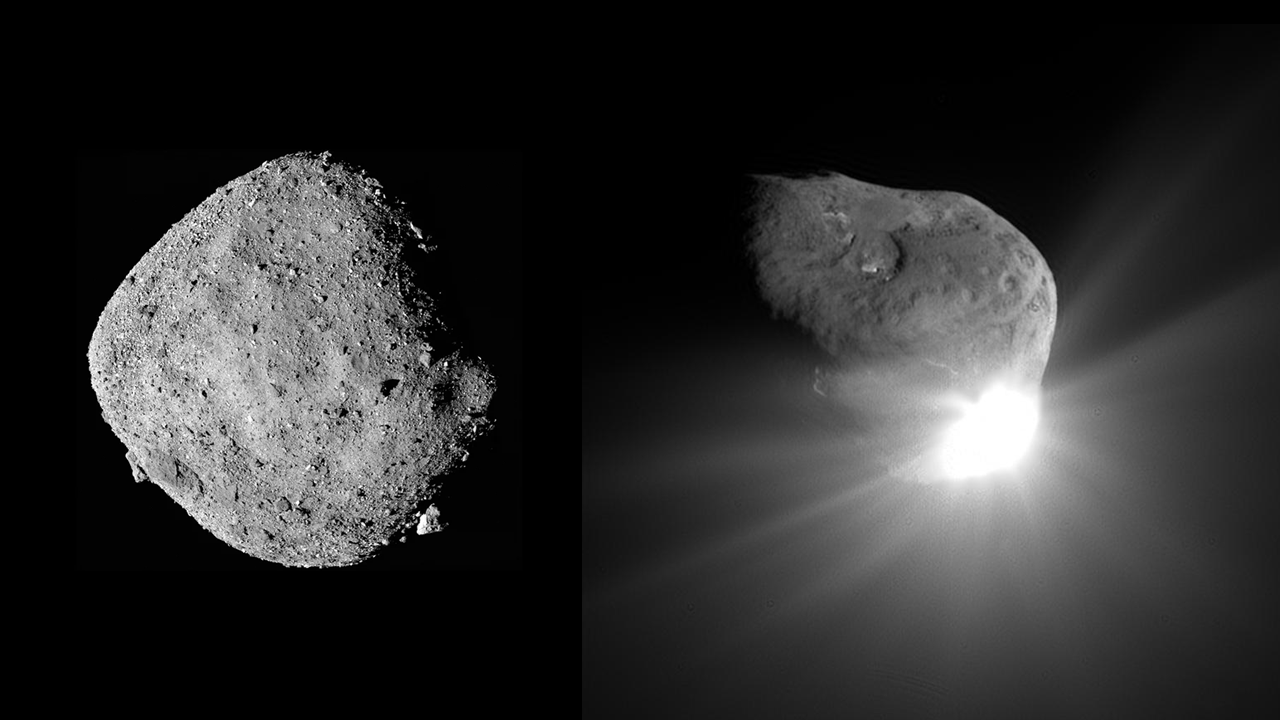
Scientists estimate the comet’s nucleus measures between 1,444 feet (440 meters) and 3.5 miles (5.6 kilometers) across, potentially making it the largest interstellar object ever observed.
NASA’s Fleet Captures Unprecedented Images
Multiple NASA spacecraft captured remarkable images of 3I/ATLAS during its journey. NASA’s Hubble Space Telescope captured images on November 30, when it was about 178 million miles (286 million km) from the comet. The observations showed considerably more detail than initial July images, revealing the comet’s active coma and distinctive characteristics.
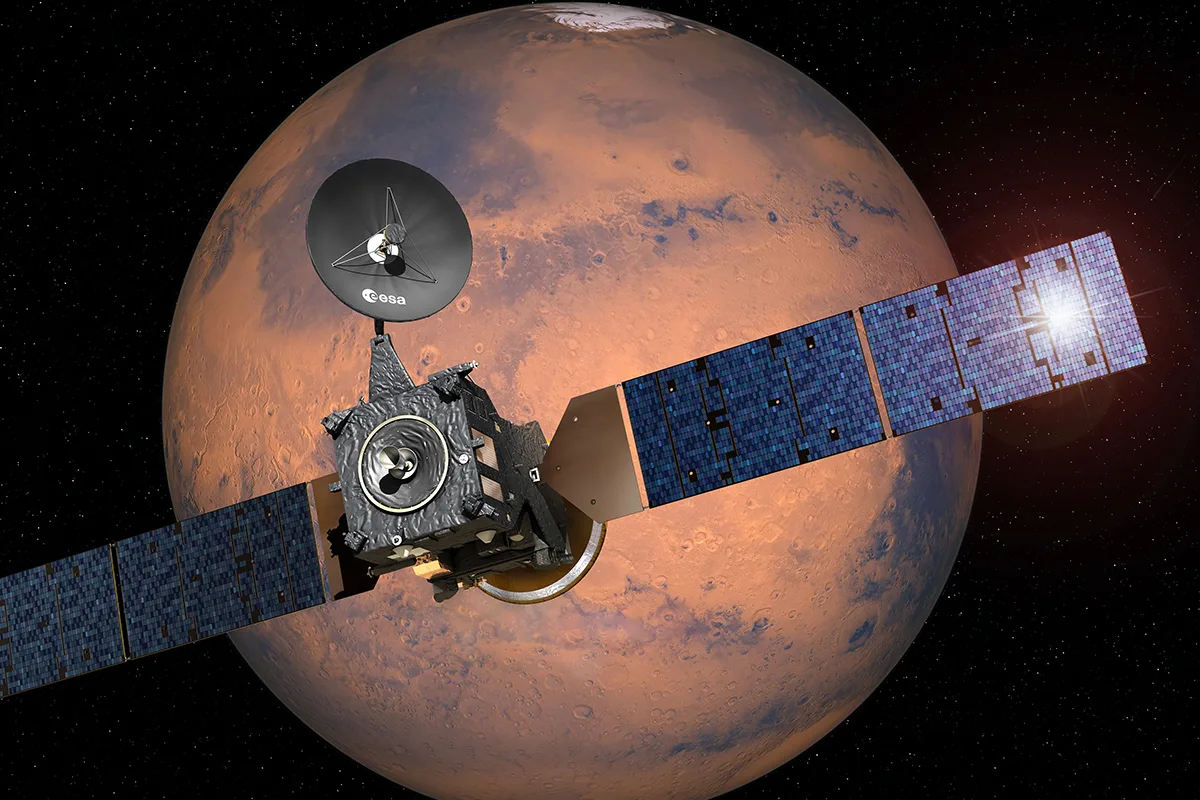
NASA’s Perseverance rover paused from its exploration of Mars and used its mastcam to take a picture of the comet, while instruments on the MAVEN spacecraft captured the halo of gas and dust surrounding 3I/ATLAS during its October approach to the Red Planet.
First Interstellar Comet Observed in X-ray Light
In a historic first, 3I/ATLAS became the first interstellar comet to have been observed in X-ray light when X-ray telescopes XRISM and XMM-Newton observed the comet in late November and early December, revealing a diffuse X-ray glow around the comet nucleus.
ESA’s XMM-Newton observed 3I/ATLAS on December 3 for around 20 hours when the comet was about 282–285 million km from the spacecraft. These X-ray observations are particularly valuable because they can detect gases like hydrogen and nitrogen that are nearly invisible to optical and ultraviolet instruments.
Unusual Chemical Composition Puzzles Scientists
The comet has revealed several peculiar characteristics that distinguish it from typical solar system comets. Researchers discovered that the coma of 3I/ATLAS has a CO₂-to-water mixing ratio of 8.0±1.0—one of the highest CO₂ abundances seen in a comet, especially at its distance from the Sun (3.32 AU) when first observed by JWST.
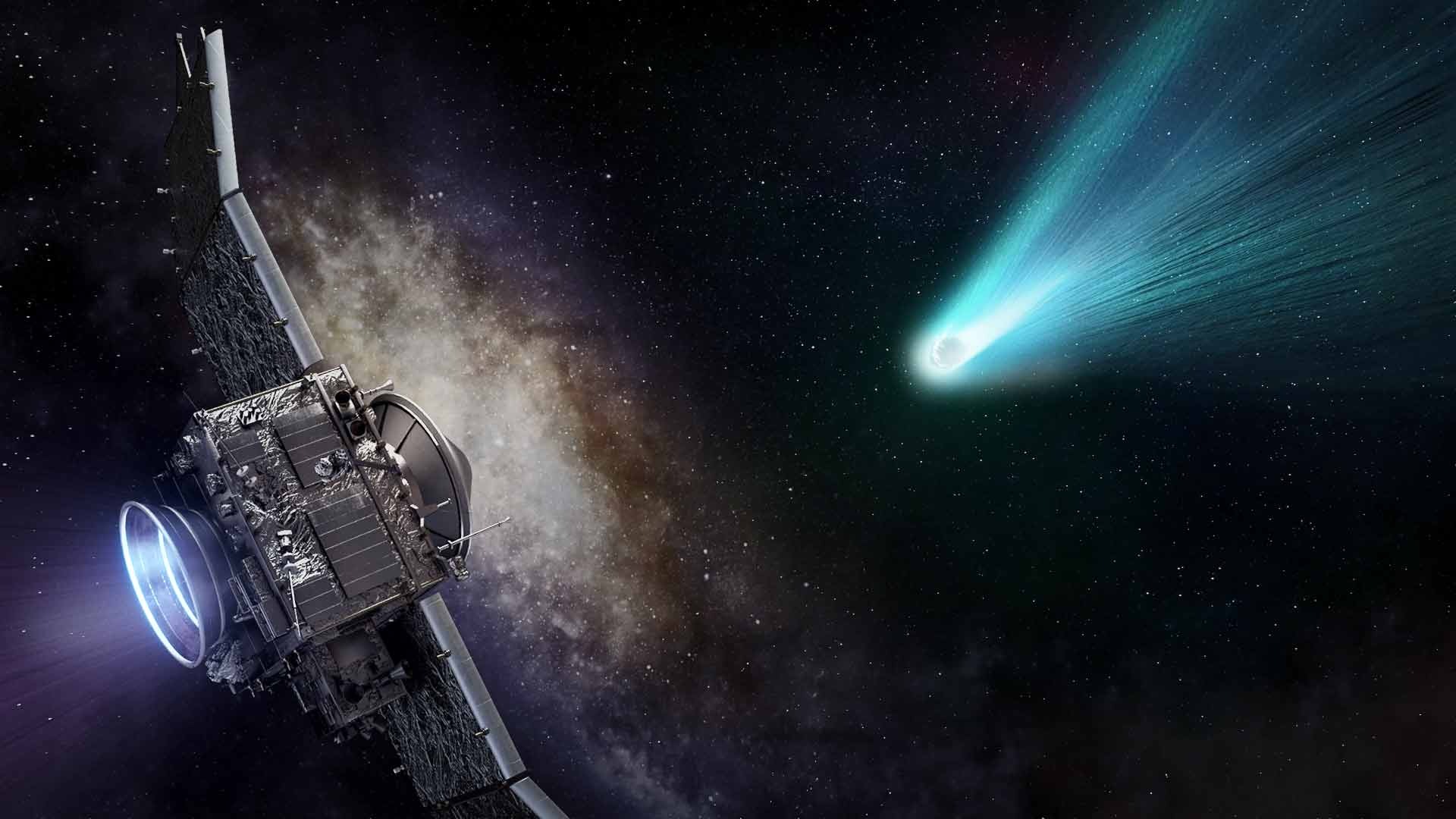
 Recent images from the Gemini North telescope in Hawaii confirm the comet has gotten brighter and greener since its close flyby of the sun in October. The green coloration, typically caused by diatomic carbon molecules excited by solar radiation, appeared later in 3I/ATLAS’s journey than expected, adding to the comet’s mysterious nature.
Early measurements revealed unusually high amounts of nickel and iron, noting a “potentially extreme composition” unlike any other comet. Scientists have also detected hydrogen cyanide and methanol in significant quantities.
Where is 3I/ATLAS Heading Next?
The comet does not follow a closed orbital path about the Sun due to the hyperbolic shape of its orbital path, meaning it will eventually leave our solar system forever, returning to interstellar space.
 Astronomers expect 3I/ATLAS to remain visible through ground-based telescopes until spring 2026, providing continued opportunities for observation as it heads toward the outer solar system. The comet will pass Jupiter at a distance before ultimately exiting our cosmic neighborhood at the same speed it entered.
Why This Discovery Matters
Interstellar objects like 3I/ATLAS provide invaluable insights into planetary formation around distant stars. These comets carry clues about the formation of worlds far beyond our own, as every planet, moon, asteroid, comet and lifeform in our Solar System share a common origin, but interstellar comets are true outsiders.
The comet may originate from either the Milky Way’s thin disk or thick disk. If it came from the thick disk, scientists estimate 3I/ATLAS could be at least 7 billion years old—older than our solar system itself—making it a pristine sample of ancient cosmic material.
How to See 3I/ATLAS
While the comet made its closest approach on December 19, it remains visible with telescopes in the pre-dawn sky. Amateur astronomers with telescopes of at least 200mm (8 inches) aperture may be able to spot the diffuse object in the constellation Leo.
 The Virtual Telescope Project has been offering livestream observations for those unable to view the comet directly, weather permitting.
No Threat to Earth
Comet 3I/ATLAS poses no threat to Earth and will remain far away, with its closest approach being about 1.8 astronomical units (about 170 million miles, or 270 million kilometers).
As 3I/ATLAS continues its journey back to interstellar space, scientists worldwide are analyzing data from dozens of observatories to unlock the secrets this ancient cosmic visitor holds.
 The comprehensive observations of this rare interstellar traveler represent a landmark moment in astronomical history, providing humanity with unprecedented insights into the nature of objects from beyond our solar system.
Key Facts
Discovery Date: July 1, 2025 | Discovered By: ATLAS telescope system, Chile
Closest Approach to Earth: December 19, 2025, at 1:00 a.m. EST
Distance at Closest Approach: 168 million miles (270 million km)
Speed: Approximately 130,000 mph (210,000 km/h)
Size: Between 1,444 feet and 3.5 miles in diameter
Status: Third confirmed interstellar object