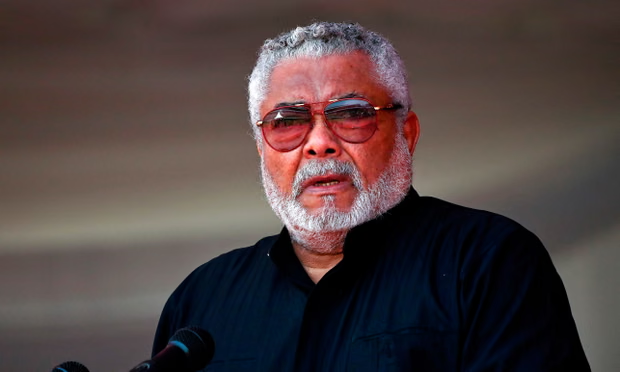
Jerry John Rawlings, the former military leader who later became the face of Ghana’s democratic transition, has died at the age of 73.
President Nana Akufo-Addo announced that Rawlings passed away on Thursday morning in a hospital in Accra after a short illness, describing his death as the fall of “a great tree” and a significant loss for the nation.
Rawlings rose to prominence after leading two military coups, first in 1979 and then in 1981. The early years of his rule were marked by a strict crackdown on corruption and indiscipline within the armed forces and political class.
Several senior military officers including Gen. Frederick Akuffo, whom Rawlings ousted in his first takeover were executed. These events would later cast long shadows over his legacy.
Born to a Scottish father and a Ghanaian mother, Rawlings joined the Ghana Air Force and graduated in 1969. By 1979 he was an air force lieutenant who seized power in a dramatic coup, only to transfer authority to a civilian government shortly afterward.
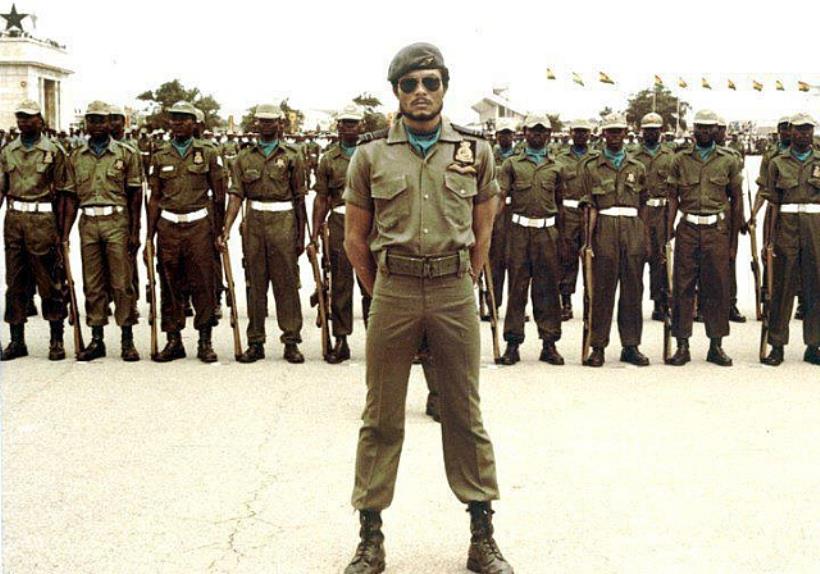
However, growing frustration with corruption and mismanagement compelled him to lead a second coup in 1981. This time, he remained in power as the head of a military-civilian government until 1993.
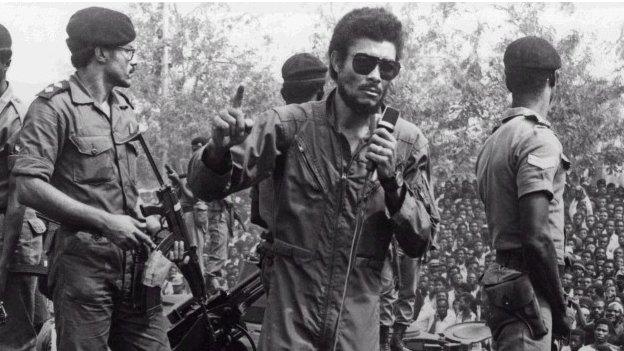
Rawlings initially embraced left-leaning, state-centered economic policies inspired by the Soviet Union and Cuba. But as Ghana’s economy deteriorated, he pivoted toward market-oriented reforms.
His government liberalized key sectors, encouraged foreign investment, and laid the groundwork for sustained economic growth. The shift earned him both critics and admirers, but it helped stabilize a struggling nation.
The early 1990s brought sweeping calls for democracy across Africa. Rawlings responded by opening the door to multi-party politics and organizing Ghana’s first presidential elections since 1979. He won the 1992 vote and was re-elected in 1996.
In 2001, after serving the constitutional limit of two terms, he peacefully handed power to opposition candidate John Kufuor. The transition strengthened Ghana’s reputation as one of West Africa’s most stable democracies, where political power regularly changes hands without violence.
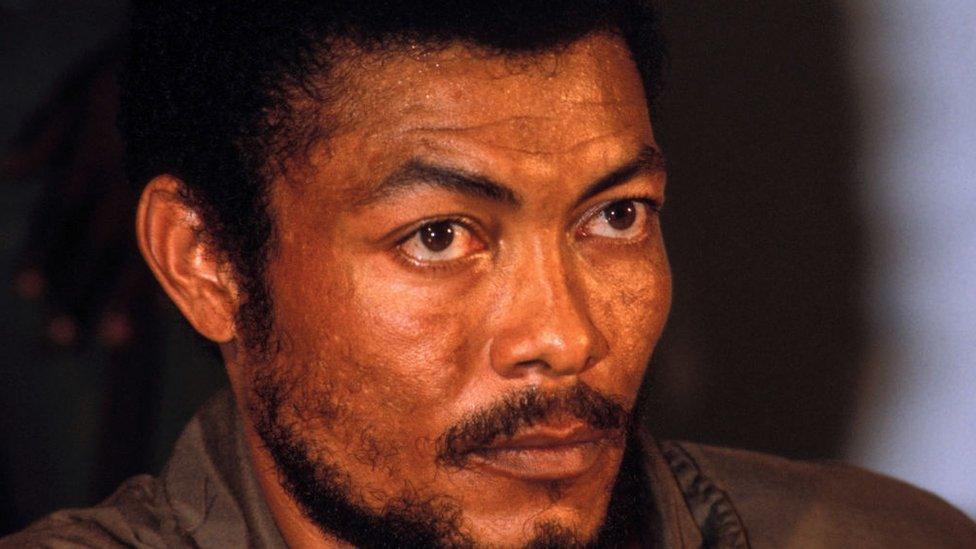
After leaving office, Rawlings remained a towering figure in Ghanaian politics. He played the role of party elder within the National Democratic Congress (NDC), which he founded, and took on several international assignments, including serving as the African Union’s special representative in Somalia. His influence continued to be felt across the continent.
Tributes poured in from African leaders following his death. The African Union Commission chair, Moussa Faki Mahamat, hailed him as a “stalwart of pan-Africanism and a charismatic continental statesman.”
Nigerian President Muhammadu Buhari praised Rawlings for his “passion, discipline and moral strength,” while Liberian President George Weah thanked him for the role he played in supporting peace during Liberia’s turbulent years.
In Ghana, the NDC’s presidential candidate and former president John Mahama suspended his campaign for the upcoming December elections out of respect. President Akufo-Addo declared seven days of national mourning in honor of the man who, despite political differences, he recognized as instrumental in shaping modern Ghana.
Rawlings’ legacy is complex. He admitted regret over the executions that took place under his leadership, including the killing of three Supreme Court judges that deeply scarred the nation. He often stated that he despised bloodshed and preferred justice through accountability and reform rather than violence. Yet his early years in power were undeniably harsh.
Still, Rawlings is widely remembered for ushering Ghana out of a cycle of coups and into a sustained era of constitutional rule.
His transition from revolutionary soldier to democratic statesman set Ghana on a political path that has endured for decades. In his later years, he campaigned vigorously for debt relief for African nations, arguing that fairer global economic systems were essential for the continent’s advancement.
From his dramatic entrance onto the political stage to his final years as an elder statesman, Jerry John Rawlings remained one of the most influential and charismatic leaders of modern Africa. His death marks the end of an era, but the political stability he helped create continues to define Ghana today.