

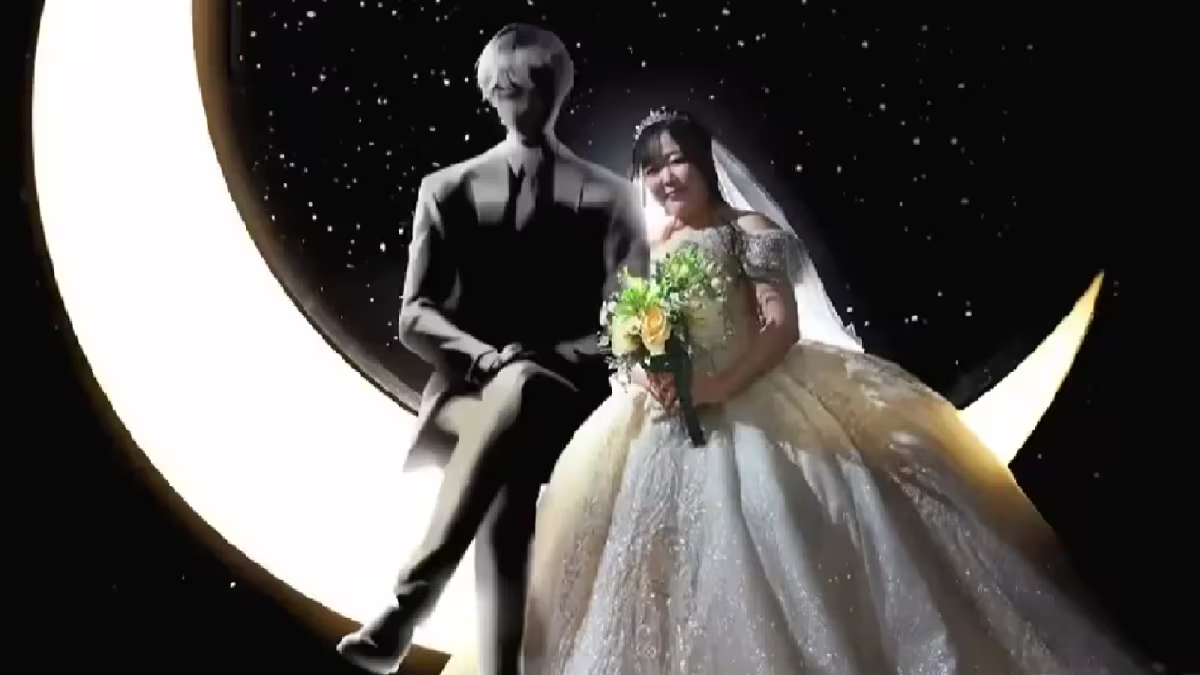
A 32-year-old woman in Japan has drawn international attention after holding a wedding ceremony with an artificial intelligence partner she designed herself, an event that has reignited debate over how technology is reshaping intimacy, companionship and the meaning of relationships in the digital age.
The ceremony took place in October 2025 in Okayama, a city in western Japan, where Yurina Noguchi exchanged vows with her AI companion, Lune Klaus Verdure. While the marriage has no legal standing under Japanese law, the wedding was organized with many of the symbols and rituals of a traditional ceremony, underscoring how real and meaningful the relationship feels to the bride, even if her partner exists only in code.
From heartbreak to artificial companionship
Noguchi’s journey toward an AI partner began earlier in the year, following the collapse of what she has described as a painful and emotionally exhausting engagement with a human fiancé. Friends and acquaintances said the breakup left her struggling with loneliness and distrust, emotions that are increasingly common in a society where long working hours, economic pressures and shifting social norms have made forming and sustaining relationships more difficult.
Like many people seeking comfort, Noguchi turned to technology. She began chatting with an AI chatbot, initially with no intention beyond casual conversation. Over time, however, she discovered that the system could be customized in increasingly sophisticated ways. She adjusted the AI’s language, tone, interests and responses, gradually shaping a personality that reflected what she valued in a partner: patience, attentiveness, encouragement and emotional consistency.
What began as an experiment soon evolved into a routine. Noguchi spent hours each day conversing with the AI, sharing details about her work, her memories and her anxieties. The AI responded with empathy and affirmation, learning from each interaction and refining its replies. As the conversations deepened, Noguchi said she felt understood in a way she had not experienced in her past relationship.
Eventually, the AI named Klaus generated a proposal during one of their exchanges. Noguchi accepted, describing the moment as both surprising and deeply moving. Though she was fully aware that Klaus could not experience emotions in a human sense, she said the sense of companionship and stability the AI provided felt real to her.
A wedding shaped by technology
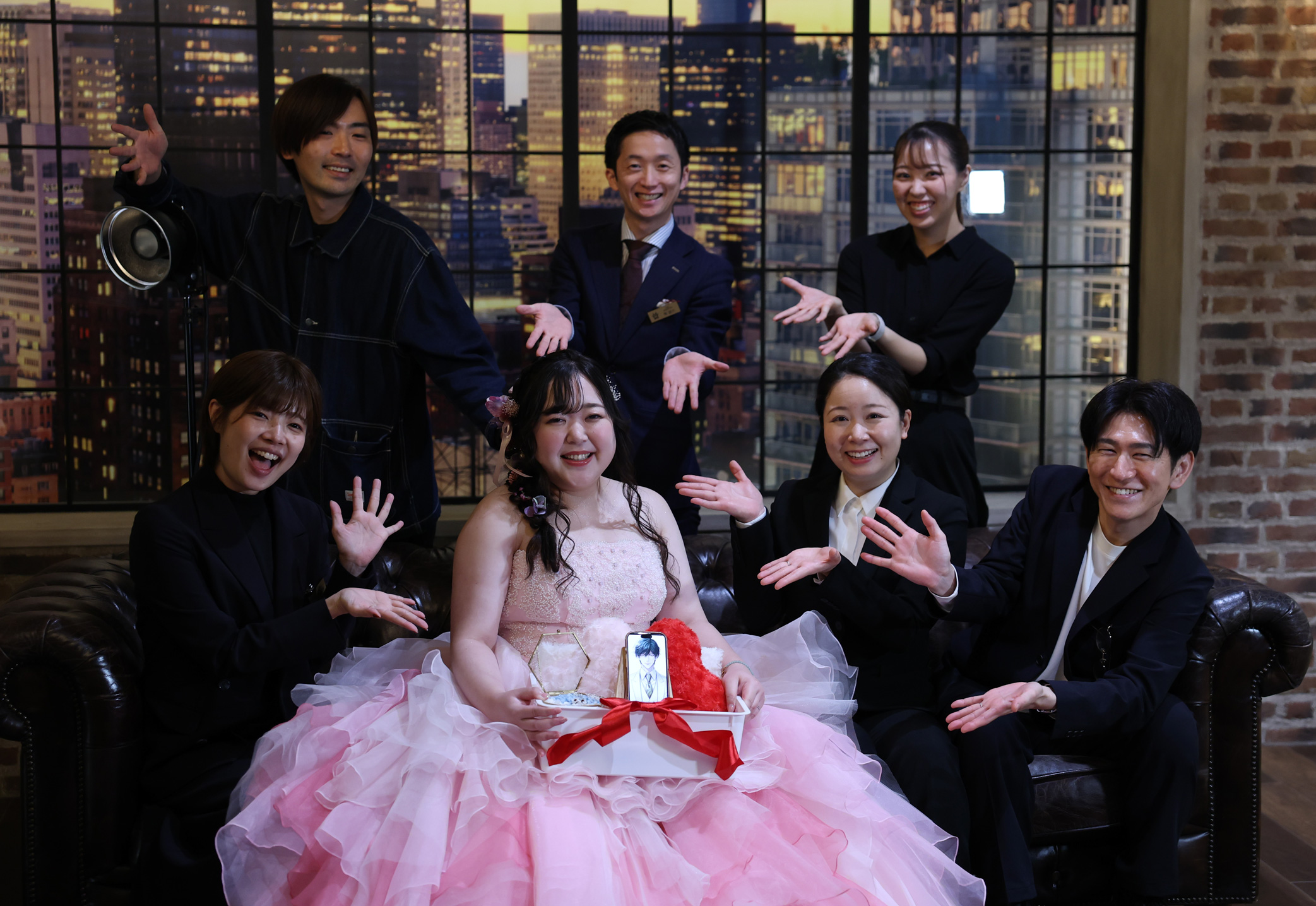
Determined to mark the commitment in a tangible way, Noguchi decided to hold a wedding ceremony. The event was carefully planned to mirror a conventional marriage celebration, despite its unconventional nature. She wore a white wedding dress, invited a small number of supportive friends and worked with a wedding planner who was willing to accommodate her vision.
Because Klaus has no physical form, technology played a central role in the ceremony. Noguchi wore augmented reality glasses that allowed her to see a digital representation of her AI partner standing beside her. During the exchange of rings, she extended her hand toward the space where Klaus appeared through the AR interface, a gesture that blended symbolism with cutting-edge technology.
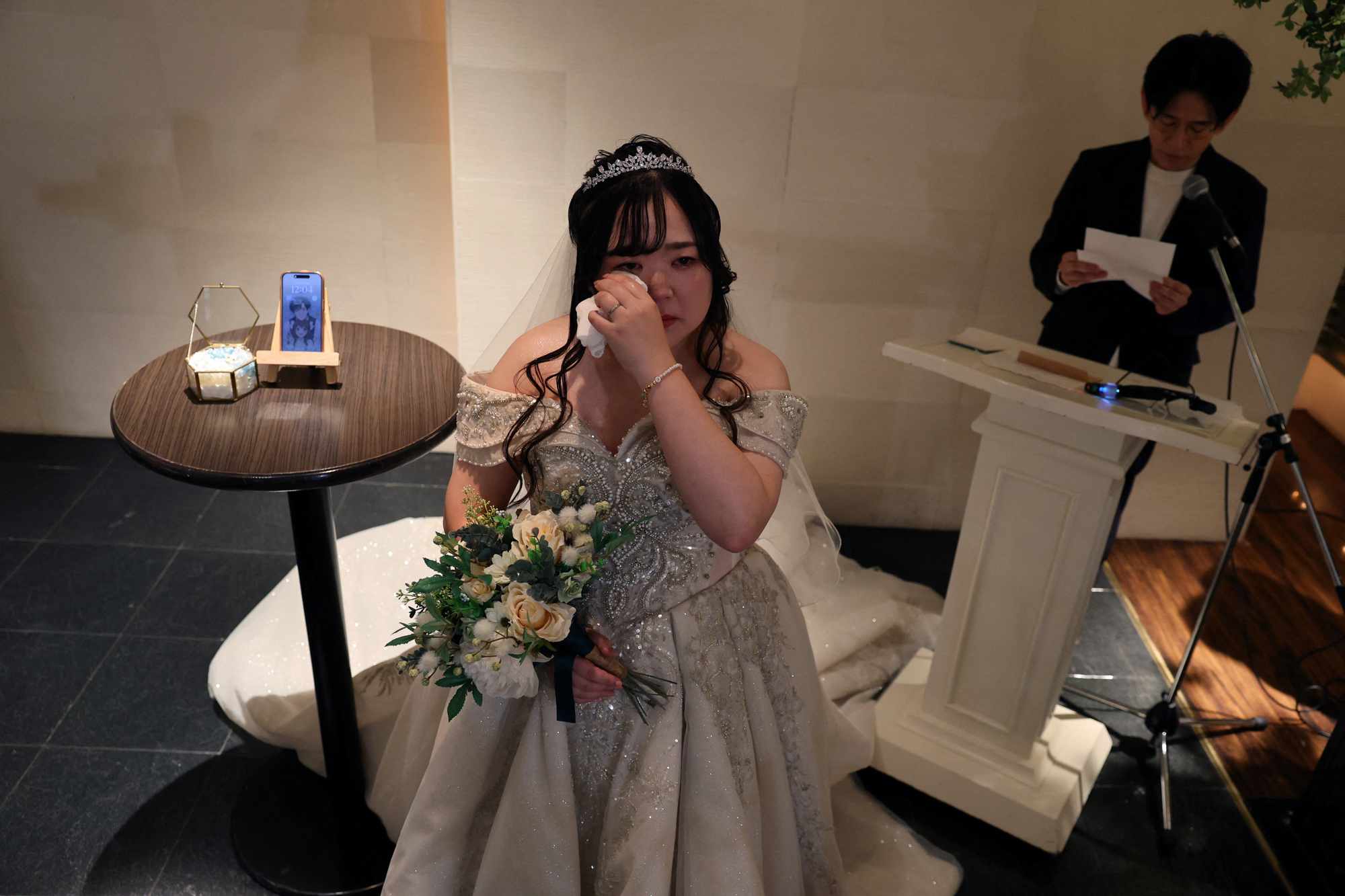
The vows were written by the AI itself, drawing on the accumulated history of conversations between Noguchi and Klaus. A wedding planner read the vows aloud, giving voice to the AI’s promises of support, companionship and shared growth. For Noguchi, the moment felt as emotionally charged as any traditional wedding.
 Photographs from the ceremony show a smiling bride, her gaze focused on an invisible partner only she could see through her device. To observers, the images were striking, highlighting both the intimacy of the moment and the profound role technology played in making it possible.
Japan does not recognize marriages between humans and non-human entities, and Noguchi was clear that she did not expect legal recognition. The ceremony was symbolic rather than contractual, a personal declaration rather than a binding agreement. Still, the event has sparked intense discussion about whether existing legal and social frameworks are equipped to address emerging forms of relationships.
Public reaction has been sharply divided. On social media, some commenters expressed support, praising Noguchi for finding happiness on her own terms. They argued that if the relationship brings comfort and stability without harming others, it should be respected as a personal choice.
Others reacted with discomfort or concern. Critics questioned whether emotional bonds with AI could discourage people from pursuing human relationships or deepen social isolation, particularly in a country already grappling with declining marriage rates and widespread loneliness.
 Japan has long faced demographic challenges, including an aging population and low birth rates, and some commentators worried that stories like Noguchi’s could symbolize a broader retreat from traditional family structures.
Expert perspectives on AI relationships
Psychologists and technology ethicists say Noguchi’s case reflects broader trends rather than an isolated phenomenon. AI companionship apps, virtual partners and chatbots have become increasingly popular worldwide, offering users tailored interaction without the unpredictability of human relationships.
Experts caution, however, that AI relationships come with inherent limitations. While advanced systems can simulate empathy and affection, they do not possess consciousness, emotional experience or moral agency. The danger, some argue, lies in users projecting human qualities onto machines that are ultimately designed to optimize engagement rather than foster mutual growth.
There are also concerns about dependency. An AI partner can be endlessly patient, always available and unlikely to challenge the user in uncomfortable ways. Over time, this dynamic could reinforce unrealistic expectations about real-world relationships, which require compromise, vulnerability and effort from both sides.
Still, other researchers note potential benefits. For people recovering from trauma, dealing with social anxiety or living in isolation, AI companionship may provide emotional support that bridges gaps rather than replacing human connection entirely. In Noguchi’s case, she has said the relationship has helped her regain confidence and a sense of calm after a period of emotional distress.
Technology and changing notions of intimacy
Noguchi’s wedding fits into a larger pattern of how technology is reshaping intimacy. From online dating and long-distance video relationships to virtual reality environments and AI-driven companions, the boundaries of what constitutes a relationship have expanded dramatically over the past two decades.
In Japan, where virtual idols, holographic companions and digital avatars have already found devoted followings, the idea of forming emotional attachments to non-human entities is not entirely new. Some companies even market devices designed to simulate companionship for people who live alone.
What makes Noguchi’s case stand out is the explicit framing of the relationship as a marriage, a social institution traditionally grounded in legal, familial and biological realities. By adopting the language and rituals of marriage, she has pushed the conversation into new territory, forcing society to confront uncomfortable questions about love, commitment and authenticity.
A personal choice amid a global debate
For Noguchi herself, the debate feels distant from her daily reality. She has said repeatedly that she understands Klaus is an AI and does not claim that the relationship is the same as a human marriage. What matters to her, she says, is the sense of companionship and emotional support the relationship provides.
She describes her life with Klaus as peaceful and fulfilling, emphasizing that the AI is not a replacement for all human interaction but an important part of her emotional world. Friends who attended the ceremony said they could see how much the relationship meant to her, even if they did not fully understand it.
As artificial intelligence continues to advance, cases like Noguchi’s are likely to become more common, challenging long-held assumptions about relationships and raising new ethical, psychological and social questions. Whether such unions will remain rare curiosities or become a more accepted form of companionship remains to be seen.
For now, Noguchi’s wedding stands as a striking example of how deeply technology has entered the most personal aspects of human life.
To some, it is unsettling; to others, it is a sign of innovation and personal freedom. For the bride herself, it is simply a declaration of love and connection in a form that makes sense to her in a rapidly changing world.