Rome / Genoa — Italian authorities have arrested nine people accused of financing Hamas through a network of charitable associations, alleging the group raised millions of euros that were ultimately diverted to support the Palestinian militant organization, including payments to families of suicide attackers and imprisoned militants.
The arrests followed a long-running counterterrorism investigation that uncovered what prosecutors described as a sophisticated system of international financial transfers disguised as humanitarian aid. Investigators said the scheme strengthened Hamas’ operational capacity and extended its influence well beyond the Middle East into Europe.
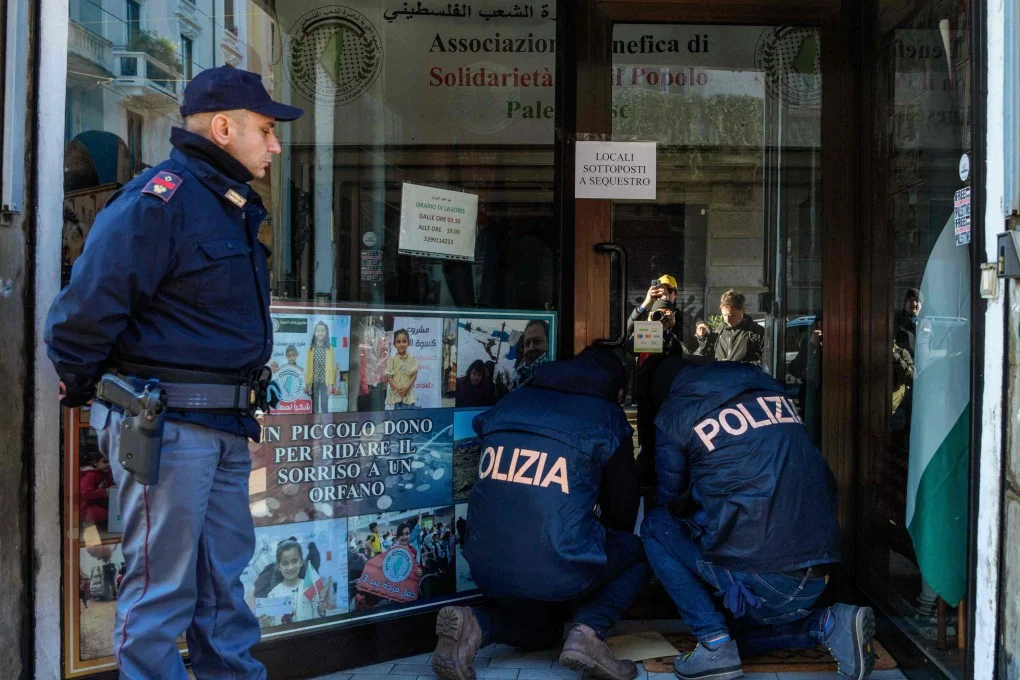
Police and the Guardia di Finanza executed arrest warrants and seized more than €8 million in assets during coordinated raids across Italy. The operation was overseen by Genoa’s District Anti-Mafia and Anti-Terrorism Directorate, which specializes in dismantling complex criminal and extremist networks.
Investigation Began Before October 7 Attack
Prosecutors stressed that the investigation began well before Hamas’ October 7, 2023, attack on southern Israel, in which about 1,200 people were killed and more than 200 taken hostage. That assault triggered Israel’s ongoing military campaign in Gaza and intensified global scrutiny of Hamas’ international financial networks.
According to Genoa chief prosecutor Nicola Piacente, the probe revealed a “stable and structured” Italian-based cell operating as part of Hamas’ broader foreign support apparatus.
“This was not episodic fundraising,” Piacente said. “It was a continuous system of collection, transfer and distribution of funds aligned with Hamas’ strategic interests.”
Suspected Hamas Operatives and Supporters
Investigators allege that seven of the nine people arrested were members of Hamas’ foreign operations wing, while the remaining two acted as facilitators, providing logistical and financial support.
Of the nine arrest warrants issued, seven were carried out in Italy. Two suspects are believed to be in Turkey and the Gaza Strip, beyond the immediate reach of Italian law enforcement.
Court documents describe the Italian cell as playing a critical intermediary role, linking donors in Europe to Hamas-affiliated entities and individuals in Gaza, the West Bank and Israel.
The investigation focused on three organizations accused of acting as fronts for terrorist financing:
Associazione Benefica di Solidarietà con il Popolo Palestinese (ABSPP), founded in Genoa in 1994
A second ABSPP-linked association established in 2003 | La Cupola d’Oro, created in Milan in December 2023
All three publicly presented themselves as humanitarian organizations dedicated to assisting Palestinians affected by conflict and economic hardship.
Prosecutors allege, however, that more than 71% of donations collected by ABSPP and related groups were transferred to entities controlled by or directly linked to Hamas.
“These organizations used the language and imagery of humanitarian relief,” prosecutors wrote in court filings, “while systematically channeling funds toward a terrorist structure.”
Alleged Leader: Mohammad Hannoun
At the center of the investigation is Mohammad Hannoun, 63, president of the Association of Palestinians in Italy and founder of ABSPP. Investigators identified Hannoun as the alleged leader and coordinator of the Italian network.
According to prosecutors, Hannoun oversaw fundraising campaigns, directed the movement of money through foreign intermediaries, and maintained direct contact with senior Hamas figures abroad.
Judge Silvia Carpanini, who authorized the arrests, said Hannoun posed a “concrete and immediate flight risk,” citing intercepted communications indicating plans to relocate to Turkey.
In a 306-page custody order, the judge wrote that those plans were already being put into action at the time of the arrests.
Banking Controls and Evasion Tactics
Court documents detail how the suspects allegedly adapted to growing scrutiny from banks and regulators.
Prosecutors said that after financial institutions including UniCredit, Crédit Agricole and Poste Italiane closed accounts linked to Hannoun following alerts from Israeli and U.S. authorities—the group responded by creating new associations and opening new accounts under different names.
Funds were then routed through a web of foreign intermediaries to obscure their final destination, investigators said.
“This was a deliberate strategy to bypass financial controls,” prosecutors noted, describing the system as “fluid, adaptive and transnational.”
According to investigators, funds collected in Italy were sent to associations in Gaza, the West Bank and Israel that Israeli authorities had declared illegal due to their links to Hamas.
In some cases, prosecutors allege, money was transferred directly to Hamas members. Among those named in court documents is Osama Alisawi, who served as transport minister in Hamas’ de facto government in Gaza between 2008 and 2014.
Authorities said these transfers violated Italian and European Union laws prohibiting financial support to designated terrorist organizations.
Support for Families of Militants
Investigators said part of the funds was used to support families of individuals involved in suicide attacks or imprisoned for terrorism offences.
Prosecutors argued that such payments play a central role in Hamas’ organizational strategy by reinforcing loyalty, maintaining morale and sustaining recruitment.
“Financial assistance to families is not merely charitable,” prosecutors wrote. “It is an operational tool that strengthens the organization’s resilience and continuity.”
Surveillance and International Cooperation
The investigation relied on phone taps, financial surveillance and close cooperation with authorities in the Netherlands and other European countries.
Prosecutors said intercepted communications showed expressions of approval for terrorist attacks, ideological alignment with Hamas, and direct contacts between suspects and senior Hamas officials.
 According to Italian media citing court documents, Hannoun attended a meeting in Turkey in December with Ali Baraka, described by investigators as a senior Hamas foreign operations official.
Previous Investigations and U.S. Designation
The U.S. Treasury Department designated Hannoun and ABSPP as terrorist financiers in 2023, freezing U.S.-linked assets and barring American entities from conducting transactions with them.
Italian prosecutors confirmed that Hannoun had previously been investigated in the early 2000s on similar allegations, but that case was archived due to insufficient evidence at the time.
Authorities said the current probe benefited from improved intelligence-sharing mechanisms and enhanced financial tracking capabilities developed over the past two decades.
Italian Prime Minister Giorgia Meloni welcomed the operation, expressing “appreciation and satisfaction” for what she described as a decisive action against terrorism financing.
Interior Minister Matteo Piantedosi said the investigation exposed how humanitarian initiatives can be exploited to conceal support for extremist groups.
“This operation lifted the veil on activities that abused solidarity and compassion for violent ends,” Piantedosi said.
Defense Response
Hannoun’s lawyer, Fabio Sommovigo, rejected the accusations, telling Italian news agency AGI that the case was based largely on interpretations provided by Israeli authorities.
Sommovigo said the funds were collected lawfully and used for humanitarian purposes, denying any intent to finance terrorism.
“My client has always acted transparently and peacefully,” the lawyer said, adding that the defense would contest the charges in court.
The arrests come amid heightened scrutiny across Europe of nonprofit organizations operating in conflict zones, particularly following the war in Gaza.
Several European governments have tightened oversight of charitable fundraising, concerned that humanitarian aid can be diverted to militant groups. The European Union and the United States both designate Hamas as a terrorist organization, making financial support a serious criminal offence.
Italian authorities said the case highlights the challenge of balancing legitimate humanitarian assistance with the need to prevent abuse by extremist networks.
Possible Outcome
The suspects face charges including terrorism financing, criminal conspiracy and violations of international sanctions. If convicted, they could face lengthy prison sentences.
Prosecutors said further developments are possible as investigators continue examining financial flows and international connections.
For Italian authorities, the case underscores the evolving nature of terrorism financing and the importance of vigilance in monitoring how money moves across borders.
“As conflicts become globalized,” prosecutor Piacente said, “so too do the networks that support them. Our responsibility is to ensure that Italy is never a safe haven for those who finance terror.”