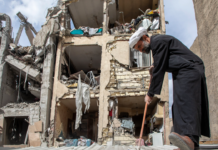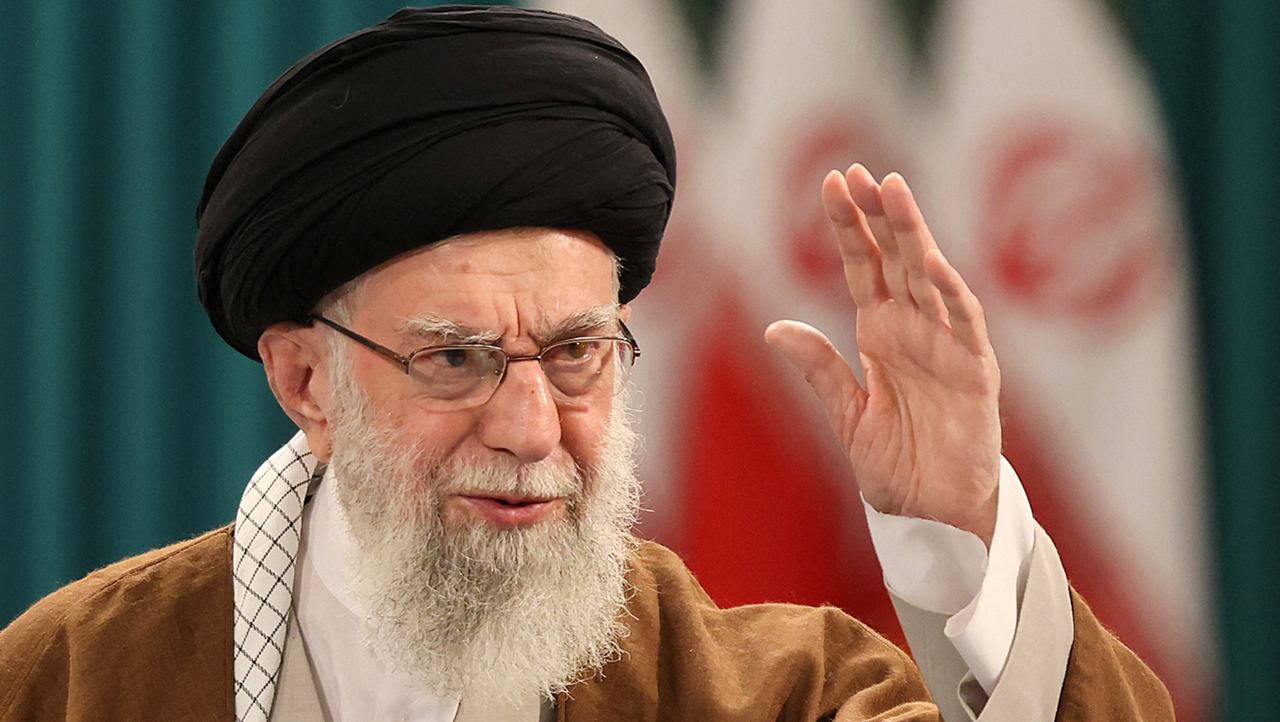
Iranian Supreme Leader Ayatollah Ali Khamenei was reportedly killed on Saturday in a massive U.S. and Israeli military operation, President Donald Trump announced. Multiple Israeli officials and a senior U.S. intelligence official reportedly confirmed the news.
“Khamenei, one of the most evil people in history, is dead,” Mr. Trump wrote on social media. He added that the U.S. government is “hearing that many of their IRGC, Military, and other Security and Police Forces no longer want to fight, and are looking for immunity from us.” He said that “heavy and pinpoint bombing… will continue, uninterrupted throughout the week or, as long as necessary to achieve our objective of PEACE THROUGHOUT THE MIDDLE EAST AND, INDEED, THE WORLD!”
Iranian state media later confirmed Khamenei’s death. The semi-official Tasnim news agency, associated with Iran’s Islamic Revolutionary Guard Corps, reported that he died during the attack. Israeli broadcasters said Prime Minister Benjamin Netanyahu had been shown a photograph of Khamenei’s body. Reports came in that people were cheering in the streets of Tehran.
The Israel Defense Forces stated that seven Iranian officials and commanders were killed in the strikes, including Ali Shamkhani, an adviser to Khamenei. Khamenei, 86, had led Iran since 1989, succeeding Ayatollah Ruhollah Khomeini. He was both the spiritual and political leader, controlling all branches of government and the military. It remains unclear who will succeed him.
A Life in Power
Khamenei was born in Mashhad, the second of eight children, and educated at Islamic seminaries. He studied under Khomeini and joined the 1979 Islamic Revolution, which toppled Iran’s pro-Western monarchy. He briefly served as deputy defense minister and was elected Iran’s president from 1981 to 1989.
Following Khomeini’s death on June 4, 1989, the Guardian Council of 88 Islamic scholars elected Khamenei as supreme leader, giving him control over the military and all branches of government. While he lacked the absolute authority of his predecessor, he consolidated power through a network of loyalists, particularly within the Revolutionary Guard.
Karim Sadjadpour of the Carnegie Endowment for International Peace wrote that Khamenei “handpicks the organization’s senior command and shuffles them regularly,” overseeing the Guards’ rise as Iran’s most powerful political and economic institution. In 2003, he issued a fatwa forbidding weapons of mass destruction but implicitly supported the expansion of Iran’s nuclear program. A U.S. intelligence assessment in May 2025 stated that Iran was not producing nuclear weapons but had positioned itself to do so if desired.
Relations with the U.S. and Regional Conflict
Khamenei’s tenure was marked by growing tension with the United States. He blamed the U.S. for the 1953 coup against Iran’s democratic government and for supporting the autocratic Shah. He endorsed the 1979 hostage crisis and maintained a lifelong distrust of America. He declared the U.S. “the number one enemy of our nation” nearly three decades after taking office.
Negotiations over Iran’s nuclear program remained fraught. Khamenei opposed Western attempts to limit Iran’s uranium enrichment, asserting that Iran should not be forced to abandon nuclear ambitions. President Trump, during his first term, withdrew from the 2015 nuclear deal and sought stricter limitations, which Khamenei rejected.
Domestically, Khamenei’s legitimacy declined over the years. Sanam Vakil, director of the Middle East and North Africa Program at Chatham House, said: “The people’s sense of loyalty to the revolution and the Islamic ideology of the revolution declined significantly while Khamenei was leader. At the same time, the economic power of Iran declined significantly.”
Despite widespread protests and calls for reform, Khamenei resisted liberalization, blaming domestic unrest on U.S. and Israeli influence and tacitly endorsing the violent suppression of demonstrations. His office confirmed his survival of major health issues, including prostate surgery in 2014, yet he remained Iran’s unflinching overlord for nearly 12 more years.
Legacy and Uncertainty
Khamenei’s rule was defined by a mixture of political pragmatism and authoritarian control, maintaining loyalty among competing factions to preserve the Islamic Republic. Under his leadership, Iran became a regional power with significant influence over proxy groups in the Middle East.
His death marks an unprecedented moment in Iran’s modern history, raising urgent questions about the succession of leadership, stability within the Islamic Republic, and the future trajectory of regional conflicts, particularly amid ongoing U.S. and Israeli military operations.