

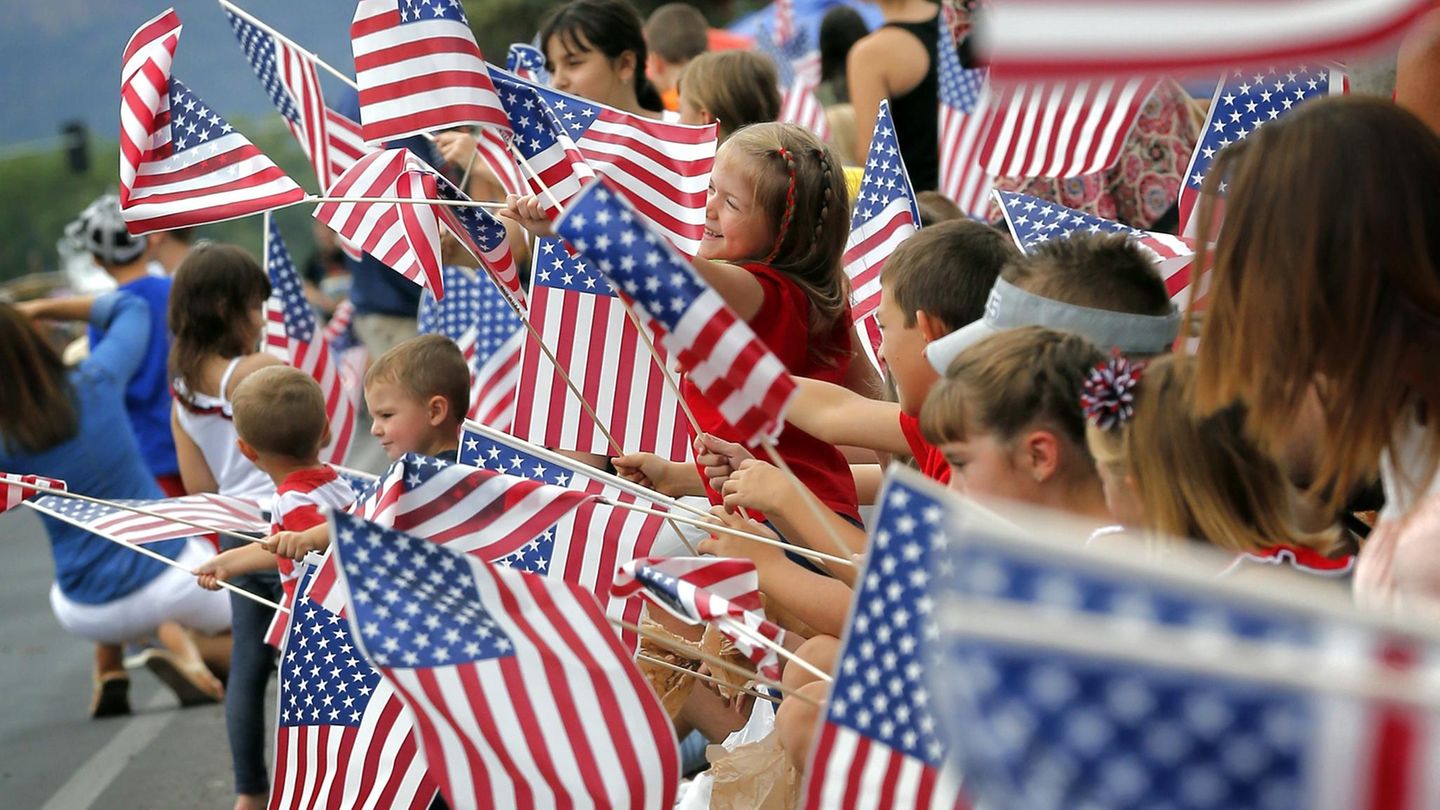

Every year on July 4, the United States of America marks one of the most significant moments in its history — Independence Day.
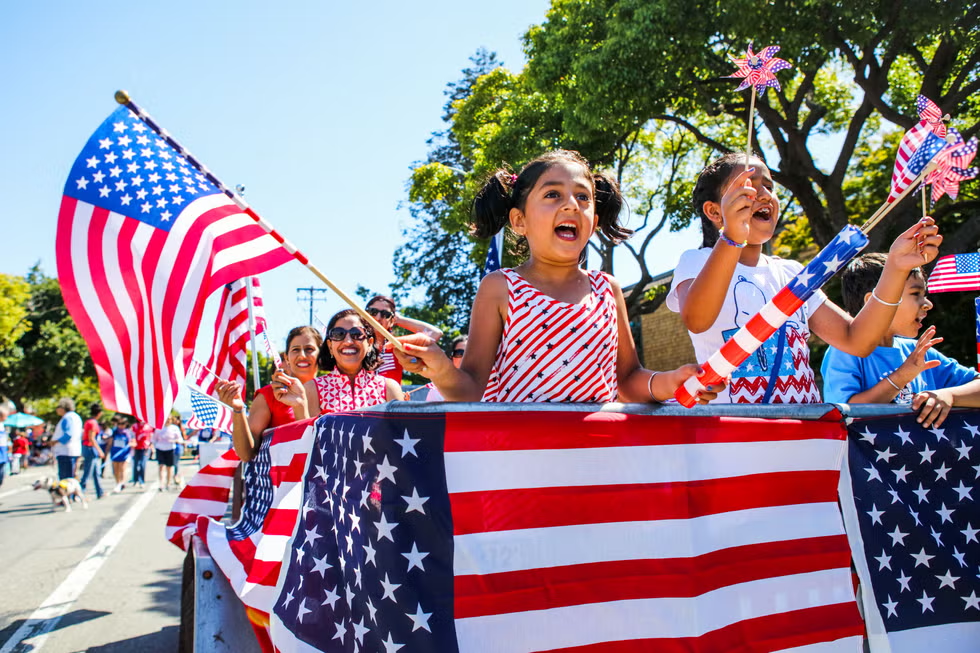
Fireworks light up the night sky, families gather for parades and barbecues, and the American flag is displayed across cities, towns, and rural communities. To many, the Fourth of July represents patriotism, national pride, and celebration.
Yet beneath the festivities lies a complex and enduring story of revolution, democratic ideals, contested freedoms, and an ongoing struggle to live up to the promises made at the nation’s birth.
Independence Day is not merely a holiday
It is a symbol of defiance against tyranny, a declaration of political philosophy, and a reminder that democracy is neither automatic nor complete. The meaning of July 4 has evolved over time, shaped by war, social movements, cultural change, and debates over who truly benefits from freedom in America.
The Road to Revolution
The roots of American Independence Day stretch back to the 18th century, when the thirteen American colonies were under British rule. For decades, these colonies had enjoyed a degree of self-governance, managing local affairs while remaining loyal to the British Crown. However, tensions began to rise after Britain sought to tighten control and increase taxation in the aftermath of costly wars, particularly the Seven Years’ War.
Colonists were angered by measures such as the Stamp Act, the Townshend Acts, and the Tea Act, which imposed taxes without colonial representation in the British Parliament. The rallying cry “no taxation without representation” captured widespread resentment and a growing belief that political authority must rest on consent.
Protests, boycotts, and acts of resistance intensified. Events like the Boston Massacre in 1770 and the Boston Tea Party in 1773 symbolized the escalating conflict between colonial resistance and imperial authority. Britain responded with punitive measures, known as the Intolerable Acts, further alienating the colonies.
By the mid-1770s, compromise had become increasingly unlikely. Armed conflict broke out in April 1775 with the battles of Lexington and Concord, marking the beginning of the American Revolutionary War. What began as resistance to British policies soon evolved into a broader struggle for independence.
The Declaration of Independence
On July 4, 1776, leaders of the thirteen colonies formally adopted the Declaration of Independence, a document that would forever shape American identity. Drafted primarily by Thomas Jefferson and influenced by Enlightenment thinkers such as John Locke, the Declaration articulated a radical vision of political authority grounded in natural rights and popular sovereignty.
The document famously declared that “all men are created equal” and are endowed with “unalienable Rights,” including “Life, Liberty and the pursuit of Happiness.” It asserted that governments exist to secure these rights and derive their legitimacy from the consent of the governed. When a government becomes destructive to these ends, the people have the right to alter or abolish it.
While the Declaration listed grievances against King George III to justify separation, its philosophical significance extended far beyond the immediate political dispute. It articulated principles that would inspire democratic movements around the world and become a moral benchmark against which the United States would be judged.
However, the Declaration also contained contradictions. The promise of equality coexisted with slavery, the exclusion of women from political rights, and the displacement of Indigenous peoples. These contradictions would shape centuries of debate over the meaning of American freedom.
Declaring independence did not guarantee it. The American colonies faced the formidable military power of the British Empire. The Revolutionary War lasted until 1783 and demanded immense sacrifice.
Victory depended on a combination of strategic leadership, popular support, and crucial assistance from foreign allies, particularly France.
The war’s end was formalized by the Treaty of Paris, which recognized the United States as an independent nation. Yet independence presented new challenges. The former colonies needed to create a stable government capable of uniting diverse states while protecting individual liberties.
The U.S. Constitution, adopted in 1787, established a system of government based on separation of powers, checks and balances, and federalism. The Bill of Rights, ratified in 1791, guaranteed fundamental freedoms such as speech, religion, assembly, and due process. Together, these documents formed the legal foundation of American democracy.
Independence Day thus came to represent not only liberation from colonial rule, but also the birth of a constitutional experiment, one that sought to balance authority and liberty in unprecedented ways.
The Symbols of the Fourth of July
Independence Day is rich in symbolism. The American flag, with its stars and stripes, represents unity, sacrifice, and national identity. Each star symbolizes a state, while the stripes recall the original colonies. Displaying the flag on July 4 is an expression of allegiance and remembrance.
Fireworks have become one of the most iconic traditions of the holiday. Their bright explosions echo the “rockets’ red glare” referenced in the national anthem and symbolize celebration, victory, and freedom. Public fireworks displays serve as communal experiences that bring people together across social and political lines.
 Parades, patriotic music, and readings of the Declaration of Independence further reinforce historical memory. These rituals connect contemporary Americans to the revolutionary generation and reaffirm shared national narratives.
Food also plays an important role. Barbecues, hot dogs, hamburgers, corn on the cob, and apple pie have become culinary symbols of the Fourth of July. These informal gatherings emphasize community, family, and the everyday freedoms associated with American life.
Independence Day and American Culture
Over time, Independence Day has become deeply embedded in American culture. It is portrayed in literature, film, and popular media as a moment of unity and national pride. From historical reenactments to modern block parties, the holiday adapts to changing cultural norms while retaining its symbolic core.
For immigrants, the Fourth of July often carries special meaning. Many new Americans view the holiday as a celebration of opportunity, self-determination, and belonging. Citizenship ceremonies held on or around July 4 underscore the connection between independence and civic participation.
At the same time, the holiday has also been commercialized. Sales, advertising, and branded patriotism are now common features of the Fourth of July. This commercialization has sparked debate over whether the deeper meaning of independence is being overshadowed by consumer culture.
Freedom, Equality, and Unfinished Promises
Perhaps the most enduring significance of Independence Day lies in the tension between ideals and reality. From the beginning, the United States proclaimed universal rights while denying them to many. Enslaved Africans, Indigenous nations, women, and poor citizens were excluded from the political community envisioned in 1776.
Throughout American history, social movements have invoked the Declaration of Independence to challenge injustice. Abolitionists cited its principles in their fight against slavery. The Civil Rights Movement of the 20th century framed its demands as a fulfillment of America’s founding promises. Women’s rights advocates, labor activists, and LGBTQ+ movements have all drawn on the language of liberty and equality.
Frederick Douglass’s famous 1852 speech, “What to the Slave Is the Fourth of July?” powerfully captured this contradiction. While acknowledging the Declaration’s ideals, Douglass condemned a nation that celebrated freedom while perpetuating bondage.
His words continue to resonate in modern discussions of racial inequality and systemic injustice.
 Today, debates over voting rights, policing, immigration, economic inequality, and freedom of expression reflect ongoing struggles to define what independence truly means. Independence Day has increasingly become a moment not only of celebration, but also of reflection and critique.
Independence Day in a Polarized Era
In contemporary America, Independence Day exists within a politically polarized landscape. Different groups interpret patriotism and freedom in contrasting ways. For some, the Fourth of July is a reaffirmation of traditional national values. For others, it is an opportunity to question whether the nation lives up to its stated ideals.
Protests and counter-celebrations have become more visible, particularly in recent years. Some Americans choose to observe the day with educational events, discussions on racial justice, or acknowledgments of Indigenous history. These alternative observances challenge the idea that patriotism requires uncritical celebration.
Rather than weakening Independence Day, this diversity of perspectives reflects the democratic principles at the heart of the holiday. Freedom of thought, dissent, and debate are themselves expressions of the independence declared in 1776.
The American Revolution had far-reaching global consequences. The Declaration of Independence influenced revolutionary movements in France, Latin America, and beyond. Its assertion of popular sovereignty challenged monarchies and colonial systems worldwide.
Today, the United States’ independence continues to shape its global identity. The country presents itself as a champion of democracy and human rights, though its actions abroad are often scrutinized and debated. Independence Day thus invites reflection on how national ideals translate into global responsibility.
For Americans living abroad, July 4 serves as a reminder of home and national identity. Embassies, expatriate communities, and international gatherings mark the holiday with ceremonies and celebrations that connect citizens across borders.
The Meaning of Independence Today
More than two centuries after the Declaration of Independence, the meaning of July 4 remains dynamic. Independence is no longer defined solely as freedom from colonial rule. It encompasses political participation, economic opportunity, personal autonomy, and social justice.
The challenges facing modern America—climate change, technological transformation, inequality, and democratic trust raise new questions about independence in an interconnected world. How does a nation remain self-governing while engaging globally? How can individual freedom coexist with collective responsibility?
Independence Day provides a space to engage with these questions. It reminds Americans that freedom is not inherited passively but maintained through civic engagement, education, and accountability.
A Living Declaration
Independence Day is not frozen in 1776. It is a living tradition shaped by history, struggle, and aspiration. The fireworks, flags, and celebrations are expressions of joy, but the true significance of July 4 lies in its ideals.
The Declaration of Independence set forth a vision of human dignity and self-government that remains unfinished. Each generation is called to interpret, challenge, and expand that vision. In this sense, Independence Day is not only about remembering the past, but about recommitting to the future.
As Americans gather each July 4, the question persists: How can the nation better align its reality with its founding promise? The answer lies not in symbols alone, but in the ongoing effort to ensure that liberty and equality are not just celebrated, but truly shared.