Ghana intends to propose a United Nations resolution recognising transatlantic slavery as the “gravest crime in the history of humankind” and calling for reparations, and expects broad support despite resistance in Europe.
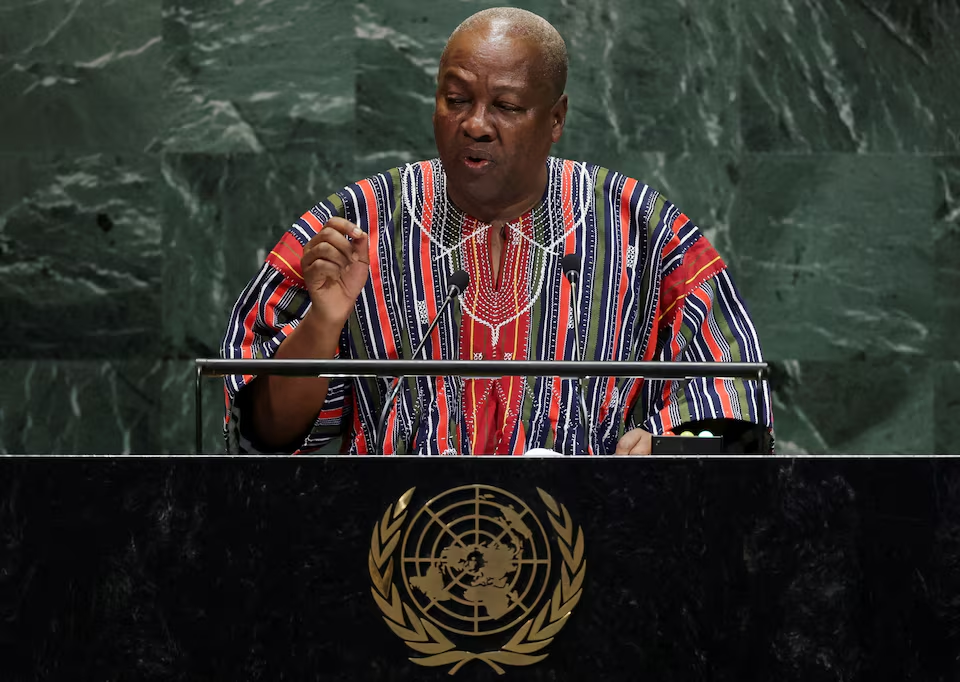
The West African nation, a prominent advocate of reparations, plans to table the proposal at the United Nations General Assembly, possibly as early as this month, its Foreign Ministry said in a statement to Reuters.
The move represents one of the most significant diplomatic efforts in recent years to elevate the issue of reparations from regional advocacy to a global institutional platform.
The plan marks a new step in Africa’s efforts to seek accountability for historical injustices by former colonial powers, and the country hopes it will “enjoy the support of many member states”.
Diplomats familiar with the process say Ghana has been quietly building consensus among African, Caribbean, and some Latin American countries, positioning the resolution as both a moral and legal milestone.
“The proposed resolution seeks to recognise transatlantic slave trade as the gravest crime in the history of humankind, taking into account its scale, duration, legalisation and enduring consequences,” it said.
The language reflects years of advocacy by historians, legal scholars, and policymakers who argue that the transatlantic slave trade was not only unprecedented in scale but also systematically embedded in law and global economic systems.
While calls for reparations have gained momentum in recent years, there is also a growing backlash. Several European leaders have opposed even discussing the subject, with critics arguing today’s states and institutions should not be held responsible for historical wrongs.
Governments in countries such as the United Kingdom, France, and the Netherlands have taken varying positions ranging from acknowledgment and apology to outright rejection of financial compensation highlighting the divisions that Ghana’s proposal is likely to encounter.
Asked if it expected opposition, the ministry said: “A backlash against truth is one that we hope would not occur. Ghana is not seeking to reopen old wounds but to heal those wounds with truth.”
Officials have emphasized that the initiative is framed not as punitive but as restorative, aiming to address enduring inequalities rooted in centuries of exploitation.
PUSH FOR REPARATIONS
African and Caribbean nations have been seeking to establish a special U.N. reparations tribunal, with lawyers noting previous tribunals had been created by resolution or by the Security Council. Advocates often point to precedents such as tribunals addressing war crimes in the Balkans and Rwanda as examples of how international justice mechanisms can be mobilized through multilateral agreement.
The African Union (AU) last year set out to create a “unified vision” among its 55 member states on what reparations may look like, from financial compensation and formal apologies to policy reforms. AU leaders endorsed the proposed resolution at a summit last month, signaling a rare level of continental alignment on a historically sensitive issue.
Member states of the Caribbean Community, which has outlined its own reparations plan, are also expected to support it. The Caribbean bloc has long been at the forefront of reparations advocacy, having established a dedicated reparations commission and a 10-point action plan that includes debt cancellation, technology transfers, and public health initiatives.
“We remain optimistic that others would equally be able to do so,” the ministry said.
The transatlantic slave trade, which spanned roughly from the 15th to the 19th centuries, forcibly transported an estimated 12 to 15 million Africans to the Americas.
Historians widely agree that the true human cost is far higher when accounting for those who died during capture, transport, and enslavement. The system underpinned the economic rise of European colonial powers and contributed significantly to the development of the modern global economy.
Countries like Ghana, once home to major slave trading forts such as Cape Coast Castle and Elmina Castle have increasingly positioned themselves as leaders in the global reckoning over this history. In recent years, Ghana has launched initiatives like the “Year of Return” and “Beyond the Return” campaigns to reconnect with the African diaspora and raise awareness of the legacy of slavery.
Other African nations, including Nigeria and Senegal, have also supported reparations discussions, though not always with the same level of diplomatic urgency. Analysts say Ghana’s initiative reflects a growing consensus among African policymakers that the issue must be pursued through formal international mechanisms rather than solely through bilateral negotiations.
GLOBAL MOMENTUM AND SHIFTING NARRATIVES
The push for reparations has gained renewed momentum in the wake of global movements addressing racial injustice, particularly following the 2020 protests sparked by the killing of George Floyd in the United States. These events prompted institutions worldwide including universities, corporations, and governments to reexamine their historical ties to slavery and colonialism.
Several European institutions have begun to acknowledge their roles. For example, Dutch Prime Minister Mark Rutte formally apologized in 2022 for the Netherlands’ role in slavery, while King Charles III of the United Kingdom has expressed personal sorrow over the legacy of the slave trade.
However, these symbolic gestures have not translated into widespread political support for reparations, especially financial compensation.
In Germany, discussions around reparations for colonial-era atrocities in Namibia have resulted in a controversial agreement that includes development aid but stops short of direct reparations.
Critics argue that such arrangements set a precedent for avoiding full accountability, while supporters say they represent pragmatic steps forward.
LEGAL AND DIPLOMATIC CHALLENGES
Legal experts note that pursuing reparations through the United Nations presents significant challenges. Unlike cases involving recent conflicts or clearly defined victims and perpetrators, the transatlantic slave trade spans centuries and involves multiple states and institutions that no longer exist in their original forms.
Nevertheless, proponents argue that international law has evolved to recognize crimes against humanity regardless of when they occurred. They point to principles such as the non-applicability of statutes of limitations to certain grave crimes, as well as the concept of intergenerational harm.
“There is a growing body of legal scholarship supporting the idea that reparations are not only morally justified but legally plausible,” said one international law expert cited in broader reporting. “The challenge is less about legal theory and more about political will.”
Diplomatically, Ghana’s resolution will need to navigate the complex voting dynamics of the General Assembly, where each member state has one vote. While African and Caribbean countries are expected to provide a strong base of support, the position of large blocs such as the European Union and key swing states in Asia and Latin America could prove decisive.
EUROPEAN RESPONSE AND INTERNAL DEBATE
Within Europe, the issue of reparations remains deeply divisive. Some countries have begun internal conversations about historical accountability, while others maintain firm opposition to reparations.
France, for example, has acknowledged aspects of its colonial past but has resisted calls for reparations. The United Kingdom has faced increasing pressure from Caribbean nations but continues to reject compensation claims, citing concerns about precedent and financial implications.
At the same time, public opinion in parts of Europe is gradually shifting. Polls in several countries suggest growing support particularly among younger generations for acknowledging historical injustices and exploring forms of restitution.
POTENTIAL IMPACT
If adopted, Ghana’s resolution would not be legally binding but could carry significant symbolic and political weight. It could pave the way for further discussions on reparations, including the potential establishment of a tribunal or other mechanisms to assess claims.
Analysts say the resolution could also influence national policies, encouraging governments to adopt more proactive approaches to addressing historical injustices. This might include educational reforms, memorialization efforts, and targeted economic programs aimed at communities disproportionately affected by the legacy of slavery.
For Ghana, the initiative is part of a broader strategy to position itself as a leader in global conversations about justice, equity, and historical accountability. Officials say the country is prepared for a lengthy diplomatic process and remains committed to building a broad coalition of support.
Ultimately, the proposal underscores a fundamental question facing the international community: how to reconcile the enduring consequences of historical crimes with the political realities of the present.
As debates continue, Ghana’s effort signals that the issue of reparations, once considered marginal in global diplomacy is increasingly moving to the center of international discourse.