

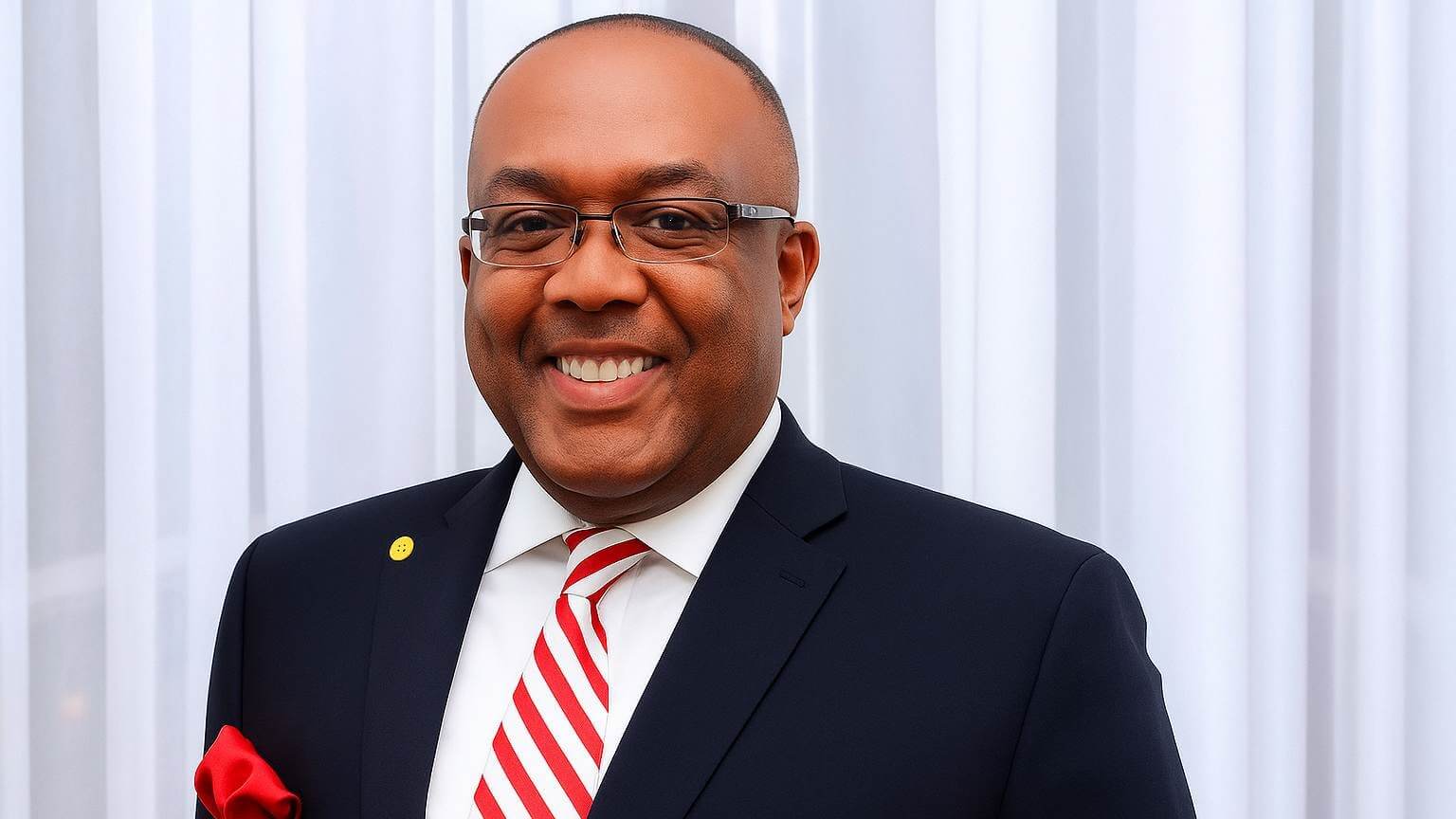
Ghana’s Ambassador to the United States, Victor Emmanuel Smith, has taken a decisive step toward strengthening protections and support systems for Ghanaians living in the United States by formalising a strategic partnership with the Association of Ghanaian Lawyers of the DMV representing the District of Columbia, Maryland, and Virginia.
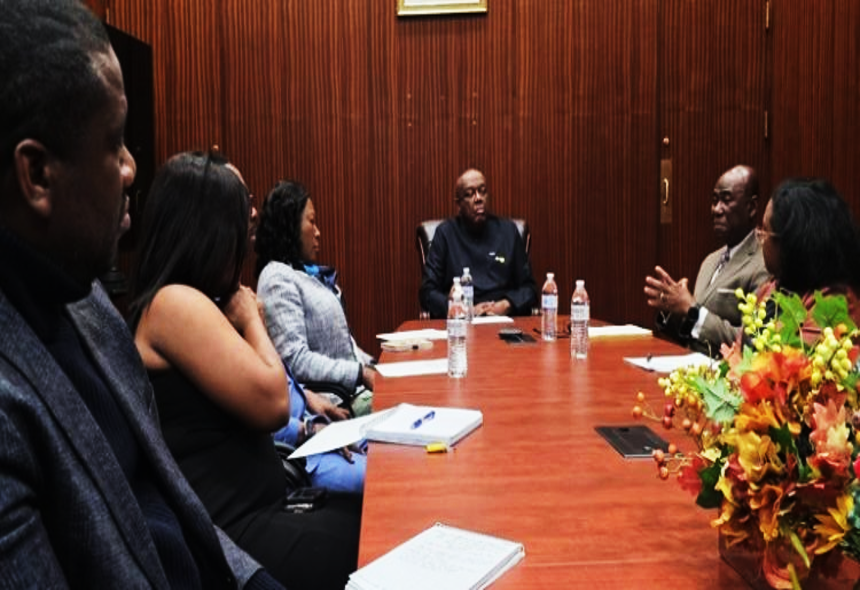
The initiative, announced during a high-level courtesy visit at the Ghanaian Embassy in Washington, D.C., on Saturday, December 13, marks a significant shift toward what embassy officials describe as a “diaspora-first” approach to consular engagement. The partnership seeks to bridge long-standing gaps in legal awareness, access to justice, and early intervention for Ghanaians navigating the complexities of the U.S. legal system.
For years, Ghanaian community leaders in the United States have raised concerns about increasing cases of immigration violations, detention, labor disputes, housing conflicts, and criminal charges involving Ghanaian nationals, many of whom lack timely legal guidance. Ambassador Smith’s latest move signals an effort to address these challenges in a structured, preventive, and sustainable manner.
A Strategic Alliance Rooted in Legal Empowerment
At the heart of the new collaboration is a shared commitment to legal education, access to justice, and proactive intervention. The Association of Ghanaian Lawyers of the DMV brings together experienced Ghanaian-American attorneys practicing across immigration law, criminal defense, civil litigation, family law, labor law, and constitutional law.
During the meeting, both sides emphasized that the partnership is not merely symbolic but designed to yield practical, community-facing outcomes. Among the flagship initiatives discussed was the creation of a recurring “Law Day”, envisioned as an open forum where members of the Ghanaian community can receive free legal education and general legal guidance.
The proposed Law Day would include workshops, panel discussions, and one-on-one consultations helping individuals better understand U.S. laws, court procedures, immigration requirements, and their rights and responsibilities as residents or visitors.
Preventing Crisis Through Knowledge
Ambassador Smith underscored the preventive value of the initiative, noting that many legal crises faced by Ghanaians abroad stem not from malicious intent but from misunderstanding or lack of information.
“The initiative could help demystify legal processes, equip citizens with knowledge of their rights and responsibilities, and encourage early intervention on legal matters before they escalate,” the Ambassador said.
According to embassy officials, many Ghanaian nationals only seek help after legal problems have become severe such as after an arrest, deportation order, or court judgment by which time options are limited and consequences often irreversible.
By contrast, early access to legal information can help individuals avoid common pitfalls, comply with immigration regulations, resolve disputes amicably, and seek professional assistance before their situations deteriorate.
Addressing Detention and Due Process Concerns
Beyond education, the partnership also aims to tackle urgent and sensitive cases involving Ghanaians in U.S. detention, particularly in immigration and criminal justice contexts.
Under international law, embassies are entitled to provide consular assistance to detained nationals, typically involving prison visits, welfare checks, and coordination with local authorities. However, Ambassador Smith acknowledged that consular access alone is not always sufficient to ensure fair outcomes.
As part of the new framework, the embassy proposes to work closely with Ghanaian-American lawyers who can help assess cases, explain legal options to detainees, and, where appropriate, facilitate access to qualified legal representation.

The goal, embassy officials say, is to move beyond symbolic support and ensure detained Ghanaians receive meaningful due process, fair treatment, and informed advocacy within the bounds of U.S. law.
A Growing Ghanaian Presence in the United States
The initiative comes against the backdrop of a rapidly growing Ghanaian diaspora in the United States. According to recent estimates, hundreds of thousands of Ghanaians now reside across major U.S. metropolitan areas, including Washington, New York, New Jersey, Texas, California, and Georgia.
The DMV region, in particular, has emerged as one of the most significant hubs for Ghanaian professionals, students, entrepreneurs, and families. While many have successfully integrated into American society, others especially new arrivals continue to face challenges related to immigration status, employment rights, housing stability, and interactions with law enforcement.
Community leaders say the lack of culturally informed legal guidance has often left vulnerable individuals exposed to exploitation, misinformation, and avoidable legal troubles.
Diaspora Policy and Ghana’s Foreign Relations Agenda
Ambassador Smith’s initiative aligns closely with Ghana’s broader diaspora engagement strategy, which views Ghanaians abroad not only as citizens needing protection but also as strategic partners in national development.
Successive Ghanaian governments have emphasized the importance of diaspora remittances, skills transfer, and investment. However, critics have long argued that diaspora welfare and legal protection have not received equal attention.
By prioritizing legal empowerment, the current embassy leadership is signaling a shift toward a more holistic diaspora policy, one that recognizes that economic contributions must be matched by institutional support.
Officials familiar with the discussions say the legal partnership could eventually serve as a model for other Ghanaian missions worldwide, particularly in countries with large and complex legal systems.
The Role of Ghanaian-American Legal Professionals
For members of the Association of Ghanaian Lawyers of the DMV, the partnership represents both a professional and moral responsibility. Many of the lawyers involved are themselves immigrants or children of immigrants who understand firsthand the difficulties of navigating U.S. legal institutions.
During the courtesy visit, association representatives expressed readiness to contribute time, expertise, and mentorship to ensure the initiative’s success. They also emphasized the importance of building trust within the community, noting that fear, stigma, and misinformation often prevent individuals from seeking help early.
By working in collaboration with the embassy, the lawyers aim to create a trusted bridge between Ghanaian nationals and the U.S. justice system.
Toward Institutionalised Diaspora Support
Embassy officials noted that discussions are underway to ensure the partnership is institutionalised rather than ad hoc, with clear protocols, referral pathways, and evaluation mechanisms.
Plans include
Establishing a legal outreach calendar
Developing informational materials in accessible language
Creating referral systems for urgent cases
Exploring virtual legal clinics for Ghanaians outside the DMV region
Such measures, officials say, will help ensure continuity beyond individual diplomatic tenures and embed diaspora legal support into Ghana’s foreign service framework.
A Signal of Renewed Engagement
The formalisation of the partnership marks an important milestone in Ambassador Smith’s tenure and reflects a broader effort to redefine the embassy’s relationship with the Ghanaian diaspora, from reactive crisis management to proactive empowerment.
As Ghana continues to deepen its ties with the United States across political, economic, and cultural spheres, the well-being of its citizens abroad remains a critical pillar of bilateral relations.
For many Ghanaians living in America, the initiative offers renewed hope that their government is listening, adapting, and taking concrete steps to protect their rights and dignity, no matter how far from home they may be.