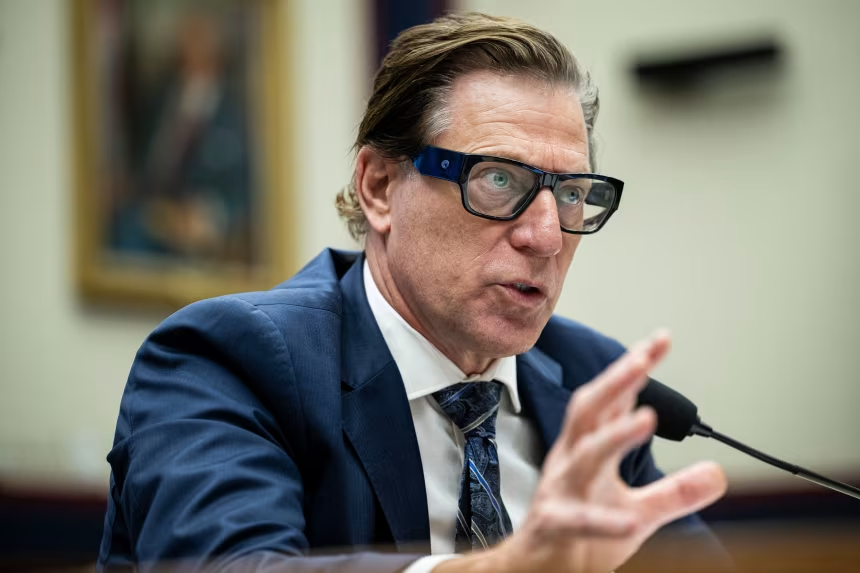
The FEMA chief resigns after a turbulent tenure marked by public criticism and internal frustration, leaving the Federal Emergency Management Agency at a critical crossroads. David Richardson submitted his resignation to the Department of Homeland Security, giving two weeks’ notice, following months of speculation about his future in the role. Sources indicate the Trump administration had already been preparing to remove him from the position.
Richardson, a loyalist to Homeland Security Secretary Kristi Noem, was tapped to lead FEMA despite lacking experience in disaster management. His tenure included controversial remarks, such as claiming unawareness of the U.S. hurricane season, a comment DHS later insisted was a joke, and periods of public absence during major crises. These moments have raised questions about leadership effectiveness at one of the nation’s most vital emergency agencies.
The resignation comes after a difficult hurricane season, which was notably mild, preventing any catastrophic disasters in the U.S. For Richardson, the timing allowed the administration to plan a smooth transition without jeopardizing disaster response. During the July floods in Texas, which killed more than 130 people, Richardson was on a personal trip and reportedly unreachable for hours, creating frustration among lawmakers and staff.
When he eventually arrived in Texas, his unannounced visit and lack of FEMA insignia,arriving in a straw hat and cowboy boots—stood in stark contrast to typical agency leadership conduct. DHS officials had instructed FEMA to keep Richardson’s trip quiet, further highlighting internal attempts to manage public perception and shield him from scrutiny.
Richardson’s leadership style drew criticism from both colleagues and former FEMA officials. Reports describe him as brash, unpredictable, and at times dismissive of professional protocol. He reportedly questioned whether disaster relief funds could be directed toward Republican areas over Democratic ones and frequently restricted communication during meetings.
Veteran staff noted that he often avoided emails and kept his phone out of sight, complicating internal coordination. These management practices, coupled with his inexperience in disaster response, intensified the growing frustration within FEMA and DHS leadership, ultimately reducing his influence in agency decisions.
Karen Evans, a close Trump ally at DHS, is set to replace Richardson as FEMA’s chief of staff starting December 1. Her appointment signals a broader reshaping of FEMA under the Trump administration, with Secretary Noem driving reforms aimed at increasing state-level responsibility for disaster preparedness and response. The administration has indicated plans to implement sweeping changes to FEMA operations once hurricane season ends.
The impending departure of the FEMA chief comes as the agency faces declining morale and significant staff turnover. Over a quarter of full-time staff, including senior leaders, have left due to layoffs, buyouts, and dissatisfaction, highlighting a critical moment for the agency’s stability and capacity to respond to future emergencies.
Richardson’s resignation underscores the delicate balance between political loyalty and effective disaster management. The Trump administration’s efforts to overhaul FEMA, combined with ongoing leadership changes, could reshape how the agency functions in future emergencies. Lawmakers continue to debate proposals like the bipartisan “FEMA Act,” which would make the agency independent from DHS,a change Noem opposes.
While Richardson leaves behind a controversial legacy, his exit opens the door for a potential new era at FEMA, one that may prioritize operational expertise and clearer leadership. As the agency prepares for structural reforms and new appointments, the ability to respond effectively during disasters will remain a central test of its resilience.
The resignation of the FEMA chief resigns marks a pivotal moment in the agency’s history, signaling both the Trump administration’s control over leadership and the urgent need for operational reform. As FEMA braces for internal restructuring and future emergencies, the focus will be on ensuring competent leadership, restoring morale, and maintaining readiness when disaster strikes.