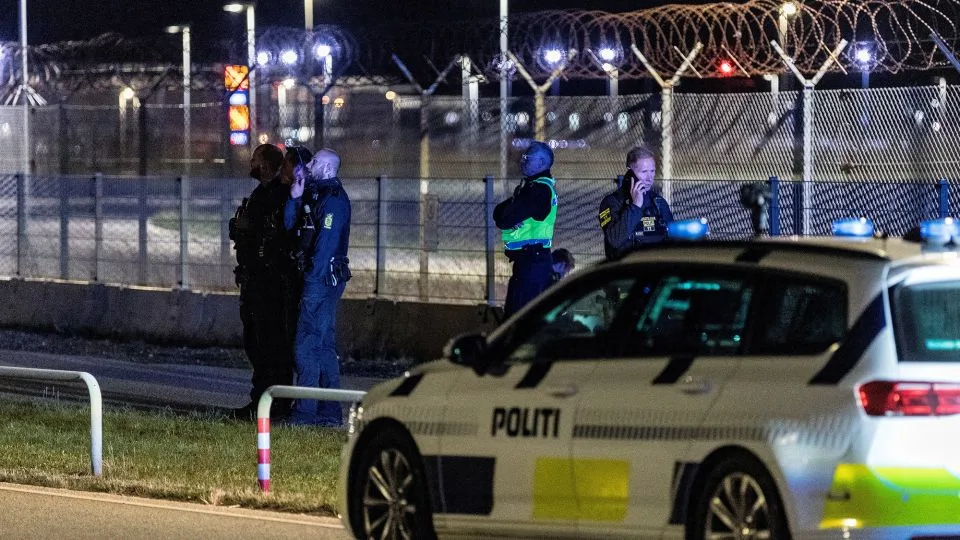
Denmark’s defense leadership has officially classified recent drone incursions near several airports as a “hybrid attack.” The move highlights growing concerns about sabotage and pressure on critical infrastructure. Airports in Aalborg, Esbjerg, Sønderborg, and the Skrydstrup airbase all reported unidentified drones during the night. Authorities suspended flights, citing risks to both civil and military aviation.
Officials believe a professional actor organized the flights. They argue the goal was to create fear, divide the public, and test Denmark’s defenses rather than cause direct physical damage. By calling it a hybrid attack, Denmark places the incidents within a modern conflict strategy that mixes sabotage, espionage, and intimidation.


The drone sightings occurred within a short window across four key locations. Aalborg, which serves both civilian and military purposes, suspended operations for hours. Esbjerg, Sønderborg, and Skrydstrup—home to fighter jets—also reported drones. Defense Minister Troels Lund Poulsen described the incidents as “systematic.” Witnesses saw drones flying close to runways and restricted zones, sometimes with lights visible.
These were not random flights. Analysts believe the drones probed air defenses and attempted to weaken public confidence. They may also have signaled technical capability without direct confrontation. Such ambiguity defines hybrid warfare, where adversaries pressure opponents without triggering open conflict.
Denmark has not named a culprit. However, intelligence agencies see similarities with tactics linked to Russia. The government has opened consultations with NATO and plans closer cooperation with EU partners. Officials also want stronger domestic laws. At present, airports and infrastructure owners cannot neutralize drones directly. Proposals now aim to give them that authority.
National agencies are also strengthening coordination. Police, intelligence services, air traffic control, and the military are working more closely to ensure rapid responses. Denmark intends to close gaps in detection and improve drone-defense systems.
Denmark’s decision to label these incursions a “hybrid attack” has broader meaning for Europe. Many countries already face cyberattacks, sabotage, and energy disruptions. The use of drones near airports expands this playbook.
Neighboring states fear similar incidents. Proposals for a regional “drone wall” are gaining traction. This system would combine sensors, jammers, and interception tools to protect shared airspace. Denmark is expected to join such initiatives.
Attribution remains a challenge. Hybrid attacks rely on ambiguity, leaving governments unsure how to respond without risking escalation. Acting too quickly may create conflict, while hesitation risks normalizing harassment.
The events also expose infrastructure vulnerabilities. Airports, energy grids, and communications networks remain attractive targets. They can be disrupted cheaply but with huge effect. Denmark’s experience proves that even advanced countries remain vulnerable to coordinated drone activity.
The drone era also changes security planning. Unmanned aerial systems are no longer only battlefield tools. They now influence strategy, diplomacy, and public trust. This trend will push governments to invest more in anti-drone systems and regional defense cooperation.
Denmark’s firm decision to say it now calls drone activity a “hybrid attack” marks a turning point in security policy. What may have looked like isolated drone flights now appears as a coordinated attempt to test defenses and unsettle the country.
The incidents have forced Denmark to review laws, upgrade defenses, and deepen cooperation with NATO and the EU. The perpetrator remains unclear, but the message is strong: hybrid warfare has entered European skies.
In the age of drones, even unarmed flights can shake national confidence. Denmark’s experience shows that states must prepare for new forms of pressure that challenge sovereignty without a single shot fired.