As US and Israeli bombs continue to rain down on Iran, civilians are enduring attacks in the dark, cut off from comprehensive information about where strikes have occurred, which medical facilities are affected, and where new bombardments are expected.
Hours after the US-Israeli attacks began on Saturday, Iran was plunged into a near-total internet shutdown that has now lasted over 100 hours, according to Doug Madory, director of internet analysis at Kentik. Internet traffic in the country fell to around 1 percent of ordinary levels, NetBlocks reported.
While some infrastructure has been damaged by military strikes, analysts say the blackout itself is government-initiated. Domestic internet and internal mobile phone networks remain partially operational, but many Iranians are effectively cut off from the outside world.
A resident, based in Tehran, who was able to connect briefly via VPN, said, “Information barely gets through. If there’s no internet, we know absolutely nothing. Not about other cities, not even about what’s happening a few streets away.” He added, “There’s this belief going around that this time only military bases are being targeted, not residential areas. I honestly don’t know how true that is. I doubt it.”
Internet Blackout Hampers Safety and Humanitarian Efforts
Human rights groups warn that the internet shutdown is worsening the human toll of the war, leaving civilians unable to access evacuation orders or guidance on safety. The IDF has posted evacuation warnings on social media for areas in Iran expected to be targeted, but experts say these messages are unlikely to reach most civilians. Project Ainita and the Outline Foundation highlighted that any warnings that do reach the population probably arrive too late for people to evacuate safely, particularly in urban areas where military targets are located.
Fereidoon Bashar, executive director of ASL19, a digital rights organization focused on Iran, said only a limited number of people, such as those with Starlink terminals or select government-approved internet access, can see evacuation notices. He described it as “a very small circle of news and state organisations who have unfettered access right now.”
Iranian state media has provided partial or contradictory reporting on strikes. While documenting some attacks on civilian sites, including the Minab primary school, other posts mischaracterized evacuation warnings as “psychological operations by enemies,” urging residents to ignore them.
One Tasnim news channel post said, “Continuing the enemy’s psychological operations to evacuate border cities, this time the evacuation of several Marivan neighbourhoods was announced by hostile elements. City officials denied this news … and announced that no decision has been made to evacuate the neighbourhoods, that the city is in complete security.”
The blackout has also limited independent verification of civilian casualties. Human Rights Activists News Agency (HRANA) said the shutdown is affecting Iranians’ ability to access information, organise humanitarian operations, and communicate with families. “During military attacks, a nationwide internet disruption is not merely a technical issue – it directly affects the flow of information, the ability to conduct field verification, citizens’ access to safety information, and communication among families,” HRANA said.
Civilian Casualties Mount Amid Limited Reporting
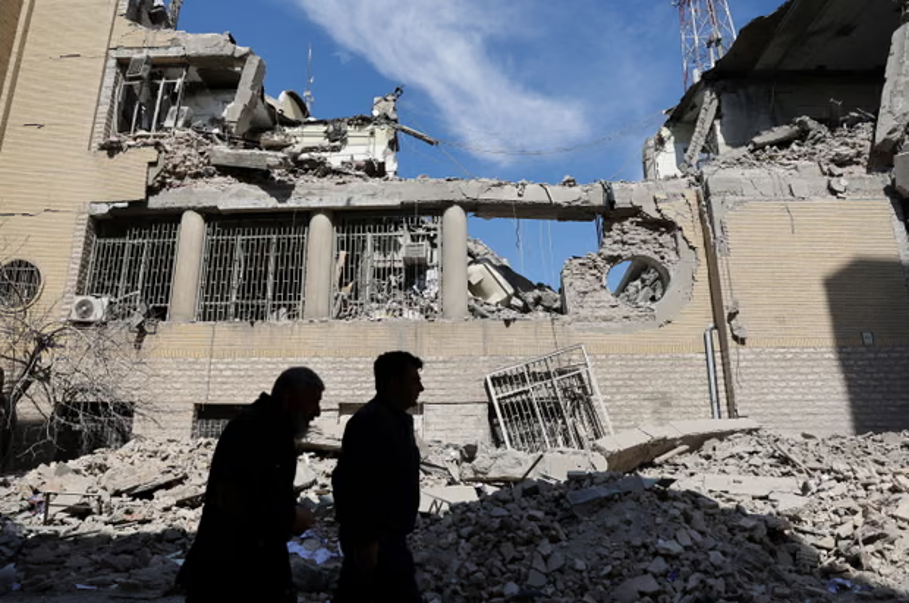
Despite limited information, reports show US-Israeli strikes have hit civilian targets, including residential buildings in Tehran and the Gandhi Hospital, which was damaged when an adjacent state television broadcast tower was bombed. Esmaeil Baqaei, spokesperson for the Iranian Foreign Ministry, said on Wednesday that 33 civilian sites had been hit or damaged, including schools, hospitals, and markets.
The deadliest single incident has been the strike on the Minab primary school, where at least 168 people, mostly children, were killed. Health infrastructure has also suffered: the International Federation of the Red Cross and Red Crescent reported that seven of its bases and branches, three rescue vehicles, and 14 medical and pharmaceutical centers had been damaged.
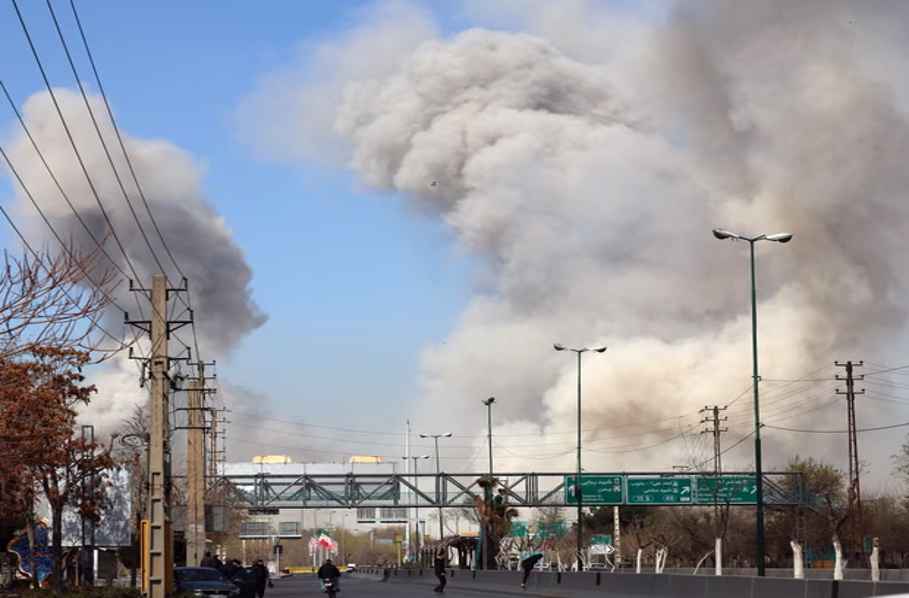
An Iranian source in a northern city described the situation as “awful. No one knows when the war will end. There’s this constant anxiety: what if it doesn’t end?”
The shutdown is hampering efforts to document the full human toll of the US-led war. HRANA reported 1,114 civilian deaths as of 4 March, including 181 children. Experts say the lack of information makes it extremely difficult for humanitarian organizations to deliver aid and for families to protect themselves during ongoing airstrikes.