A new arms race may be quietly unfolding across Asia, as China accelerates an unprecedented expansion of its missile production network.
Satellite imagery, maps, and government records analyzed by international security experts show a rapid build-up of facilities linked to China’s ballistic and nuclear programs.
The surge, which began around 2020, underscores Beijing’s determination to bolster its military power, deter the United States, and assert dominance in the Indo-Pacific region.
While Washington struggles with weapons supply issues amid ongoing conflicts in Ukraine and the Middle East, China appears to be investing heavily in long-term missile production capacity a development that could reshape the balance of global military power.
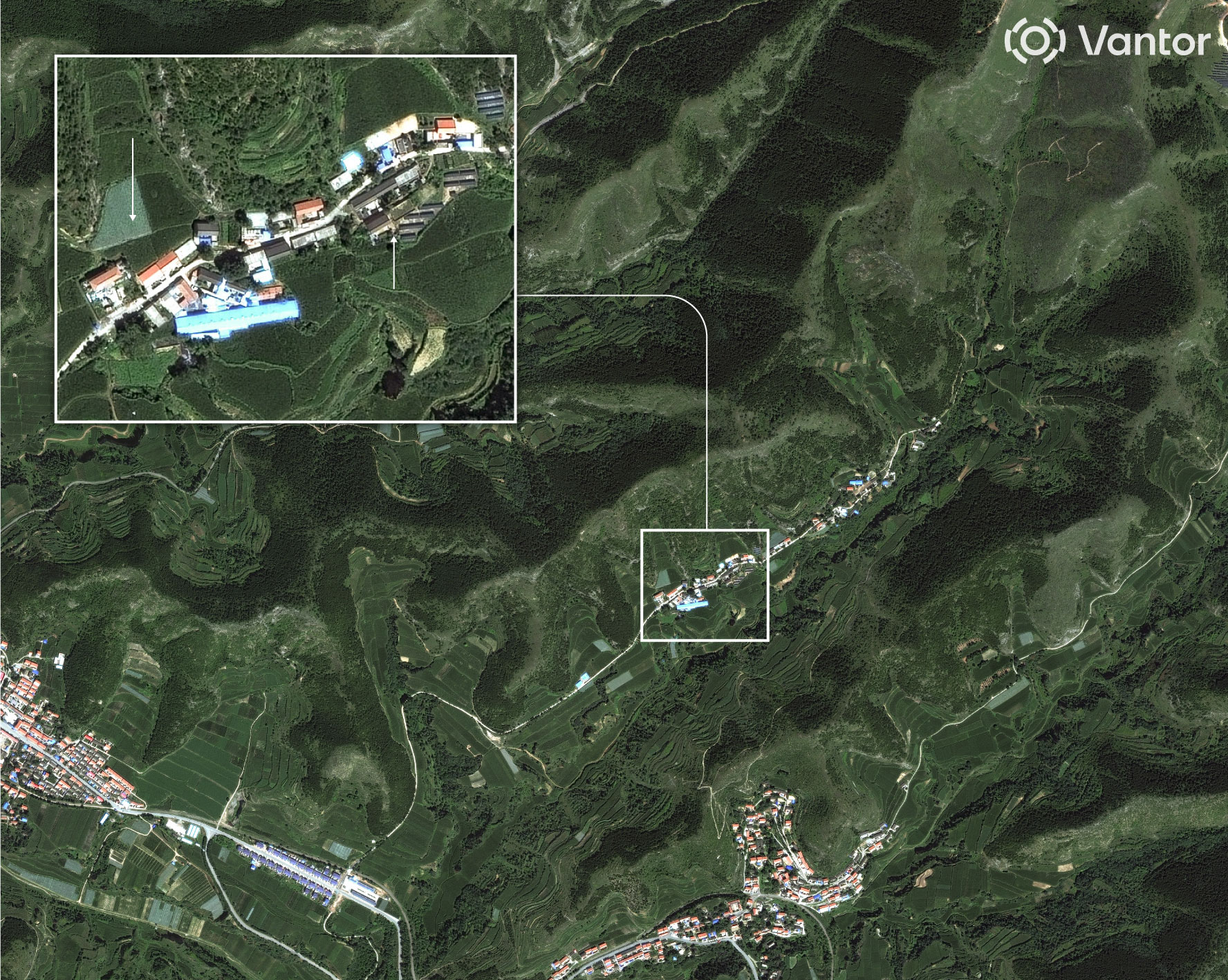
Recent analysis of satellite images identified more than 130 sites connected to China’s missile industry, with over 60% showing clear signs of expansion. These facilities, which range from testing centers to large-scale factories, have collectively added more than 21 million square feet of new construction since 2020.
Many of these sites have replaced farmland and small villages with sprawling research hubs, production plants, and underground bunkers.
Some even show visible missile components on-site. According to defense expert William Alberque, the expansion represents “China positioning itself as a global superpower.” He describes it as “the early phase of a new arms race” one that Beijing seems determined to win.
The Chinese government, led by President Xi Jinping, has long emphasized military modernization as a national priority.
Xi has invested billions into transforming the People’s Liberation Army (PLA) into a “world-class” force. Central to this effort is the PLA Rocket Force (PLARF), which manages China’s growing arsenal of nuclear and conventional ballistic missiles.
China’s missile buildup is not just about quantity, it’s about capability. Many of the new facilities are believed to focus on producing more advanced weapons, including hypersonic glide vehicles and medium-range missiles like the DF-26, often called the “Guam killer.” This weapon can strike targets thousands of miles away, posing a serious challenge to U.S. bases in the Pacific.
Military analysts say these missiles are key to China’s “anti-access/area denial” strategy , a military doctrine designed to keep U.S. forces at bay in the event of a conflict, particularly over Taiwan. The growing missile network gives Beijing the ability to target critical U.S. assets such as ports, airfields, and supply bases in the western Pacific.
The expansion also aligns with lessons learned from Russia’s war in Ukraine. China’s military leadership has reportedly studied how massed missile and drone attacks can overwhelm advanced defense systems. Analysts believe Beijing is now ramping up production to ensure it could sustain such a campaign if necessary.
While China’s missile output increases, the United States faces its own challenges. The Pentagon has acknowledged shortages in critical defense systems, including THAAD (Terminal High Altitude Area Defense) interceptors, after heavy use in conflicts like Israel’s defense against Iranian missile attacks.
Although Washington recently boosted production contracts worth over $2 billion, these systems remain costly and time-intensive to manufacture. As a result, U.S. officials are concerned that China’s fast-growing missile capacity could outpace America’s ability to respond effectively in a prolonged confrontation.
According to the Stockholm International Peace Research Institute (SIPRI), China’s nuclear stockpile has been growing by roughly 100 new warheads each year since 2023, even as it remains smaller than that of the U.S. and Russia. Still, experts warn that China’s growth trajectory could eventually narrow that gap.
Despite this impressive expansion, China’s defense establishment faces internal issues. Recent anti-corruption crackdowns have removed several high-ranking officials within the Rocket Force and defense ministries. These shakeups raise questions about transparency, procurement practices, and the true operational readiness of the PLA.
Even so, the pace of construction remains steady. Satellite images of new sites in provinces such as Shaanxi show blast walls, testing infrastructure, and structures similar to known missile assembly plants. Each newly built square foot represents additional production potential — and potentially thousands of new missiles.
The evidence points to one clear reality: a new arms race is underway. China’s rapid missile build-up, coupled with U.S. production bottlenecks, signals a shifting global military order.
While Beijing claims its actions are purely defensive, the scale and speed of its expansion suggest a deeper strategic ambition, to deter U.S. influence and secure its dominance in Asia.
As tensions over Taiwan and the South China Sea continue to rise, the world may be entering an era where deterrence and escalation coexist uncomfortably. The challenge for both superpowers will be preventing this technological race from spiraling into direct confrontation.