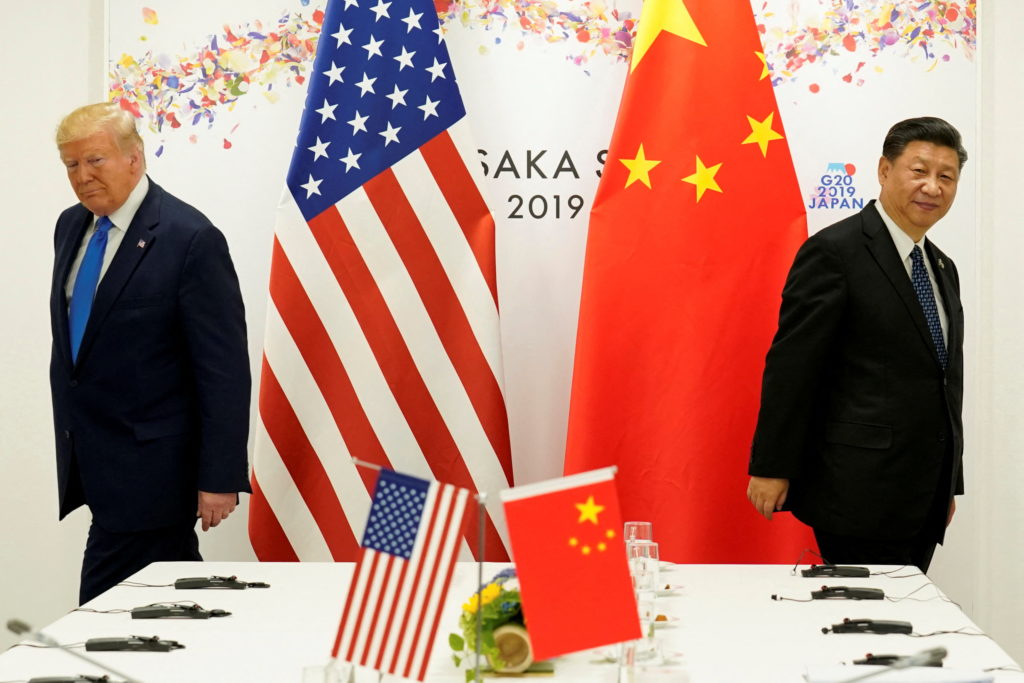
China has issued a strong warning that it will retaliate if Trump does not reverse his plan to impose a 100% tariff on Chinese imports. The move has escalated trade tensions between the two countries. Beijing’s statement signals that it regards the tariff threat as a serious provocation one that it may respond to with its own countermeasures if Washington fails to back down.
President Trump announced that, starting November 1, the United States would impose an additional 100% tariff on Chinese goods, over and above the existing duties. He framed this as a response to China’s export controls on rare earths and new restrictions on critical technologies.
China quickly rebutted. Its Commerce Ministry defended its export controls as legal and necessary, arguing that they target sensitive technologies and that civil-use exports would continue under license. Beijing criticized the U.S. for escalating tensions and accused Washington of hypocrisy and overreach. A ministry spokesperson said, “If the U.S. persists in acting unilaterally, China will resolutely take corresponding measures to safeguard its legitimate rights and interests.”
China also reiterates that it does not want a full tariff war, but will not shy away from defending national interests if provoked.
China controls a large share of global supply chains for rare earth elements—vital for electronics, renewable energy, and defense systems. Its export curbs already rattled global markets. From China’s view, a 100% tariff would squeeze both its earnings and its influence in those supply chains, which it is loath to cede.

By warning of countermeasures, China is signaling strength to both the U.S. and its own domestic audience. It wants to appear resolute, not yielding to pressure. In diplomacy, showing willingness to retaliate can be a tool to push adversaries toward negotiation.
Trump’s threat jolted markets, stocks slumped, especially in tech sectors tied to Chinese manufacturing. That financial shock adds urgency. Beijing may use these tensions to push Washington back or extract concessions before tariffs kick in.
Tariffs on U.S. goods
China could reapply or increase tariffs on American agricultural products, industrial goods, or tech imports. That has precedent in earlier phases of the U.S.–China trade war.
Port or shipping fees
In one already reported move, China imposed new port fees on U.S.-linked vessels docking in Chinese ports—presented as reciprocal measures to U.S. charges for Chinese ships.
Export controls tightening
More technologies or materials could be added to China’s restricted export list, especially those with military or advanced civilian use.
-
Regulatory scrutiny of U.S. firms
China may increase antitrust cases, audits, or licensing reviews against American companies operating in China—creating pressure without direct tariffs. -
Trade diversion and alternative partnerships
China might pivot trade to other partners—Southeast Asia, Africa, Latin America—to reduce dependence on the U.S. market and soften impact.
A confrontation at this scale would ripple worldwide. Companies relying on Chinese components may face higher costs or supply disruptions. Countries competing with China for trade access could see shifting alignments. If China follows through on countermeasures, the U.S. may face a backlash from exporters and industries dependent on Chinese supply chains.
For supply chain managers and importers, uncertainty spurs risk management. Some may rush orders earlier, diversify sourcing, or hedge currencies. Such behavior can amplify volatility.
China’s warning that it will launch countermeasures if Trump doesn’t walk back 100% tariff threat reflects how seriously it views that proposed escalation. Beijing asserts it would defend its interests and sees the threat not only as economic coercion but as a challenge to its diplomatic standing.
Whether Trump relents or doubles down may determine whether this becomes a full-blown trade war or a negotiation turning point. Either way, global supply chains and diplomatic balance are on unsteady ground.