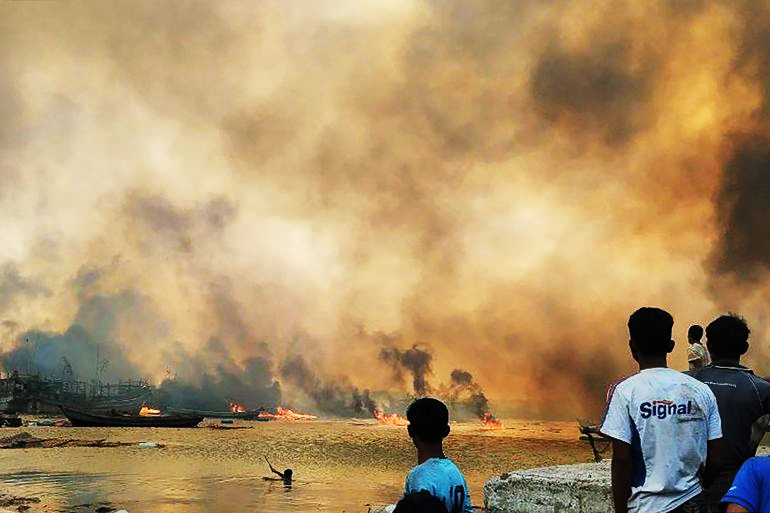
Myanmar’s powerful Arakan Army (AA) has seized control of most of western Rakhine State, vowing to capture the capital Sittwe and strategic coastal hubs that host Chinese and Indian infrastructure projects — a shift that could reshape the country’s civil war and regional geopolitics.
The AA, an ethnic Rakhine armed group fighting for self-determination, now holds 14 of Rakhine’s 17 townships after a string of battlefield victories against Myanmar’s military junta. Analysts warn the group is poised to launch a decisive monsoon offensive to capture Kyaukphyu, site of a deep-sea port and twin oil-and-gas pipelines central to China’s Belt and Road Initiative.
The group has also pledged to secure Sittwe, where India has invested heavily in the Kaladan transport project linking its landlocked northeast to the Bay of Bengal.
“If the AA succeeds in capturing Rakhine’s ports, it could control trade gateways vital to both China and India,” said Anthony Davis, a Bangkok-based defense analyst with Janes. “That would give it leverage no other armed actor in Myanmar holds.”
The advance comes amid a deepening humanitarian crisis. The junta has blockaded food and medicine to Rakhine, leaving two million people at risk of starvation, according to the UN. Prices in encircled Sittwe have soared — pork that once cost $2 now sells for more than $13. Residents report rising crime, suicides, and families resorting to begging and sex work.

The Arakan Army itself faces accusations of abuses against Rohingya civilians, including a reported massacre last year — allegations it denies. More than a million Rohingya refugees remain in Bangladesh camps after the military’s 2017 crackdown, with Dhaka urging the AA to accept returns.
China, Myanmar’s largest foreign investor, has quietly stepped up support for the junta in recent months but is also moving to safeguard its assets in Kyaukphyu. About 50 Chinese security staff remain on site.
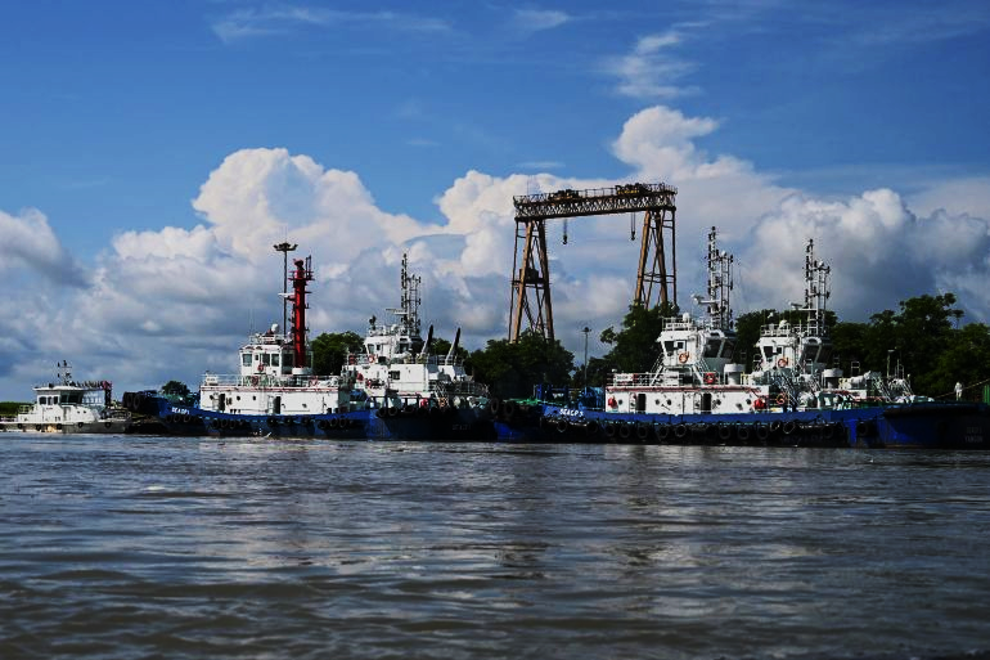
The AA has pledged to “protect all foreign investments and personnel” and says it seeks “positive relations” with Beijing.
India, meanwhile, faces uncertainty over its $484 million Kaladan project. If the AA consolidates control, analysts warn it could tax Indian trade routes, boosting its finances while undercutting the junta’s ties with New Delhi.
The AA claims to have mobilized more than 40,000 fighters, making it Myanmar’s largest ethnic army. Analysts estimate it could commit up to 10,000 troops in a Kyaukphyu assault against roughly 3,000 junta defenders backed by jets, drones, and naval firepower.

“Based on its record, the AA has a significant chance of capturing Kyaukphyu,” Davis said, calling it potentially “one of the most consequential and costliest campaigns” of Myanmar’s three-year civil war.
For now, China and India are watching closely as the AA edges toward control of Myanmar’s western seaboard — and with it, a new role as a regional powerbroker.
Source: Aljazeera