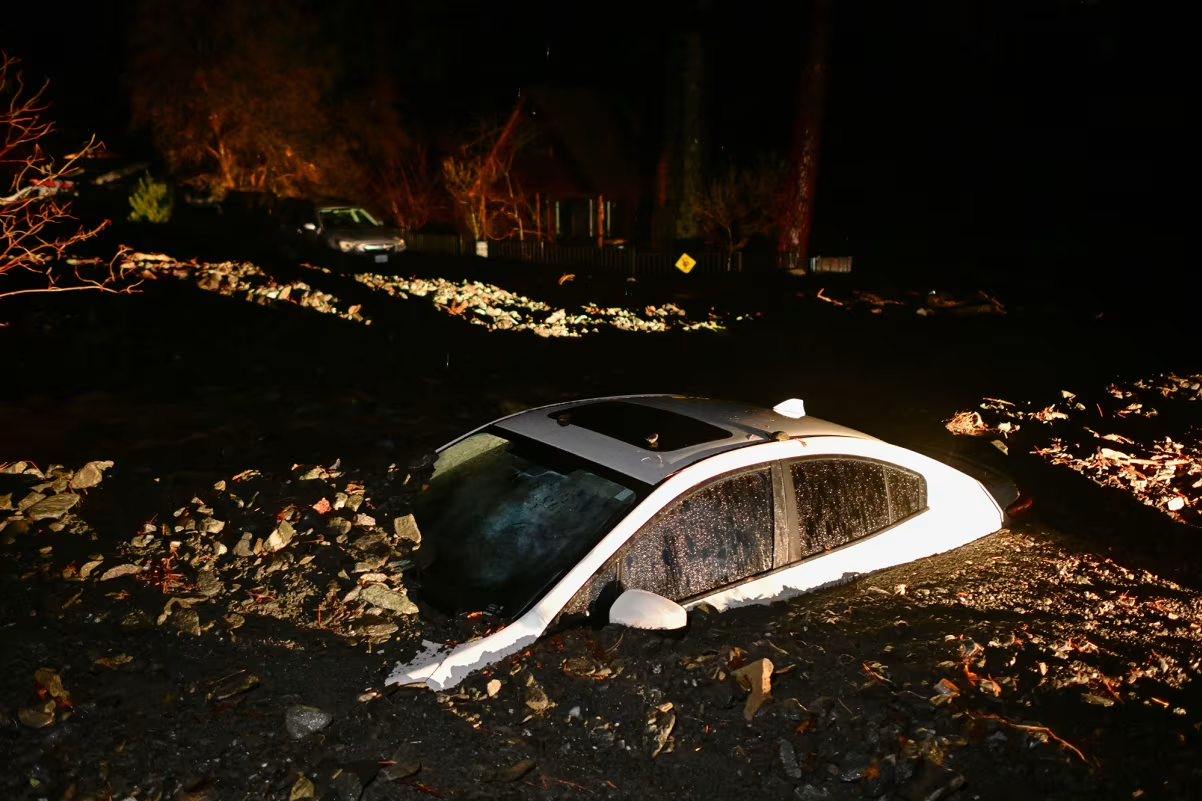
A final round of heavy rain swept across California on Friday, compounding the damage from a relentless series of holiday storms that have already killed at least four people, forced evacuations across wide swaths of the state, and triggered dangerous flooding, mudslides, and mountain avalanches.
The storms, which began last weekend and intensified during the Christmas holiday, have drenched much of California with rainfall totals more typical of an entire month, overwhelming drainage systems, saturating soil, and destabilizing hillsides—particularly in regions scarred by recent wildfires.
Forecasters warned that even though rainfall on Friday was expected to be lighter than earlier in the week, the cumulative impact of days of rain posed a serious risk. The Weather Prediction Center issued a Level 2 of 4 risk for flooding rainfall across Southern California, covering more than 18 million people, as already waterlogged ground struggled to absorb additional precipitation.
Meteorologists said an additional 1 to 3 inches of rain could fall Friday in parts of Southern California, enough to trigger renewed flooding, debris flows, and road closures. Heavy snowfall in the mountains was also expected to continue into Friday night before tapering off early Saturday.
“This is one of those classic late-December storm sequences where the danger isn’t just one storm, it’s the accumulation,” said one National Weather Service forecaster. “By the time you reach day four or five, the ground simply cannot take any more water.”
Authorities stressed that while the storm system was expected to weaken over the weekend, hazards would linger well beyond the final raindrops, especially in burn scar areas and steep mountain communities.
Deadly Toll Across the State
At least four people have died in storm-related incidents since the weather system moved into California last weekend.
Among the dead was James Caravallo, a 19-year veteran of the Sacramento County Sheriff’s Office, who was killed early Wednesday while driving to work. According to the California Highway Patrol, Caravallo lost control of his vehicle on a rain-slick roadway and crashed into a power pole.
In Southern California, a 61-year-old man in San Diego County died after strong winds toppled a tree onto him. His daughter-in-law described him to CNN affiliate KFMB as an “elderly, loving man” who was deeply devoted to his family and always eager to help others.
Two additional deaths were reported in Northern California, though authorities have released limited details as investigations continue.
Widespread Rescues and Evacuations
The storms have triggered a massive emergency response. The Los Angeles County Fire Department reported rescuing more than 100 people during the height of the flooding earlier in the week, many of them pulled from submerged vehicles or swept away by fast-moving floodwaters.
On Friday morning, a Los Angeles City Fire Department helicopter crew rescued a woman who had been swept downstream in a rapidly flowing wash in the Arleta neighborhood of the San Fernando Valley. Dramatic video showed firefighters lowering a rescue basket as muddy water surged below.
Los Angeles County officials extended evacuation orders for hundreds of homes deemed most at risk particularly in wildfire burn scar zones until 1 p.m. Friday. Despite repeated warnings, many residents chose to remain in their homes, Los Angeles Police Chief Jim McDonnell said, complicating rescue efforts.
Mountain Communities Overwhelmed by Mud and Debris
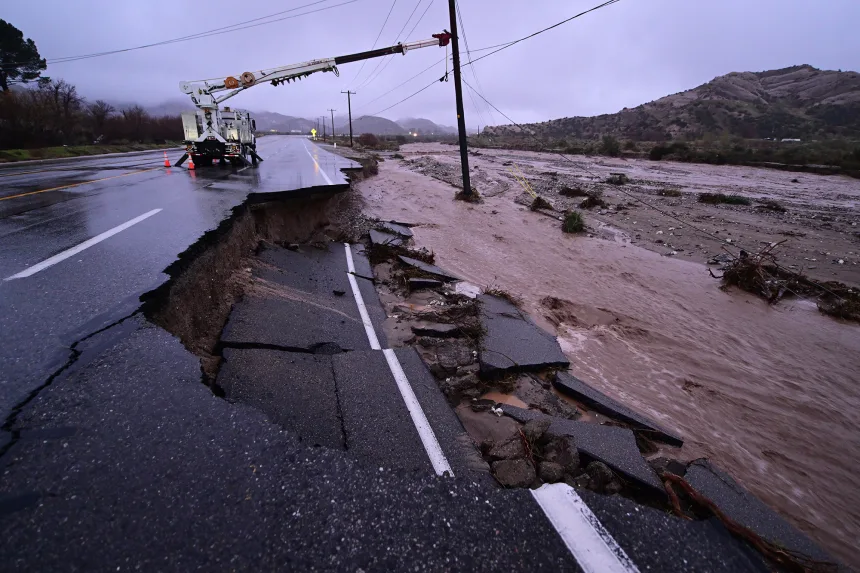
Some of the most severe damage occurred in mountain communities northeast of Los Angeles, where intense rainfall triggered mudslides and debris flows.
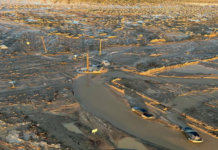
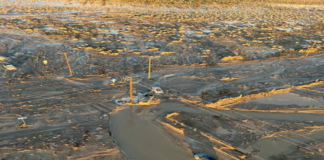
In Wrightwood, a town of roughly 5,000 residents nestled in the San Gabriel Mountains, floodwaters and mud poured through streets Wednesday, encasing homes and cars in thick layers of dirt and rock. Entire neighborhoods were transformed into rivers of debris.
San Bernardino County officials said residents were rescued from inundated vehicles and, in some cases, airlifted from rooftops. A child suffered minor injuries, but no fatalities were reported in the town.
Evacuation warnings were lifted Friday evening, but the San Bernardino County Sheriff’s Department cautioned that many areas remained severely damaged and unsafe.
“Even though the rain has slowed, the danger is not over,” the department said in a statement. “Debris remains unstable, and road access is limited.”
For many residents, the timing of the disaster, coinciding with Christmas deepened the emotional toll.
On Christmas Eve, Cody Burgess watched as a Los Angeles County Fire helicopter rescued his neighbors from their rooftops in Piñon Hills, another San Bernardino County community hit hard by flooding.
“Mud and water were just pouring out of their windows,” Burgess told CNN. “There was no way for firefighters to get to them on foot.”
The three people rescued were unharmed, but Burgess said his neighborhood was left without water or internet service, and the main road sustained significant damage.
In Wrightwood, residents spent Christmas navigating homes buried in debris. Misty Cheng, who had been out of town when the storm struck, returned home after receiving a video from a neighbor showing floodwaters racing through her property “like a rushing river.”
“I can literally walk onto my roof, the second-floor roof from my backyard,” Cheng told CNN affiliate KABC.
Another resident, Kaitlyn Johnson, said what began as minor street flooding escalated with terrifying speed.
“It went from a little bit of flooding to very alarming, very fast,” she said. “The water tripled in size and broke through our fence.”
County officials acknowledged the emotional toll on families displaced during the holidays.
“San Bernardino County Fire is devastated that many families are unable to be home together this Christmas due to the ongoing impacts of this incident,” the department said in a Christmas Eve statement.
Cheng described arriving home on Christmas Day and breaking down in tears.
“To have five feet of pure dirt and rock inside my house, inside my garage, halfway up my windows—it was overwhelming,” she said.
Despite the devastation, residents described acts of solidarity and resilience. With power outages widespread, a gas station and a coffee shop running on generators became informal community hubs, according to the Associated Press.
Local resident Meyers told the AP that a single call for help to a friend with a Jeep quickly turned into a coordinated effort involving eight volunteers.
“That, to me, is the beauty of this town,” she said. “Whether it’s floods or fires, people show up for each other.”
Sierra Nevada Buried Under Snow
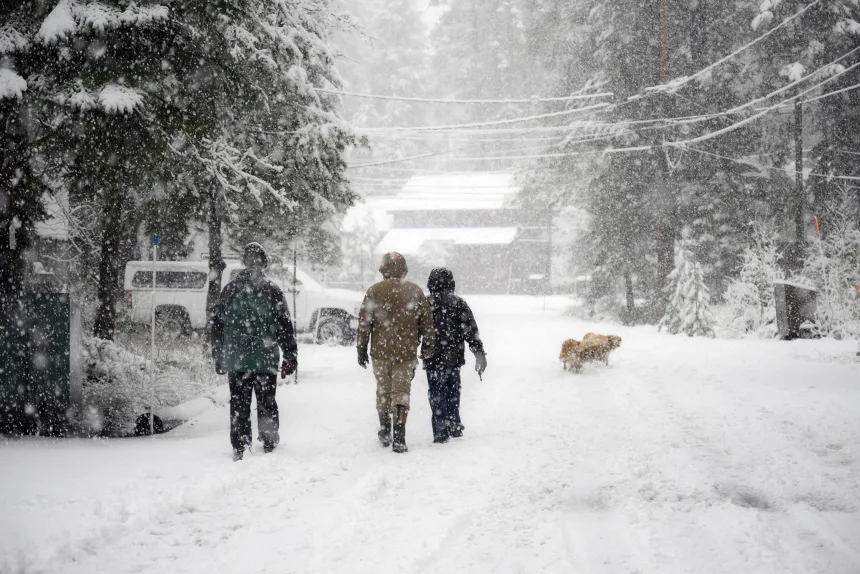
While rain battered lower elevations, the Sierra Nevada mountains were buried under feet of snow. Over five feet fell in some areas since Tuesday, creating dangerous travel conditions and increasing avalanche risk.
The Winter Storm Severity Index warned of major travel impacts, with roads closed or restricted and visibility near zero during peak snowfall.
An avalanche injured two ski patrollers Friday morning on Lincoln Mountain in the eastern Sierra Nevada, according to Mammoth Mountain Ski Area officials. One patroller sustained serious injuries and was being evacuated for advanced medical care, while the second suffered possible broken bones. The resort closed for the day.
California has long been prone to cycles of drought and deluge, but scientists say climate change is intensifying both extremes. Warmer air holds more moisture, fueling stronger storms, while longer dry spells leave landscapes vulnerable to erosion and flooding when rain finally arrives.
Burn scars from recent wildfires are especially dangerous, as vegetation that once stabilized slopes has been stripped away, allowing rain to rapidly mobilize soil and debris.
State officials urged residents to remain vigilant even as the storm system winds down, warning that secondary hazards, from weakened infrastructure to delayed mudslides could persist for days or weeks.
As the final wave of rain moves east and skies begin to clear, emergency crews will shift from rescue to recovery. Damage assessments are underway, but officials say it will take weeks to fully understand the financial and environmental toll.
For many Californians, the storms have turned what should have been a season of celebration into one of loss and uncertainty. Yet amid the destruction, stories of courage, compassion, and community continue to emerge, offering hope as the state begins the long process of rebuilding.