

A labor dispute that rippled far beyond Canada’s borders has begun to ease, after days of uncertainty that stranded travelers and exposed deeper tensions within the airline industry.
Flight attendants at Air Canada say they have reached a tentative agreement with the carrier, signaling a possible end to a strike that disrupted travel plans for roughly half a million people worldwide.
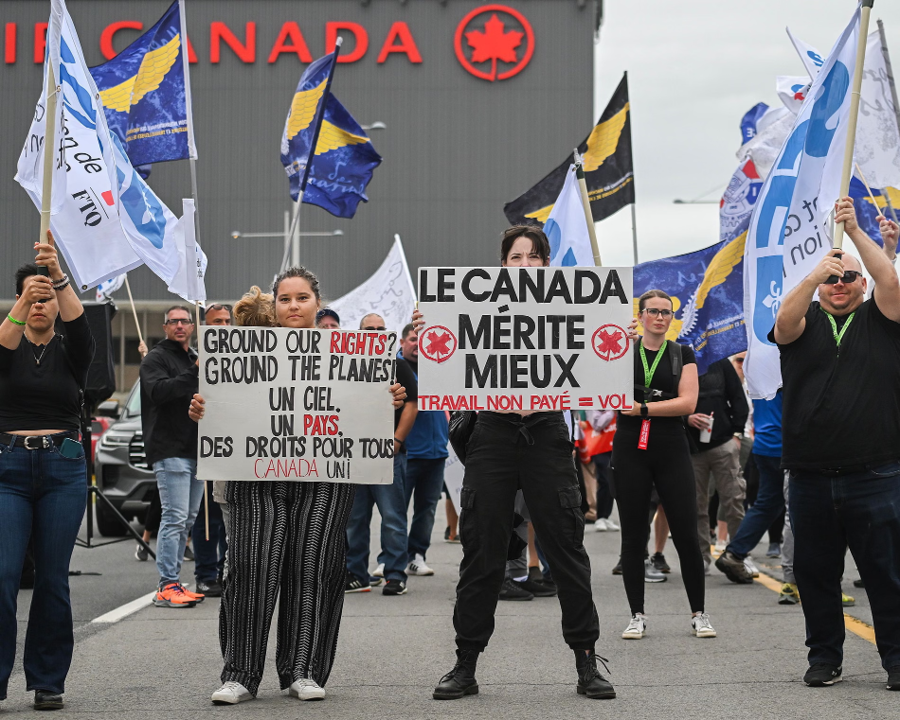
The breakthrough comes after a dramatic standoff that saw nearly 10,000 cabin crew members walk off the job just after midnight on Saturday. Their demands centered on higher wages and compensation for what they described as long standing unpaid duties on the ground, particularly during boarding and preflight preparation.
Those responsibilities, while essential to flight operations, have historically not been counted as paid working time under many airline contracts, an issue that has increasingly drawn scrutiny across the global aviation sector.
The strike quickly escalated into a high stakes confrontation. The flight attendants’ union, a branch of the Canadian Union of Public Employees, refused to comply with two separate orders from the Canada Industrial Relations Board directing workers to return to their posts. That defiance forced the airline to abandon early attempts to partially restore service, deepening the disruption and leaving thousands of passengers scrambling for alternatives.
For travelers, the impact was immediate and widespread. Flights were canceled across domestic and international routes, affecting business trips, family reunions, and long planned vacations. Airports in major hubs saw lines stretch for hours as passengers sought rebookings or refunds.
Some were forced to spend nights in terminals, while others turned to rival airlines or postponed their plans entirely. The scale of the disruption underscored just how dependent modern travel is on the smooth functioning of airline labor.
Negotiations amid Pressure
Negotiations resumed Monday evening under mounting pressure from government officials, industry stakeholders, and frustrated passengers.
By late that night, union representatives announced that a tentative deal had been reached through mediation led by arbitrator William Kaplan. While details of the agreement remain undisclosed, both sides described it as a significant step forward.
“The strike has ended. We have a tentative agreement we will bring forward to you,” the union said in a statement to its members. The message struck a tone of cautious optimism while also emphasizing the need for cooperation as operations resume. “We are required to advise our membership that we must fully cooperate with resumption of operations,” it added.
Air Canada confirmed the development, stating that it would begin gradually restarting flights. The first departures were scheduled for Tuesday evening, though the airline warned that a full return to normal service could take up to ten days. Repositioning aircraft and crews, as well as clearing the backlog of delayed passengers, presents a logistical challenge that cannot be resolved overnight.
“Restarting a major carrier like Air Canada is a complex undertaking. Full restoration may require a week or more,” said company president Michael Rousseau. His comments reflect the intricate coordination required to bring a global airline back online after a sudden shutdown, particularly one involving multiple continents and time zones.
Neither the union nor the airline has released specifics about the terms of the proposed deal, citing the need to complete the ratification process. A vote among union members is expected, though the timing has not yet been announced. Until then, the agreement remains provisional.
Still, the union has characterized the outcome as a major victory. In its statement, it described the deal as delivering “transformational change for our industry after a historic fight.” Central to that claim is the issue of unpaid work, which has become a flashpoint not only in Canada but across the aviation world.
“Unpaid work is over,” the union declared, signaling that one of its key demands may have been addressed. If confirmed, such a shift could have implications beyond Air Canada, potentially influencing labor negotiations at other airlines where similar practices persist.
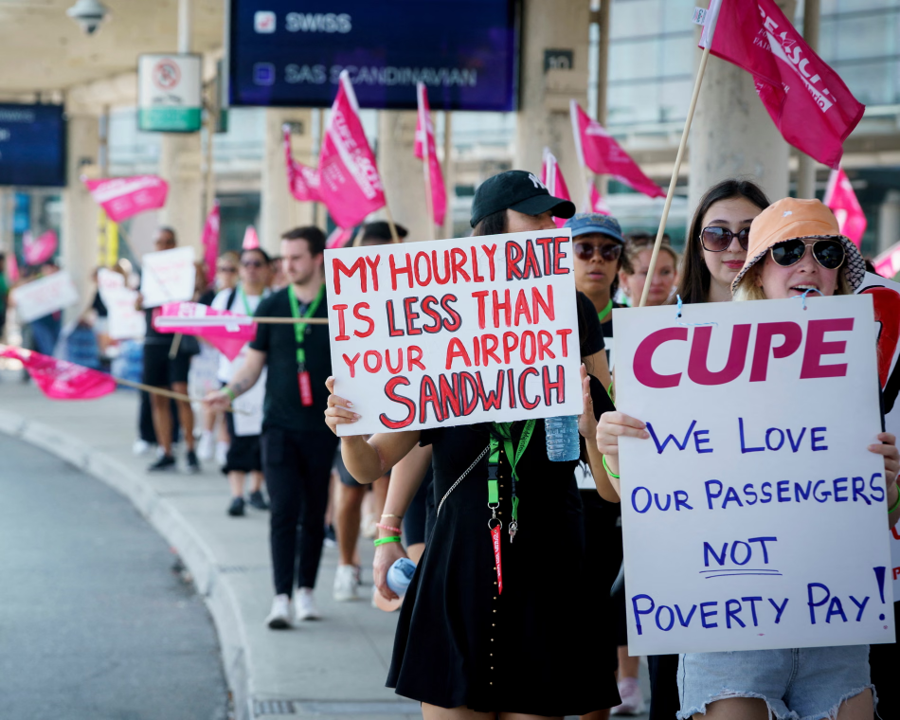
The dispute also drew attention at the highest levels of government. Over the weekend, federal labor minister Patty Hajdu invoked emergency powers in an attempt to halt the strike and compel both sides into binding arbitration. The intervention highlighted the broader economic stakes, as prolonged disruption threatened to ripple through tourism, business travel, and supply chains.
Despite those efforts, the union initially refused to comply with the tribunal’s back to work orders, prolonging the standoff. The decision reflected deep frustration among workers who felt their concerns had gone unaddressed after months of negotiations. According to officials, talks between the airline and union had been ongoing for roughly eight months without producing an agreement.
Prime Minister Mark Carney weighed in on the situation, calling it “disappointing” that such an extended negotiation period had failed to yield a resolution. At the same time, he acknowledged the legitimacy of the workers’ concerns, emphasizing the importance of fair compensation.
“It is important that flight attendants are compensated equitably,” Carney said, while also expressing concern about the widespread disruption affecting travelers.
The strike is part of a broader trend within the aviation industry, where labor groups have become increasingly assertive in pressing for better pay and working conditions. In recent years, pilots, ground staff, and cabin crews across North America and Europe have staged walkouts or threatened strikes as airlines rebound from the financial strain of the pandemic.
During the COVID-19 crisis, many carriers implemented cost cutting measures, including layoffs and reduced wages, to survive a collapse in demand. As travel has recovered, workers have argued that they should share in the industry’s renewed profitability. At the same time, rising inflation has intensified pressure on wages, making contract negotiations more contentious.
The issue of unpaid ground work has emerged as a particularly sensitive topic. Flight attendants often perform a range of duties before takeoff and after landing, from assisting passengers during boarding to conducting safety checks. While these tasks are essential, they are not always included in paid flight time, leading to gaps in compensation that unions say are unfair.
Industry analysts note that resolving such disputes may require a fundamental rethink of how airline labor is structured. Some carriers have already begun to adjust their compensation models, offering pay for boarding time or increasing base salaries to address concerns.
For Air Canada, the immediate priority is restoring operations and rebuilding trust with customers. The airline has advised passengers to check flight statuses carefully and avoid heading to the airport unless their flights are confirmed to be operating. It also issued an apology for the inconvenience caused by the strike.
“The suspension of our service is extremely difficult for our customers. We deeply regret and apologize for the impact on them of this labour disruption,” Rousseau said.
For many travelers, the experience has been a reminder of how quickly plans can unravel when labor disputes hit critical infrastructure. While the tentative agreement offers hope for a return to normalcy, the episode has left a lasting impression on passengers and industry observers alike.
As the ratification process moves forward, attention will turn to the details of the deal and what it means for the future of airline labor relations. If the agreement delivers on the union’s promises of meaningful change, it could set a precedent that shapes negotiations across the sector.
For now, the end of the strike brings a measure of relief. Flights are beginning to resume, passengers are finding their way home, and a fragile sense of stability is returning to the skies. Yet the underlying issues that led to the walkout remain part of a larger conversation, one that is unlikely to fade as the aviation industry continues to evolve.
This article was first published on Guardian