According to reports in Africa, the Democratic Republic of the Congo (DRC) has declared a new Ebola outbreak in Kasai Province. It’s revealed that it’s caused by the most severe strain: the Zaire Ebola virus.

The first report of this virus this year was on the 20th of August, when a 34-year-old pregnant woman was admitted to the hospital and died five days later. Unfortunately, two health workers who treated her also became infected and died of the complication.
As of September 15, about 81 confirmed cases and 28 deaths, including four health workers, have been reported. Since the virus outbreak, the DRC has had 15 prior Ebola epidemics, with the largest recorded in 2019 and the most recent in 2022. However, based on genetic analysis, it was asserted that the outbreak likely began after a spillover from an animal to a human, rather than a continuation of earlier outbreaks.
Mode of Transmission and Symptoms
Historically, the first outbreak of Ebola virus disease was identified in 1976 in a village near the Ebola River in the Democratic Republic of the Congo and South Sudan. The natural host of the virus is the fruit bat. Subsequently, humans got infected with the virus after contact with animals such as bats, chimpanzees, antelopes, or porcupines.
The Ebola virus spreads mainly through direct contact with blood or other body fluids. It has a life cycle of two to 21 days for the onset of symptoms. The symptoms can be sudden with fever, fatigue, muscle pain, headaches, and sore throat appearing first, then progress to vomiting, diarrhoea, rash, abdominal pain, bleeding, and shock.
If left untreated early, the death rate can reach between 50% and 90%, and it depends on the availability of high-quality health care. The interesting fact is that Ebola tends to spread rapidly within families, health-care facilities and during funerals, where many people gather and the bodies are washed or touched.
During the period when the largest recorded Ebola epidemic occurred in 2014, it was estimated that more than 800 health workers were infected, and two-thirds died. Health workers often get infected through close contact with infected patients, needle stick injuries, or due to inadequate protective gear.
Interventions Made So Far
Based on reports, the DRC is currently managing multiple outbreaks at once, including a large mpox epidemic, cholera, and measles, which also require staff, supplies, and attention. Although the Kasai Province in DRC is fairly remote, the risk of further spread is increased by the proximity to the provincial capital, Tshikapa city, and the neighbouring country of Angola, where people travel for trade and work.
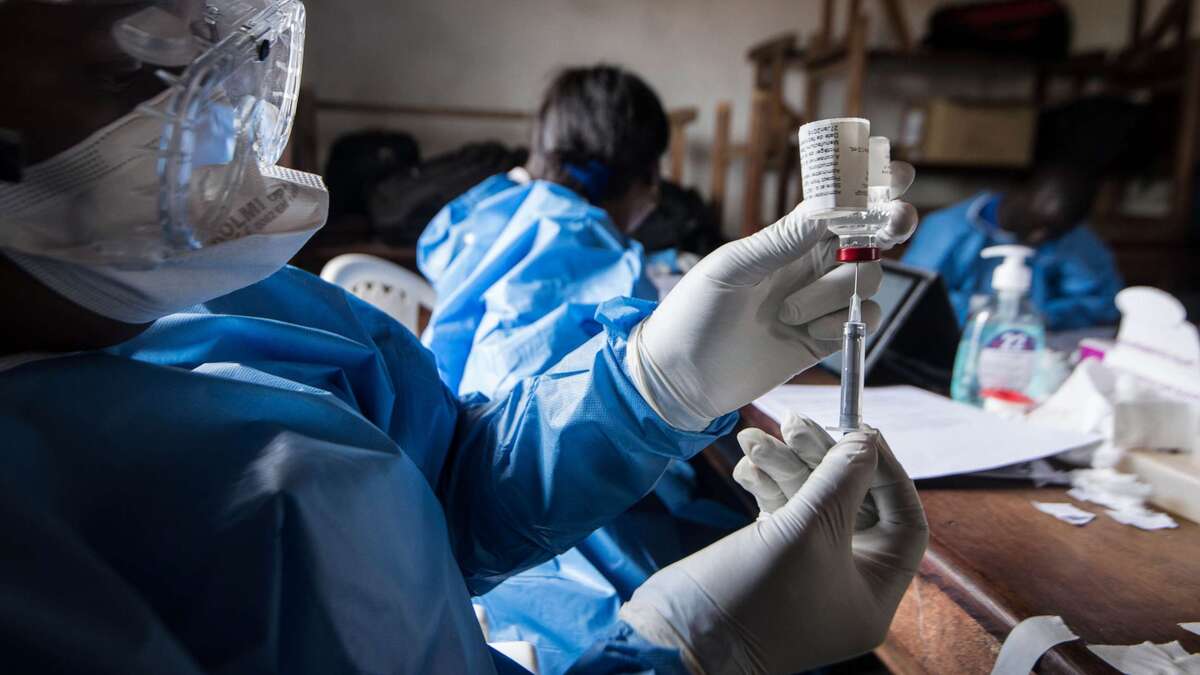
Meanwhile, this outbreak can be prevented by the Ervebo vaccine (rVSV-ZEBOV). This vaccine has shown 100% effectiveness in a clinical trial against Zaire Ebola when given immediately after exposure. Based on the clinical trial conducted, the vaccine was reported to be 95% effective if given 12 or more days after exposure.
Currently, the World Health Organization (WHO) is supporting vaccination efforts, sending about 400 doses, with more to follow. Likewise, ring vaccination of contacts of known cases has started, together with vaccination of front-line workers.
In addition to vaccination, early isolation of suspected cases, tracing contacts, and quarantining them can also control Ebola outbreaks. Furthermore, practising safer funeral rituals by avoiding traditional practices, such as washing or touching bodies, also helps prevent transmission.
Subsequently, this Ebola outbreak may remain localised, with limited regional or international impact if contained quickly. The WHO has also assessed the risk for the Ebola virus as high for DRC, moderate for the region, and low globally.