A preliminary US military investigation has reportedly found that a deadly strike on an elementary school in southern Iran earlier this year was the result of an American targeting error, raising fresh questions about accountability, intelligence failures and civilian protection in a rapidly escalating conflict.
Investigation points to US targeting error
According to reporting by The New York Times, which cited unnamed US officials and others familiar with the findings, the inquiry has determined that a Tomahawk missile strike on 28 February hit the Shajarah Tayyebeh elementary school in the town of Minab due to a mistake in targeting by US military planners.
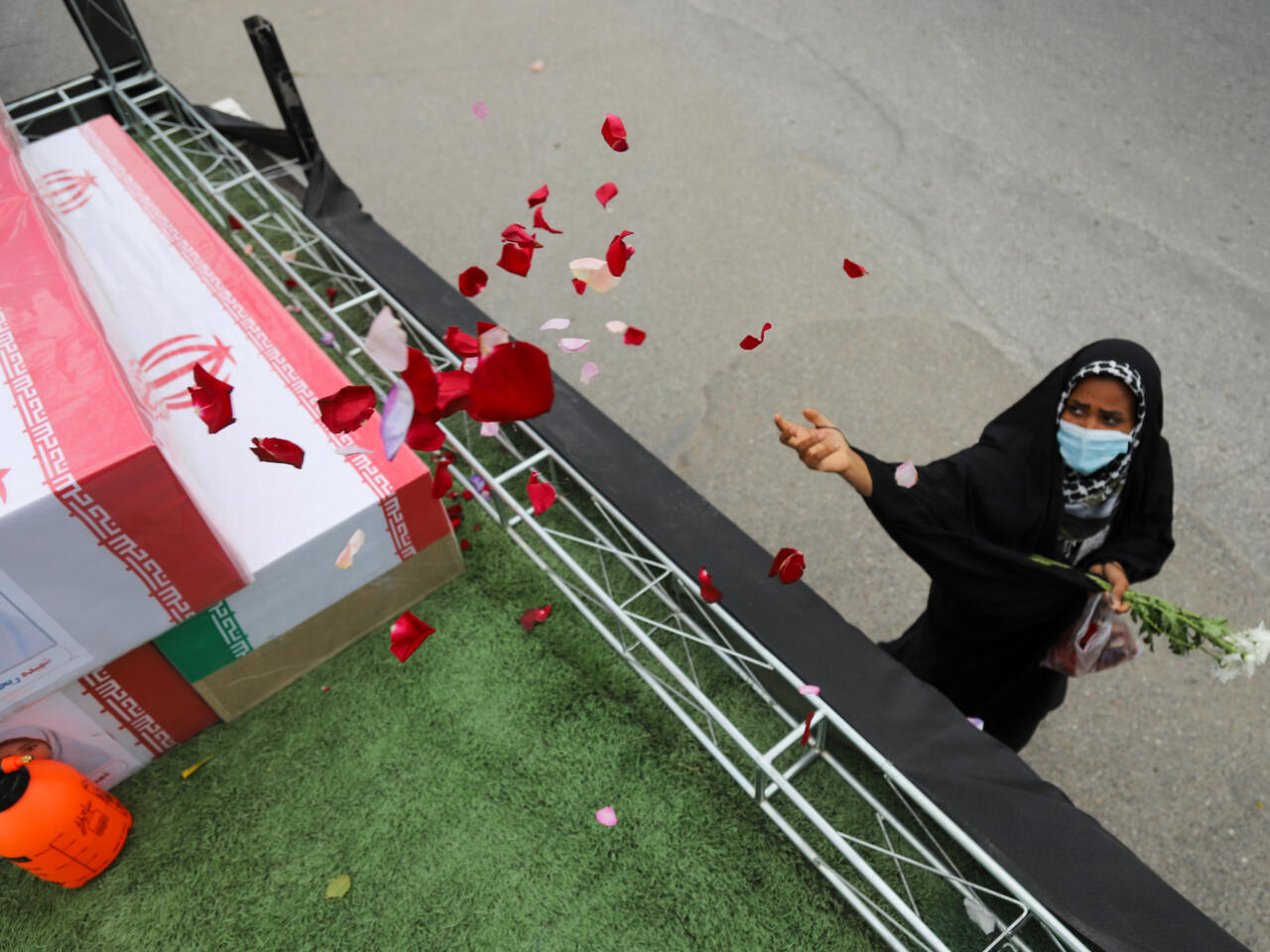
The attack killed at least 175 people, according to Iranian officials, the majority of them children. It stands as one of the deadliest incidents involving civilian casualties in the current war and has drawn widespread condemnation.
The investigation, which is still ongoing, reportedly found that officers at United States Central Command generated target coordinates using outdated intelligence provided by the Defense Intelligence Agency. That error appears to have led to the selection of a site that was no longer part of an active military compound.
The findings lend weight to claims made by Iran in the aftermath of the strike. Tehran had released video footage of the explosion and fragments of what it said were US made missile components, insisting that the attack had been carried out by American forces.
Conflicting claims and mounting evidence
Despite the emerging evidence, Donald Trump has publicly denied US responsibility. Speaking on Saturday, he said, “In my opinion, based on what I’ve seen, that was done by Iran. They’re very inaccurate, as you know, with their munitions. They have no accuracy whatsoever. It was done by Iran.” He did not provide evidence to support the claim.
US military officials have taken a more cautious line, declining to assign blame while the investigation continues. The Pentagon said only that “the incident is under investigation,” while a spokesperson for Central Command said it would be inappropriate to comment further at this stage.
Nevertheless, independent analysis has increasingly pointed toward US involvement. Satellite imagery shows that although the school building had once been part of a larger complex linked to the Islamic Revolutionary Guard Corps, it had been separated from the barracks for at least nine years. The site bore clear signs of civilian use, including brightly coloured murals and small sports fields visible from above.
There has been no indication that the school was being used for military purposes at the time of the strike. Its proximity to IRGC naval facilities, however, may explain why it fell within a targeted zone during a broader operation.
Verified footage and analysis reconstruct the strike
A series of videos shared on Iranian social media in the hours after the attack has played a crucial role in reconstructing what happened. Several clips, later verified by the Guardian, show the same location from different angles, identifiable by distinctive features such as painted walls and surrounding structures.
In one video, the camera pans from the rubble of the destroyed school to thick smoke rising beyond a fence, in the direction of a nearby IRGC base. The footage suggested early on that the school may have been struck as part of a wider set of attacks on military facilities in the area.
Further evidence emerged on 8 March, when Mehr News Agency released footage of a missile striking a site in Minab. The video was analyzed by the investigative group Bellingcat, which used geolocation techniques to confirm where the strike took place.
By matching buildings, roads, trees and other landmarks visible in the footage with satellite imagery, analysts were able to determine both the camera position and the point of impact. Their findings indicated that the missile struck the IRGC compound adjacent to the school.
Experts who examined the footage identified the weapon as a Tomahawk missile. According to NR Jenzen Jones, director of Armament Research Services, the type of munition used strongly suggests US involvement.
“Given the belligerents, that indicates it is a US strike, as Israel is not known to possess Tomahawk missiles,” he said. “The United States is the only country involved in the Iran war to have this weapon.”
He also dismissed claims circulating online that the strike could have involved an Iranian Soumar missile, noting clear design differences. “The munition in question is clearly not an Iranian Soumar missile,” he said, pointing to the absence of its distinctive external engine configuration.
Questions over accountability and civilian protection
The reported findings have intensified scrutiny of how targets are selected and verified in modern warfare, particularly in densely populated or mixed use areas. The use of outdated intelligence data raises concerns about the processes used to update and validate targeting information, especially when civilian lives are at stake.
The Trump administration has so far maintained a cautious and at times contradictory stance, balancing public denial with a formal investigation that appears to be uncovering a different narrative. Critics say the lack of transparency risks undermining trust and complicating efforts to establish accountability.
For Iran, the incident has become a powerful symbol of the human cost of the conflict. Images and videos of the destroyed school have circulated widely, fueling anger and reinforcing calls for international condemnation.
The strike also highlights the broader dangers of operating in environments where military and civilian infrastructure exist in close proximity. Even when targeting legitimate military objectives, errors in intelligence or execution can have devastating consequences.
As the investigation continues, its final conclusions may carry significant political and legal implications. If confirmed, the findings would place responsibility for one of the deadliest civilian incidents of the war on US forces, adding to the mounting pressures surrounding an already volatile conflict.
For now, the destruction of the school in Minab stands as a stark reminder of how quickly war can spill beyond its intended targets, and how the consequences of a single error can reverberate far beyond the battlefield.