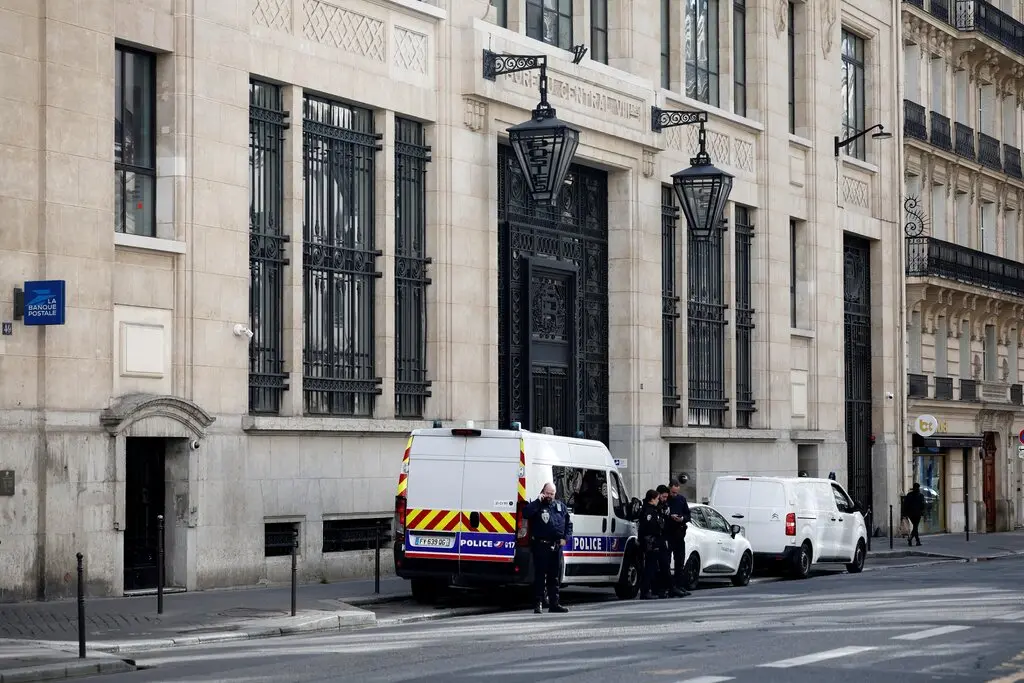
French police say they have thwarted a suspected terrorist attack in the heart of the capital, arresting a man in the early hours of Saturday as he allegedly attempted to detonate a homemade explosive device outside the headquarters of Bank of America.
The intervention took place in the city’s upscale 8th arrondissement, one of the most sensitive and closely guarded districts in Paris. The area sits just a few blocks from the Élysée Palace, where President Emmanuel Macron lives and works, and only a short distance from the Champs-Élysées, one of the most visited tourist avenues in the world.
According to the National Counterterrorism Prosecutor’s Office, the suspect was arrested at around 3.30am as he prepared to set off the device. Authorities said the plot was disrupted just in time, preventing what could have been a serious attack in a densely populated and symbolically important part of the city.
Arrest in high-security district raises alarm
Details emerging from the investigation suggest the device was relatively sophisticated for a homemade construction. Sources involved in the case, indicated that it contained five litres of liquid believed to be fuel, along with an ignition mechanism. The ignition component itself reportedly held around 650 grams of explosive powder, raising concerns about the potential destructive capacity of the device.
Police sources said officers moved in immediately after the suspect placed the object, detaining him before it could be activated. The device was later removed and taken to a forensic laboratory for full analysis, where specialists are working to determine its exact composition and whether it was fully operational.
Authorities have not released any information about the suspect’s identity, nationality, age or possible motive. However, the seriousness of the case is reflected in the charges under investigation.
Prosecutors said they are examining potential offences including “attempted damage by fire or dangerous means” and the “manufacturing of incendiary or explosive devices in connection with a terrorist enterprise.” The case is also being investigated as a “terrorist criminal conspiracy,” suggesting officials believe the act may not have been carried out in isolation.
Investigation widens as global tensions loom
The investigation is being led by the Paris judicial police with support from General Directorate for Internal Security, the country’s main intelligence service responsible for counterterrorism operations. Their work will focus on determining whether the suspect had accomplices, how the device was assembled, and whether the plot was linked to a wider network.
Interior minister Laurent Nuñez praised the officers involved, describing their response as swift and decisive. In a message posted on social media, he said the intervention had “thwarted a violent terrorist attack” and emphasized that vigilance in France “remains more than ever at a high level.”
“I commend all the security and intelligence forces fully mobilized under my authority in the current international context,” he added.
Speaking later on French television, Nuñez revealed that investigators are searching for a second individual who was present outside the bank at the time of the incident but managed to flee. “Clearly, there was a coordinated action,” he said, reinforcing concerns that the attempted attack may have involved more than one person.
The incident comes at a time of heightened security anxiety across Europe, driven in part by the ongoing conflict in the Middle East. Western intelligence agencies have warned that geopolitical tensions can increase the risk of attacks targeting symbolic or strategic locations, including American and Israeli interests abroad.
In this case, the choice of target may prove significant. A branch of Bank of America, an emblem of US financial presence, located in a high profile Parisian district near key government buildings and tourist landmarks, would carry both economic and symbolic weight.
The broader international context has only added to those concerns. Anxiety about potential retaliation or spillover from the war has grown in the weeks since fighting escalated, with European governments increasing surveillance and security measures. The conflict has also had economic consequences, particularly in energy markets.
The effective closure of the Strait of Hormuz, a critical artery for global oil and gas shipments, has contributed to a spike in energy prices, deepening unease across European economies already grappling with inflation and supply pressures.
France, like several of its European allies, has chosen not to participate directly in the military campaign linked to the conflict. However, it has taken steps to protect its interests and those of its partners. French naval vessels and warplanes have been deployed to the Persian Gulf to help defend allied countries from missile and drone attacks.
At the same time, France and United Kingdom are in discussions to assemble a multinational maritime force aimed at securing shipping routes once hostilities ease. The proposed coalition could involve as many as 35 countries and would focus on keeping the Strait of Hormuz open to commercial traffic.
Under the plan, participating nations would contribute frigates to escort tankers through the strait, with the capability to intercept drones or missiles using onboard air defense systems if necessary. Officials say such measures are essential to preventing further disruption to global trade and energy supplies.
For now, the focus in Paris remains on the ongoing investigation and the search for the second suspect. The swift police response has been widely credited with preventing what could have been a dangerous incident in one of Europe’s most prominent cities.
Yet the episode also serves as a reminder of the persistent risks facing major urban centers in times of international tension. As authorities continue to piece together what happened in the early hours of Saturday morning, the broader message from officials is clear. Vigilance remains essential, and the line between global conflict and domestic security has rarely felt thinner.