A widening conflict in the Middle East is drawing in global powers and raising fears of a broader regional war, as diplomatic efforts struggle to keep pace with escalating military activity.
Behind the scenes, the Pentagon is reportedly weighing plans for targeted offensives on Iran’s critical oil infrastructure, including Kharg Island and sites near the Strait of Hormuz, underscoring how close the confrontation may be to a new and more dangerous phase.
The developments come as regional powers attempt to contain the crisis through diplomacy. Officials from Saudi Arabia, Turkey and Egypt are expected to gather in Islamabad for urgent talks aimed at finding a path to de escalation. The meeting, hosted by Pakistan, reflects growing alarm across the region that the conflict could spiral beyond control.
Pakistan’s prime minister Shehbaz Sharif said he had already held “extensive discussions” with Masoud Pezeshkian about the hostilities, signaling that diplomatic channels remain active even as violence intensifies. Analysts say Islamabad’s involvement highlights its role as a potential intermediary, maintaining ties with both Gulf states and Iran at a moment when communication between rivals is strained.
The urgency of those talks is being driven by a cascade of developments across multiple fronts. In Lebanon, tensions surged after an Israeli strike killed three journalists, an incident that drew sharp condemnation from Abbas Araghchi. Writing on his official Telegram channel, Araghchi described the killings as a “targeted assassination” and a “flagrant violation of international law,” language that reflects Tehran’s increasingly confrontational posture.
Lebanon to the Gulf
The victims included Ali Shoeib of the Hezbollah affiliated al Manar television station, along with Fatima Ftouni and her brother Mohammed Ftouni from the pro Hezbollah outlet al Mayadeen. Israel said Shoeib was a “terrorist,” a claim that has done little to quell outrage among Iran aligned groups and their supporters. The killing of media workers has long been a flashpoint in conflicts across the region, often intensifying international scrutiny and deepening grievances on all sides.
Meanwhile, a separate but related escalation unfolded in Oman, where authorities reported a drone attack on the port of Salalah that injured a worker and forced a temporary halt in operations by the Danish shipping giant Maersk. Oman’s foreign ministry condemned the attack and said it was investigating its origins, though no group has claimed responsibility.
The targeting of commercial infrastructure has raised alarms in global markets, particularly given the strategic importance of Gulf shipping routes. The Strait of Hormuz, through which a significant portion of the world’s oil supply passes, has long been viewed as a potential flashpoint. Any disruption there could have immediate consequences for energy prices and global trade, amplifying the stakes of the current crisis.
Shifting War Plans
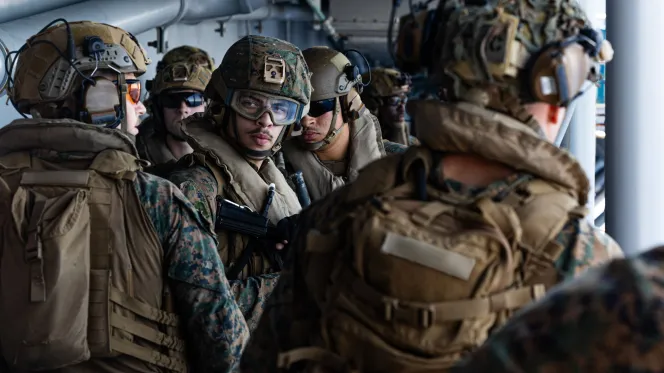
Military movements by the United States have added to the sense of escalation. As recently as Friday, about 3,500 US sailors and marines arrived in the region aboard the amphibious assault ship USS Tripoli, the flagship of the Tripoli Amphibious Ready Group and the 31st Marine Expeditionary Unit. According to United States Central Command, the deployment includes not only personnel but also transport aircraft, strike fighters, and amphibious assault capabilities.
Such deployments are often described as defensive or precautionary, but they also provide the United States with the flexibility to respond quickly to emerging threats. Military analysts note that amphibious groups like the one led by the USS Tripoli are designed for rapid intervention, capable of launching raids, evacuations, or limited strikes without requiring large scale ground operations.
That flexibility appears to be central to the Pentagon’s current planning. According to reports, the United States is considering weeks of operations focused on specific targets rather than a full scale invasion. These could include raids by special operations forces and conventional infantry aimed at disrupting Iran’s oil exports and military infrastructure.
Kharg Island, which handles roughly 90 percent of Iran’s oil exports, is seen as a particularly sensitive target. Any strike there would not only affect Iran’s economy but could also reverberate through global energy markets. Similarly, operations near the Strait of Hormuz would carry significant risks, given the presence of international shipping and the potential for rapid escalation.
So far, Donald Trump has not approved any ground deployment. Officials have emphasized that any potential operation would be limited in scope. Marco Rubio said on Friday that the United States could “achieve all of our objectives without ground troops,” suggesting a preference for air and naval power. Still, reports that internal planning is at an advanced stage indicate that more assertive options remain under consideration.
Expanding fronts raise risk of wider war
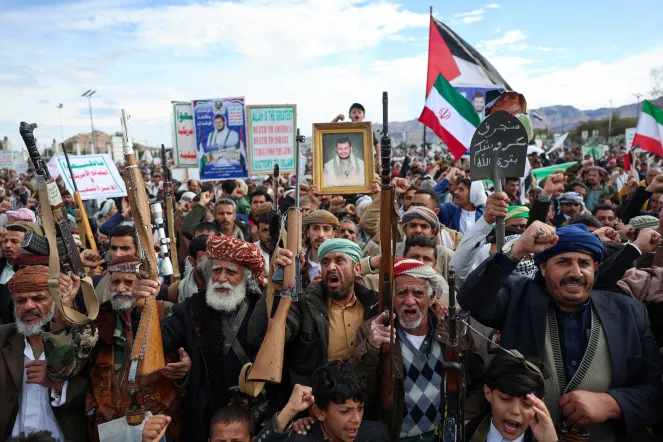
On the ground, the conflict continues to expand. In Yemen, the Iran aligned Houthi movement has entered the war, vowing to continue attacks against Israel. The group said it launched a barrage of cruise missiles and drones targeting what it described as “vital military sites.” Spokesman Yahya Saree claimed the operation had achieved its objectives and warned that further strikes would follow.
Israel said the attacks were successfully intercepted, but the involvement of the Houthis marks a significant escalation, opening another front in an already complex conflict. The group has previously targeted shipping in the Red Sea and launched missiles toward Israel, actions that have drawn retaliatory strikes and heightened tensions with Western powers.
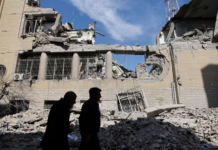
Inside Tehran, residents reported hearing two powerful explosions early Sunday morning, at around 7.20 local time. The Israeli military later confirmed it had carried out “another wave of attacks” on the city, targeting what it described as weapons storage and production facilities.
“The IDF deepened the damage to the regime’s weapons production infrastructure,” the military said, adding that dozens of sites had been struck. Such operations are part of a broader Israeli strategy aimed at degrading Iran’s military capabilities and limiting its ability to support allied groups across the region.
The pattern of strikes and counterstrikes reflects a conflict that has moved beyond isolated incidents into a sustained campaign involving multiple actors. From Lebanon to Yemen to the Gulf, the lines between separate theaters are increasingly blurred, with each development feeding into a wider confrontation.
Diplomats warn that this interconnectedness makes de escalation more difficult. A single incident, whether a strike on infrastructure, an attack on shipping, or a miscalculation by armed groups, could trigger a chain reaction. That risk is one reason why the talks in Islamabad are being closely watched.
For countries like Saudi Arabia and Egypt, stability in the region is not only a political priority but an economic one. Both rely on secure trade routes and are wary of any disruption that could undermine growth or trigger domestic unrest. Turkey, meanwhile, has sought to position itself as a regional power broker, balancing its relationships with Western allies and neighboring states.
Pakistan’s role as host adds another layer of complexity. While not directly involved in the conflict, it has historically maintained ties with both Iran and Gulf states, giving it a degree of credibility as a mediator. Whether that translates into tangible progress remains uncertain, particularly given the scale of the current crisis.
 For now, the gap between diplomacy and reality on the ground appears wide. Military preparations continue, alliances are being tested, and rhetoric is hardening. The reported plans by the Pentagon to target key Iranian sites suggest that even as talks proceed, contingency planning for further escalation is well underway.
The coming days may prove decisive. If diplomacy can gain traction, the region could step back from the brink. If not, the combination of military deployments, strategic strikes, and expanding fronts risks pushing the conflict into a new and far more volatile phase, one with consequences that would extend far beyond the Middle East.