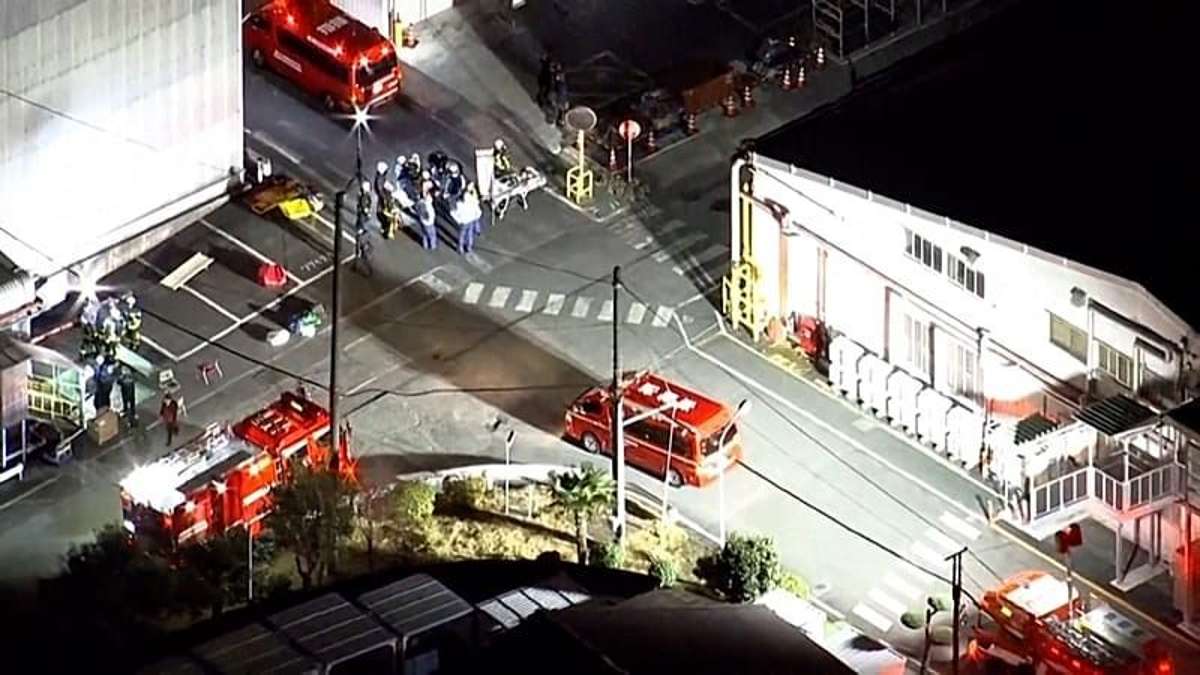
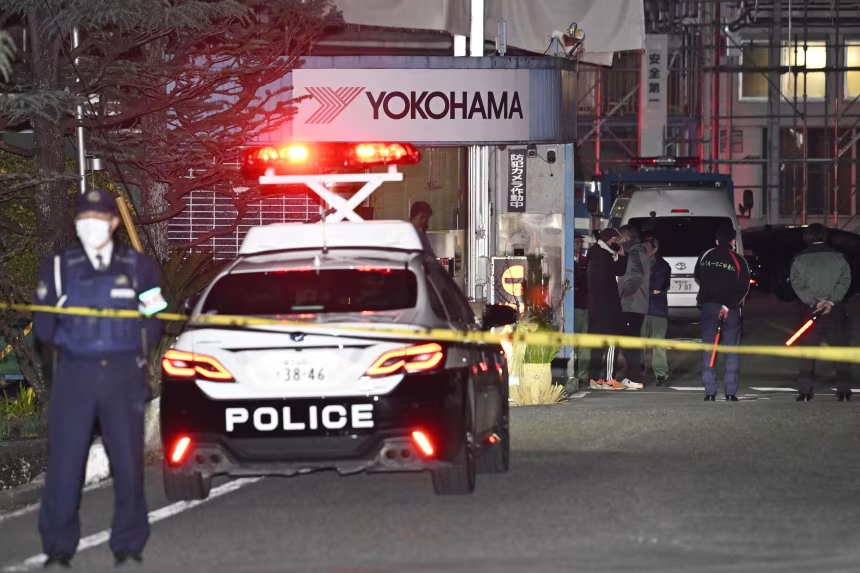
Japanese police have arrested a man after a violent attack at a tire manufacturing plant operated by Yokohama Rubber Co. in central Japan, where eight people were stabbed and seven others were injured by a chemical believed to be bleach, officials said on Friday.
The incident occurred at a factory in the city of Mishima, located in Shizuoka prefecture, west of Tokyo, an industrial region known for its concentration of manufacturing facilities and proximity to key transport corridors linking the capital to western Japan.
Emergency services were alerted shortly after the attack began, and multiple ambulances were dispatched to the site. Victims were transported to nearby hospitals for treatment, according to the Fujisan Nanto Fire Department.
Authorities said there was no immediate indication of a motive, and the suspect was taken into custody at the scene.
Victims hospitalized, several in serious condition
Eight people suffered stab wounds inflicted by a knife and were rushed to hospitals, emergency officials said. Five of those victims were reported to be in serious condition, though officials did not release details about the extent of their injuries or whether any were life-threatening.
In addition to the stabbing victims, seven others were injured after the attacker allegedly threw a liquid substance believed to be bleach. These individuals were also hospitalized, primarily for chemical exposure, according to emergency responders.
Officials did not say whether the chemical injuries were severe, but medical authorities typically treat bleach exposure as potentially dangerous due to its corrosive effects on skin, eyes, and the respiratory system.
Suspect arrested at the scene
Shizuoka prefectural police identified the suspect as a 38-year-old man and said he was arrested on suspicion of attempted murder. Police declined to confirm whether the suspect was an employee of the factory, a contractor, or an outsider, nor did they disclose whether he had any prior relationship with the victims.
Japanese media outlets reported that the man was carrying a survival knife and was wearing what appeared to be a gas mask during the attack, citing investigators familiar with the case. Police have not officially confirmed those details but said the investigation was ongoing.
Authorities said they were questioning the suspect to determine his motive and whether the attack was planned in advance.
Emergency response and investigation
Emergency services responded rapidly to the incident, deploying multiple ambulances and coordinating with local hospitals to treat the injured. Fire department officials said the response prioritized isolating the suspect, evacuating affected areas of the factory, and ensuring that no further chemical exposure occurred.
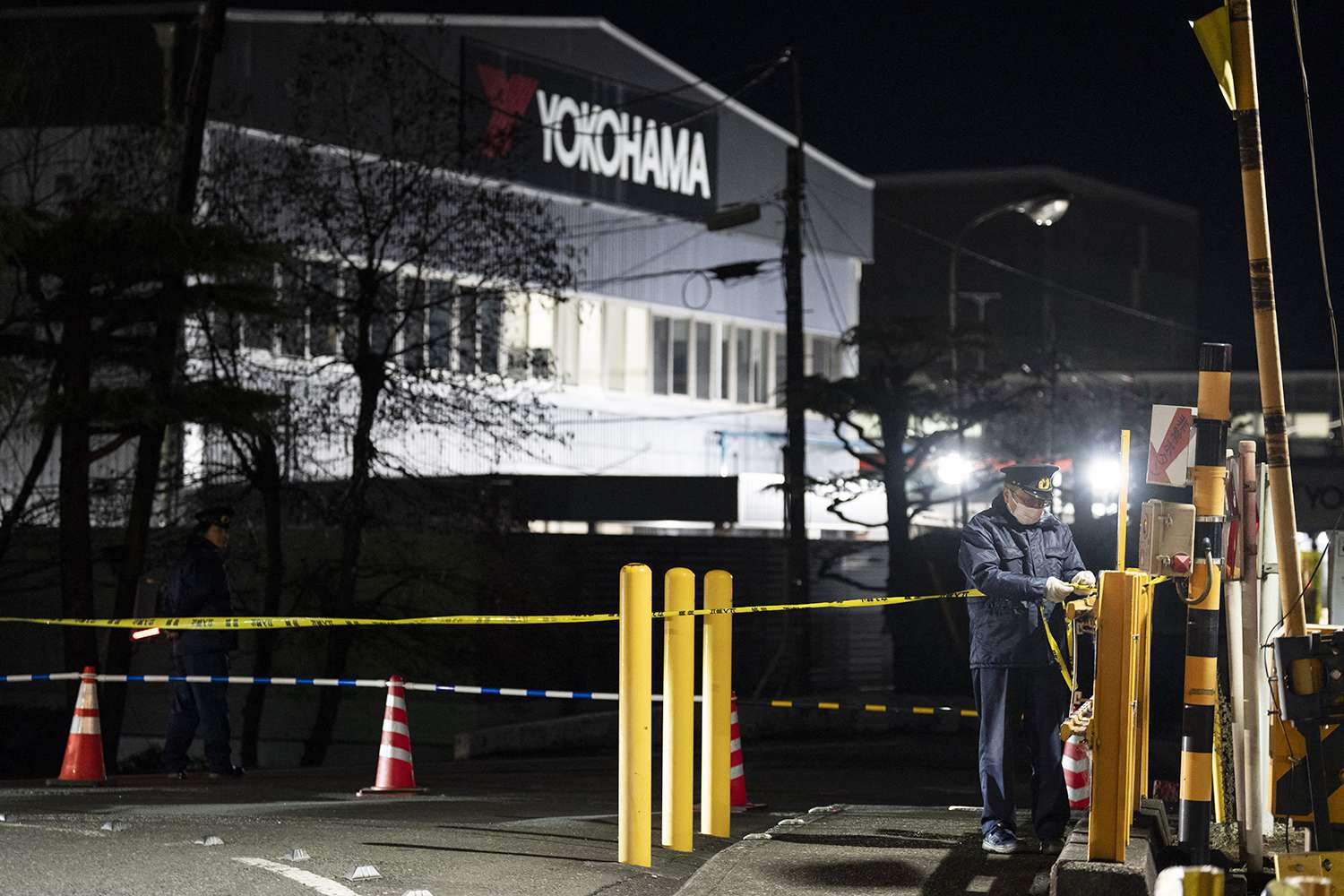
Police have secured the site and are examining surveillance footage, witness statements, and physical evidence, including the knife and chemical container allegedly used in the attack.
Investigators are also working to determine whether the suspect acted alone and whether there were any warning signs prior to the incident.
As of Friday evening, police had not released the names of the victims or the suspect, citing privacy concerns and the ongoing investigation. Authorities said additional charges could be filed as more information becomes available.
For now, Japan is once again grappling with a rare but deeply disturbing act of violence—one that has shaken confidence in the safety of even the most orderly and tightly regulated workplaces.
 The incident also raises broader questions about stress, mental health, and social pressures in Japan’s working population. Long hours, job insecurity, and social isolation have been cited by experts as contributing factors in some past violent incidents, though there is no evidence yet that those issues played a role in Friday’s attack.
Japan’s government has made mental health a growing policy priority in recent years, expanding counseling services and workplace support programs. Still, access to care and stigma around seeking help remain challenges.
Shock in a country with low violent crime
The attack has sent shockwaves through Japan, a country known for its strict gun control laws and comparatively low rates of violent crime. While assaults involving firearms are exceedingly rare, knife attacks occasionally occur and tend to receive widespread public attention.
Local officials in Mishima said the community was reeling from the violence. The city, located near Mount Fuji and known for its residential neighborhoods and industrial zones, is not accustomed to incidents of this scale.
“We are deeply concerned for the victims and their families,” a local government official said, adding that counseling services would be made available to affected workers and residents.
Workplace violence, in particular, is uncommon in Japan, where corporate culture emphasizes harmony, conflict avoidance, and hierarchical resolution of disputes. Violent incidents inside factories or offices are especially rare, making Friday’s attack all the more unsettling.
“This kind of indiscriminate violence in a workplace setting is extremely unusual in Japan,” said one former law enforcement official familiar with industrial safety practices. “That is why incidents like this resonate so strongly with the public.”
Recent history of knife attacks
Despite Japan’s overall reputation for safety, the country has experienced several high-profile knife attacks in recent years, often in public spaces such as train stations, buses, and schools.
In some cases, attackers have cited personal grievances, mental health struggles, or social isolation. Authorities have increasingly focused on early intervention and mental health support as part of broader crime prevention efforts.
However, experts caution against drawing conclusions too quickly in the Mishima case, noting that details about the suspect’s background and motivations remain unclear.
Yokohama Rubber Co. — A major industrial employer
The attack took place at a factory operated by Yokohama Rubber Co., one of Japan’s largest and most internationally recognized tire manufacturers.
Founded in 1917, Yokohama Rubber is a cornerstone of Japan’s industrial sector and a major global supplier of tires for passenger vehicles, commercial trucks, aircraft, and motorsports. The company employs tens of thousands of workers worldwide and operates production facilities across Asia, North America, and Europe.
In Japan, Yokohama Rubber has long been associated with the country’s postwar industrial growth and is considered a symbol of manufacturing reliability and technological innovation. Its facilities typically maintain strict safety and security protocols, reflecting Japan’s broader emphasis on workplace discipline and order.
The Mishima-area plant is part of Yokohama Rubber’s domestic manufacturing network and contributes to both domestic supply and export production. The company has not disclosed how many workers were present at the facility at the time of the attack.
In a brief statement, Yokohama Rubber said it was cooperating fully with law enforcement and prioritizing the safety and well-being of its employees. The company did not comment on whether operations at the factory had been suspended.
Workplace safety and security concerns
The attack is likely to prompt renewed scrutiny of workplace security measures at industrial facilities across Japan, particularly those employing large numbers of workers.
While Japanese factories generally emphasize safety against accidents and machinery-related injuries, violent intrusions or internal attacks are not a central focus of security planning.
Some analysts say companies may now consider additional measures, such as access controls, emergency drills, and staff training on responding to violent situations, though they caution against overreaction in a country where such incidents remain rare.